
What if the four walls of your home weren't just a physical shelter, but a living, breathing portal to the divine? You likely feel the heavy weight of the modern world pressing against your windows, where a 2012 study by UCLA's Center on Everyday Lives of Families found that physical clutter directly triggers a spike in stress hormones. It's exhausting to seek inner peace in a room that feels like a storage unit for distractions, making it difficult to create sacred space for your daily practice. You crave a sanctuary that honors your journey and invites the whispers of ancestral wisdom into your life.
In this guide, you'll discover how to transform any corner of your home into a powerful sanctuary for spiritual growth using ancient shamanic principles and intentional design. We'll explore the art of directional placement, the cleansing power of sacred smoke, and the specific tools needed to ground your plant medicine practice. Prepare to turn your living environment into a temple of presence. The ritual begins now.
Key Takeaways
- Understand the profound shift from simple home decor to an energetic portal that serves as a bridge between the mundane and the divine.
- Learn why clearing physical and energetic clutter is the essential first ritual to create sacred space that feels light, intentional, and grounded.
- Discover how to harmonize your sanctuary by balancing the five essential shamanic elements-Earth, Water, Fire, Air, and Ether-within your personal altar.
- Master the art of "opening the space" through daily rituals and intentional presence to activate the transformative power of your sanctuary.
- Explore how to evolve your sacred environment alongside your own spiritual growth through seasonal stewardship and deep-cleaning rituals.
What is a Sacred Space? Beyond Home Decor
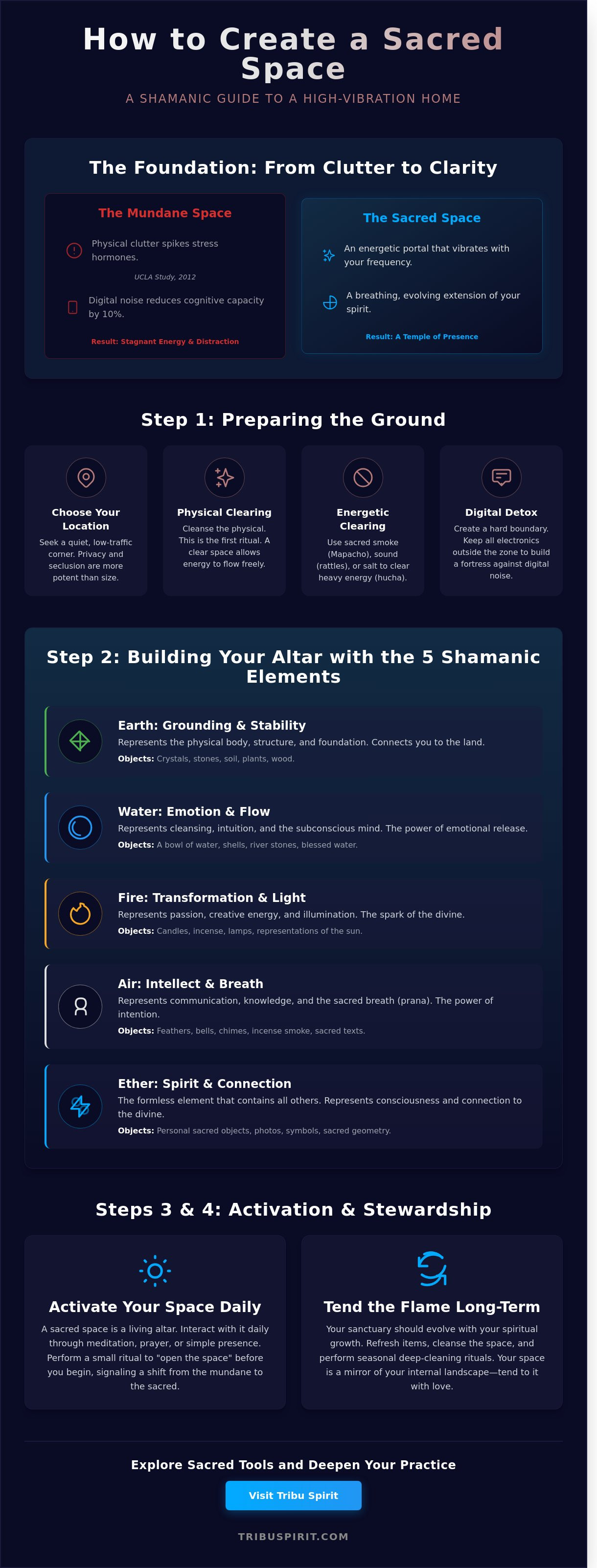
To understand what is a sacred space is to recognize that your home is more than a collection of furniture and walls; it's a sanctuary for the soul. While interior design focuses on the aesthetic arrangement of objects, the choice to create sacred space is rooted in deep intention. It's an intentional threshold between the mundane world and the divine. This isn't just about a "pretty corner" decorated for a social media post. It's about crafting an energetic portal that vibrates with your personal frequency. One looks nice; the other feels alive.
Modern life moves at a frantic pace, often leaving us untethered from our center. Physical anchors are essential for spiritual focus because they provide a tangible point of return. When your eyes land on a specific object or a dedicated area, your nervous system begins to settle. In various shamanic traditions, this is called the "Living Altar." It isn't a static display or a museum of spiritual relics. It's a breathing, evolving extension of your spirit that requires interaction and care. It pulses with your presence. It grows as you grow.
The Psychology of Sacred Enclosures
When you consistently return to a dedicated area, you're performing a psychological hack. This dedicated space signals the brain to enter a meditative state, shifting your frequency from the high-beta waves of daily stress to the calming alpha or theta waves of reflection. Boundaries are vital here. They create a sense of liminality, which is the potent "space between" where personal transformation happens. By stepping into this enclosure, you leave the external noise behind. Sacred space is a mirror for the internal landscape.
Ancient Roots: How Indigenous Cultures View Space
Indigenous cultures, particularly within Amazonian traditions, don't view environments as empty or inanimate. They see every space as a living entity filled with spirit. Honoring the four directions-North, South, East, and West-is a foundational practice that aligns the individual with the natural order of the cosmos. This isn't just symbolic; it's a way to invite local spirits and ancestral wisdom into your immediate surroundings. By acknowledging these forces, you transform a room into a multidimensional map of the universe. To dive deeper into these ancient ways of being, you can explore the Art of Sacred Ritual. Connecting with the land and its history allows you to create sacred space that feels grounded and ancient, even in a modern apartment.
Preparing the Ground: Clearing Physical and Energetic Clutter
Before you arrange your altar or light the first candle, you must honor the container. Clutter is more than a visual distraction; it's stagnant energy that anchors your mind to mundane worries. When you clean your chosen area, you aren't just dusting surfaces. You're performing the first ritual of the process. A clear floor allows the breath to move freely. A clean window invites the light of intention to enter. To truly create sacred space, you must first address what the eyes cannot see.
Choosing the right location requires intuition rather than square footage. You don't need a grand room. A small, intentional corner is often more potent than a vast, open hall. Privacy is the currency of deep medicine work. Seek a low-traffic zone where you won't be interrupted by the 150 daily notifications or the movement of others. This seclusion allows you to drop into a theta brainwave state more easily, facilitating deeper meditation and connection. Small spaces feel like cocoons; they hold your energy close rather than letting it dissipate into a large, empty void.
The Art of Smudging and Smoke Medicine
Energetic hygiene moves beyond the physical broom. Traditional wisdom teaches us to clear hucha, or heavy energy, using sacred smoke. Many practitioners use Mapacho to ground the space and provide a protective shield. When you smudge, direct the smoke into the corners of the room where energy tends to pool and stagnate. Seal the space by moving clockwise, inviting in high-vibrational frequencies. If smoke isn't an option, use a brass rattle to break up density with sound, or place bowls of sea salt in the corners for 24 hours to absorb lingering negativity.
Closing the Mundane Loops
Your sanctuary must be a fortress against digital noise. Research shows that even the silent presence of a smartphone reduces cognitive capacity by 10 percent. Create a hard boundary by keeping all electronics outside the zone. Establish a threshold ritual to signal your transition from the ordinary to the extraordinary. This could be as simple as:
- Removing your shoes to ground your feet on the floor.
- Washing your hands with flower water to cleanse the day's burdens.
- Lighting a single match to announce your presence to the spirits of the space.
By setting these boundaries, you ensure that your efforts to create sacred space aren't diluted by the outside world. Every time you cross this threshold, you're telling your subconscious that the work here is different. To begin your journey with the right intentions, you can explore our collection of ceremonial tools designed to elevate your daily practice and help you maintain a high-vibrational environment.
Building Your Altar: The 5 Essential Shamanic Elements
An altar serves as a living bridge between the mundane and the divine. It's a micro-cosmos where you create sacred space by mirroring the vastness of the universe on a small, intentional surface. This physical center point allows the infinite to find a home within your four walls, acting as a focal point for your daily practice. To build a balanced altar, you must invite the five fundamental elements to sit in harmony.
- Earth: Represented by stones, salt, or crystals, providing the grounding foundation for your work.
- Water: A simple ceramic bowl of fresh water invites emotional flow and purification.
- Fire: The flame of a beeswax candle or the glowing coal of Palo Santo represents transformation.
- Air: Rising smoke from incense or the presence of a feather carries your prayers to the heavens.
- Ether: This is the space between the objects, the invisible thread of your intention that binds the other four elements together.
Arranging these items isn't about following rigid rules; it's about facilitating energy flow. You might place Earth in the North and Fire in the South to align with ancient cardinal wisdom. Balancing "found objects," such as a river stone from a meaningful hike, with "sourced tools" creates a dialogue between your personal journey and collective ancestral wisdom. Every object should have room to breathe, allowing the energy to circulate freely around your center.
Sourcing Sacred Tools with Integrity
Sourcing your ritual objects requires deep discernment and respect. A Kuripe is much more than a simple pipe; it's a precise tool for breath and spirit, used to direct sacred snuff with focused intent. Similarly, a shamanic rattle is used to call in protective lineages, its rhythmic vibration breaking up stagnant energy in the room. Ethics play a vital role here. Indigenous-made tools carry a different medicine because they're born from centuries of prayer and a sustainable relationship with the land. When you choose tools made with integrity, you're honoring the lineage behind the craft.
Personalizing Your Sacred Center
Your altar should breathe and evolve alongside you. It's helpful to add photos of ancestors or symbols that represent your personal power to make the space feel truly yours. Incorporating seasonal offerings, like autumn leaves or fresh spring blossoms, ensures you stay grounded in nature's current cycles. This practice helps you create sacred space that feels alive rather than static. Your altar acts as a physical save point for your spiritual progress, anchoring the heights of your meditation into the density of the material world. It's a mirror of your inner landscape, reflecting your growth, your shadows, and your enduring light.
Activating Your Space: How to Use It Daily
A physical sanctuary only becomes a portal when you engage with it through conscious action. When you create sacred space, you aren't just decorating a corner; you're building a container for transformation. The most vital part of this process is the "Opening of the Space." This ritual acts as an energetic handshake with the divine. By calling in the four directions, you ground your practice in the ancient rhythms of the Earth. Face North for ancestral wisdom, South for the fire of action, East for the rising sun of clarity, and West for the deep waters of the soul.
Before you step inside, stop. Set a specific intention for your session. Clarity is the fuel of ritual. Use your breath to bridge the gap between your busy life and this quiet sanctuary. Data from a 2021 study on mindfulness suggests that even 60 seconds of intentional breathing can lower cortisol levels by 15 percent. Use this physiological shift to enter your room with a clear heart. Finally, always close your space. This ensures the energy you've stirred stays clean and contained, preventing your ritual work from leaking into your sleep or domestic tasks.
Rituals for the Sacred Space
- Facilitating a solo Hapé ceremony: Use your sanctuary to connect with the grounding medicine of the forest. This private practice allows for deep introspection without external distractions.
- Somatic Release: Practice shamanic breathwork to move stagnant energy through the body, using the safety of your space to facilitate spiritual rebirth.
- Daily Maintenance: Treat your altar like a living being. Refresh the water bowl every morning and trim the candle wicks. This 3-minute act of service keeps the vibration of the room high.
Integration: Bringing the Sacred into the Mundane
The true test of a sanctuary is how you feel after you leave it. You don't have to stay in your room to remain peaceful. Carry the stillness into your emails and meetings. If you've just finished a deep session, focus on ceremony integration to ensure those insights take root in your daily habits. On days when time is scarce, use the "Five-Minute Sanctuary" rule. Enter, light one incense stick, take five breaths, and leave. This consistency tells your subconscious that your spiritual growth is a non-negotiable priority. When you create sacred space, you're making a promise to your soul that you'll always have a place to return home to.
Ready to deepen your daily practice? Explore our collection of ethically sourced ritual tools to enhance your journey.
View the Tribu Spirit Ritual CollectionTending the Flame: Long-term Stewardship of Your Sanctuary
Your sanctuary isn't a static museum of spiritual artifacts; it's a living, breathing extension of your own consciousness. When you first create sacred space, the energy is vibrant and clear. However, just as a garden requires consistent weeding and watering, your altar and meditation nook demand regular stewardship. As you evolve through different chapters of your life, your space must mirror that growth. Stagnation in your physical environment often reflects a plateau in your internal journey. By treating your sanctuary as a dynamic partner, you ensure it remains a potent portal for transformation.
Deep cleaning rituals should align with the four seasonal transitions. Every 90 days, during the equinox or solstice, remove every object from your altar. Wipe surfaces with cedar-infused water or a salt solution to neutralize accumulated vibrations. This physical act of dusting and polishing serves as a powerful metaphor for clearing the mind. If the energy feels "stuck" or heavy, try rearranging the layout. Move your crystals to different cardinal points or introduce a new botanical element. Sound is also a vital tool; using a brass bell or a crystal bowl for three minutes can break up energetic density that smoke alone might not reach.
Advanced Tools for Deepened Practice
As your practice matures, you might feel called to work with more potent allies from the forest. Introducing Sananga into your ritual can provide profound visual and spiritual clarity. These sacred eye drops are traditionally used to clear "panema," or dense gray energy, allowing you to see your path with fresh eyes. For those seeking to anchor their intentions through focused prayer, the role of Mambe is unparalleled. This sacred preparation of Ypadu facilitates a grounded state of communication, helping you articulate your deepest truths during your sessions. While your sanctuary is a private refuge, there may come a time to invite others. Sharing a ritual with two or three trusted individuals can amplify the collective frequency, turning your home into a beacon for your community.
Conclusion: Your Home as a Temple
The journey to create sacred space concludes not with a finished room, but with a shift in perception. You've successfully transitioned your environment from a mere "house" to a "home of spirit." Every time you light a candle or sit in silence, you strengthen the bridge between the mundane and the divine. This commitment to daily ritual is what separates a beautiful room from a true temple. Your home is now a vessel for your highest self to land and expand.
If you're ready to deepen your commitment, visit the Tribu Spirit Shop to find your foundational tools, from ethically sourced resins to hand-carved altars. For those who feel a deeper calling, we invite you to join our Academy for formal practitioner training, where you can master the ancient arts of space holding and ceremonial leadership.
Embrace the Sacred Rhythm of Your Sanctuary
Your sanctuary is more than a collection of objects; it's a living dialogue between your spirit and the natural world. By clearing energetic clutter and thoughtfully arranging the five shamanic elements, you transform a quiet corner into a portal for transformation. When you create sacred space, you're making a vow to honor your inner journey and invite deep presence into your daily life. This commitment to stewardship keeps the flame of your practice burning bright through every season.
Authentic transformation requires tools that carry the pure resonance of their origin. Tribu Spirit provides instruments ethically sourced from Amazonian tribes, ensuring that your ritual remains rooted in integrity. These Private Ministry and Academy certified tools don't just serve your altar; they directly support reforestation initiatives that protect the very landscapes where these traditions were born. Every hand-crafted tool acts as a bridge between ancient wisdom and your modern sanctuary. Begin your journey with ethically sourced shamanic tools at Tribu Spirit. Your path to a more intentional, spirit-led life starts with the first spark of intention. Trust the call of your soul.
Frequently Asked Questions
Do I need a whole room to create a sacred space?
You don't need an entire room to create a sacred space; a dedicated 2x2 foot corner or a simple wooden shelf is enough to anchor your practice. The power lies in your intention rather than the square footage. Even a small bedside table can serve as a portal to your inner world. Focus on the quality of your presence in that specific spot. A tiny sanctuary often feels more intimate and easier to maintain than a large hall.
What are the most important items to have on a shamanic altar?
A traditional shamanic altar, or mesa, typically incorporates items representing the 4 cardinal directions and elements. You should include a stone for Earth, a shell for Water, a candle for Fire, and a feather for Air. These tools act as bridges to ancestral wisdom. Adding a personal power object like a crystal enhances the energetic resonance of your setup. This intentional arrangement creates a microcosm of the natural world right in your home.
How do I clear 'heavy energy' if I can't burn smoke or incense?
You can effectively clear heavy energy using sound vibration or sacred sprays if smoke is not an option. Use a 528 Hz tuning fork or a brass bell to break up stagnant frequencies within 3 minutes. Alternatively, mist the area with 100% pure Florida Water or a rose water infusion. These methods purify the atmosphere without affecting air quality or triggering smoke detectors. They offer a discreet way to refresh your sanctuary daily.
Is it okay to have my sacred space in my bedroom?
It's perfectly acceptable to create sacred space in your bedroom, provided you maintain a clear boundary between rest and ritual. Ensure the area remains uncluttered to prevent stagnant energy from affecting your sleep. Research from the Sleep Foundation suggests that 88% of people feel more relaxed in a clean environment. Positioning your altar away from the foot of the bed helps maintain a respectful energetic distance. This setup allows you to begin and end your day in prayer.
How often should I clean or 'reset' my altar?
You should physically clean your altar once every 28 days to align with the lunar cycle. A deep energetic reset is most effective during the 4 seasonal transitions, such as the Solstices or Equinoxes. Remove every item and wipe the surface with a damp cloth. This practice ensures that your intentions don't become stagnant and your connection remains vibrant and clear. Regular maintenance honors the spirits you invite into your home.
Can I use my sacred space for different types of practices, like yoga and Hapé?
You can absolutely use your space for multiple rituals like yoga and Hapé ceremonies. The versatility of a sacred area allows it to evolve with your needs. Just ensure you have enough floor space, typically a 6x2 foot area for a yoga mat, alongside your altar. Transitioning between practices with a brief moment of silence helps reset the energy for the next ritual. This flexibility makes your spiritual practice more sustainable in a modern home.
What should I do if someone else enters my sacred space without permission?
If someone enters your space without permission, perform a quick 5 minute clearing ritual to reclaim the energy. Use a bell or a salt bowl to seal the perimeter again. It's helpful to explain your boundaries to housemates, as 90% of boundary issues stem from a lack of clear communication. Your space is an extension of your spirit, so it deserves protection and respect. This process helps you maintain the sanctity of your personal temple.
How do I know if my sacred space is actually 'working'?
You'll know your efforts to create sacred space are working when you feel a palpable shift in your nervous system upon entering the area. Most practitioners report a 30% increase in focus and a sense of immediate calm after 21 days of consistent use. You might notice the air feels lighter or your breath slows down automatically. These physical cues signal that the space is successfully holding your intention and providing the spiritual nourishment you seek.