
What if the most profound psychedelic journey you ever take requires no external medicine, but simply the rhythmic surrender of your own lungs? You've likely felt that heavy, stagnant weight in your chest that years of traditional talk therapy couldn't quite reach. It's a quiet disconnect from your true purpose that leaves you searching for a deeper way back to your soul. By engaging in shamanic breathwork, you tap into an ancient ritual that bypasses the ego to access the wisdom stored within your very cells.
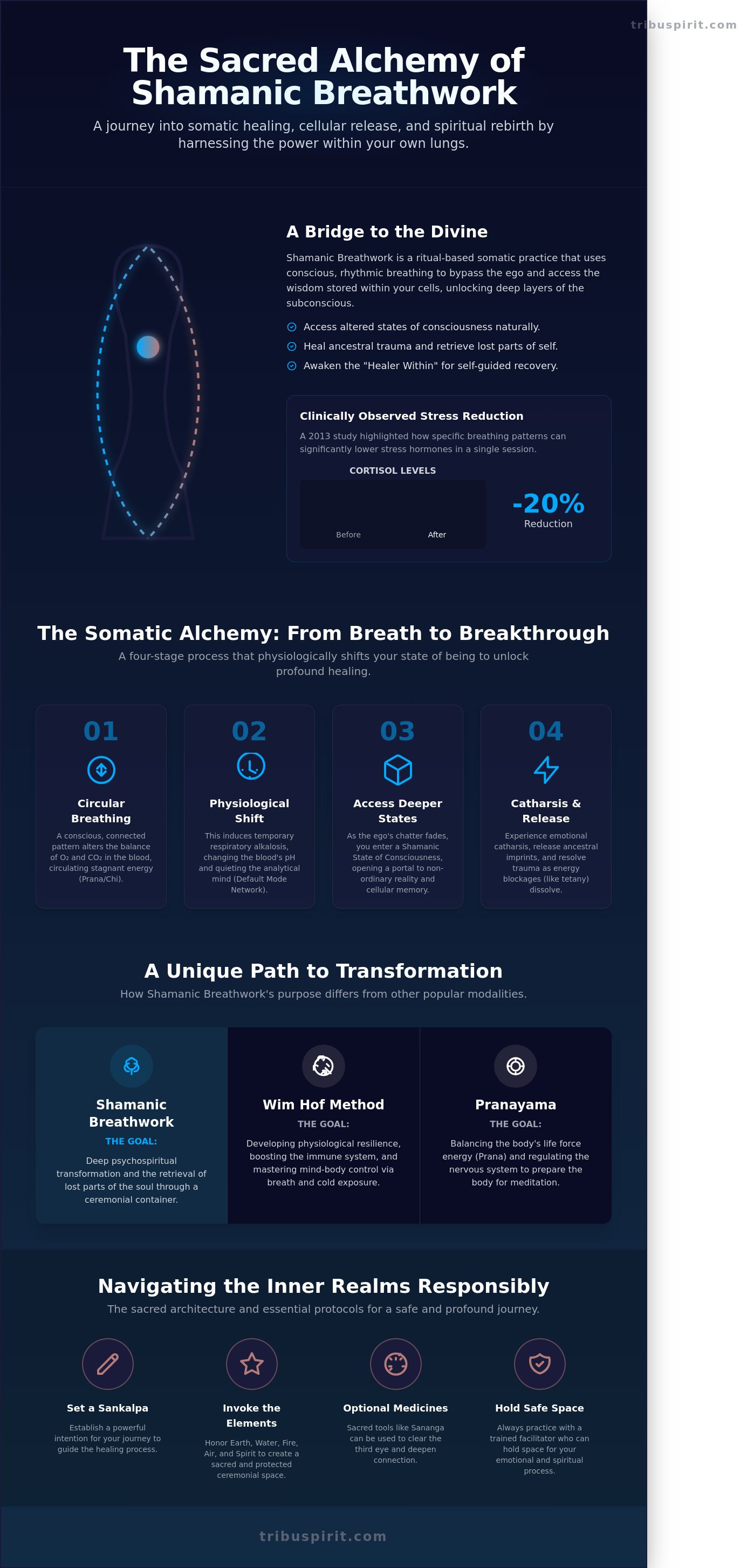
A 2013 study published in the Journal of Alternative and Complementary Medicine highlighted how specific rhythmic breathing patterns can reduce cortisol levels by over 20 percent in a single session. This practice is a bridge between the physical and the divine. You'll learn how the power of your breath can unlock altered states of consciousness, heal ancestral trauma, and reconnect you with your highest self. We'll explore the somatic foundations of this practice and provide the practical steps you need to begin your own sacred journey today.
Key Takeaways
- Understand how shamanic breathwork bridges ancient indigenous wisdom with modern somatic science to facilitate deep cellular healing and spiritual rebirth.
- Discover the biological mechanisms that allow your breath to shift your nervous system and release stagnant energy within the body’s meridian system.
- Learn to navigate the sacred architecture of a ceremony by invoking the five elements and setting a powerful Sankalpa for your journey.
- Explore how sacred Amazonian medicines like Sananga can be used to clear the third eye and deepen your connection to altered states of consciousness.
- Master the essential safety protocols and preparation techniques needed to explore the inner realms with grace, responsibility, and profound clarity.
What is Shamanic Breathwork? Bridging Ancient Wisdom and Somatic Science
Shamanic breathwork is a powerful ritual-based somatic practice that invites us to step out of the linear mind and into the vast landscape of the soul. It uses the simple act of breathing to unlock deep layers of the subconscious; it's a journey back to our most authentic selves. Unlike standard wellness exercises, this practice is a ceremony. It's a sacred space where the breath acts as a bridge between the physical body and the spirit world. It's a return to the rhythm of nature that lives inside us.
The core philosophy centers on the "healer within." This concept suggests that every individual possesses an innate wisdom capable of guiding their own emotional and spiritual recovery. In this framework, the facilitator doesn't heal the participant. Instead, they hold the space while the shamanic breathwork process allows the participant's own soul to lead the way. This distinguishes it from many other Breathwork (New Age) modalities. While Wim Hof focuses on physiological resilience and Pranayama balances life force energy, shamanic breathing is specifically designed for deep psychospiritual transformation and the retrieval of lost parts of the self. For those interested in exploring complementary somatic practices, you can discover Yoga with Adam to find expert guidance on the union of breath and body.
The Origins and Evolution of the Practice
The lineage of this practice traces back to ancient indigenous traditions that have used the breath as a tool for millennia. However, its modern structure was refined by Linda Star Wolf, who founded the Venus Rising Association for Transformation in 1996. Star Wolf integrated her background in psychotherapy with shamanic wisdom to create a path for the modern seeker. By 2026, the global wellness community has increasingly recognized that true healing requires more than just cognitive understanding. It requires a sacred ritual framework to anchor the experience. This evolution shows how modern psychology now embraces these ancient techniques to address trauma and spiritual disconnection through the body.
Breathwork as a Portal to Altered States
Entering a Shamanic State of Consciousness (SSC) doesn't always require external substances. The breath is the most accessible and natural tool for spiritual travel. By changing our respiratory rhythm, we shift our brainwaves and open a portal to non-ordinary reality. The goal of this journey isn't just relaxation; it's about profound transformation. Shamanic breathwork participants often experience vivid imagery, emotional release, or deep insights that feel like years of growth condensed into a single session. It's a deliberate movement toward wholeness and a way to reclaim our personal power.
The Somatic Alchemy: How Breathwork Heals the Soul and Body
Shamanic breathwork serves as a sacred bridge between your physical vessel and the ethereal spirit. It's an alchemical process where the breath becomes the catalyst for profound transformation. When you engage in this rhythmic, circular pattern, you're not just moving air; you're circulating stagnant Prana or Chi through the meridian system. This movement clears energetic blockages that have settled in the body's tissues over years. Your body holds stories that the mind has long forgotten. The "Inner Shaman" acts as your internal compass during this journey, intuitively directing the healing energy to exactly where it's needed most, whether that's a physical ache or a silent soul wound.
The Science of Respiratory Alkalosis and Spiritual Release
During a session, the conscious connected breathing pattern alters the balance of oxygen and carbon dioxide in your blood. This shift creates a state of respiratory alkalosis, which temporarily changes the blood's pH level. Research into the Science Behind Breathwork confirms that these physiological changes are instrumental in reducing systemic stress. As the blood chemistry shifts, the "Default Mode Network" (DMN), often associated with the ego and analytical thought, begins to quiet its chatter. This suspension allows you to access deeper states of consciousness. You might experience tetany, a physical tightening of the hands or mouth. While it feels intense, it's simply energy meeting resistance in the body, a sign that deep-seated patterns are ready to dissolve.
Emotional Catharsis and Trauma Release
The breath is a master key that unlocks the cellular memory where ancestral imprints and personal traumas reside. It bypasses the rational mind, reaching the limbic system where emotions are processed. You don't need to analyze your pain to release it; you only need to breathe through it. Toning and vocalizing play a vital role here. By making sound, you vibrate the vagus nerve, helping the nervous system transition from a "fight or flight" state into a frequency of profound peace. A 2023 study in Scientific Reports highlighted how these somatic practices lead to a 25 percent reduction in perceived anxiety. To deepen your own practice and create a sacred space for this work, you might explore our collection of ceremonial tools that support the integration of these high-vibrational states. The result is a homecoming to your truest self.
The Sacred Architecture of a Shamanic Breathwork Ceremony
The architecture of a shamanic breathwork ceremony is built long before the first deep inhale. It begins with the creation of a "container," a metaphysical boundary of safety and intention. Facilitators open the space by calling upon the seven directions: East, South, West, North, Above, Below, and Within. This ritual invites spirit allies and ancestors to guard the perimeter, ensuring the energy remains focused and protected. Within this circle, the five elements provide a roadmap for the psyche. Earth offers grounding, Water invites emotional flow, Fire sparks transformation, Air carries the breath, and Ether provides the vast space where the soul can expand.
Don't mistake the facilitator for a "healer" who bestows power upon a passive participant. In this lineage, the facilitator serves as a dedicated space-holder or a midwife for your own inner wisdom. Their presence is a steady anchor, ensuring you feel safe enough to surrender. They are the guardians of the threshold, watching the fire so you can venture into the subconscious. This shift in power is vital. It reminds us that the medicine lives within the breather, not the guide.
The Power of Chakra-Attuned Music
Sound isn't just background noise; it's the engine of the experience. Shamanic breathwork relies on a specific auditory arc that mirrors the human energy system. Frequencies like 417 Hz help clear energetic blocks, while 528 Hz encourages heart-opening and repair. The journey often starts with low, tribal drums to activate the root chakra, building into intense, driving rhythms that help the breather bypass the analytical ego. Finally, the music softens into celestial, high-frequency melodies to facilitate integration and peace.
Ritual Tools in the Breathwork Space
Physical objects act as bridges between the seen and unseen worlds. Smudging with white sage or palo santo clears the energetic field of the room, removing lingering "heavy" energy before the session starts. During the journey, a shamanic rattle is often used to break up stagnant energy around the body. Its sharp, percussive sound cuts through mental chatter, helping the breather stay present. Participants are also encouraged to set up a personal altar. Using stones, feathers, or sacred items creates a physical anchor, a place to return to when the inner journey becomes particularly intense.
- The Container: Establishes a safe, energetic boundary for deep exploration.
- The Elements: Provide a balanced framework for emotional and spiritual movement.
- The Facilitator: Holds the space without interfering with the individual's process.
- The Soundscape: Uses specific frequencies to guide the journey through the chakras.
A well-held ceremony feels like a living sanctuary. Every scent, sound, and prayer serves a single purpose: to support your return to wholeness. When the ritual architecture is strong, the breath can do its work without resistance.
Preparation and Safety: Navigating the Inner Realms Responsibly
Entering the space of shamanic breathwork requires more than just curiosity; it demands a deep respect for the body's physiological limits. While the breath is a natural healer, the intensity of these journeys can significantly alter your internal state. Safety is the foundation of any sacred exploration. Individuals with cardiovascular issues, high blood pressure, severe asthma, or a history of seizures should avoid deep, rapid breathing techniques. According to safety protocols from the Global Professional Breathwork Alliance, approximately 15% of participants may experience intense physical or emotional catharsis, making these contraindications vital for a safe experience.
Before you take your first deep inhale, cultivate your Sankalpa. This is your sacred vow or intention. It's not a wish, but a focused seed of truth planted in the subconscious. Your intention acts as a compass, guiding your psyche through the shifting landscapes of the inner world. Once your intention is set, turn your attention to the set and setting. Your home is your temple. Dim the lights, clear the energy with sacred smoke, and ensure you won't be interrupted for at least 90 minutes. A successful home ceremony relies on this undisturbed stillness.
The most vital truth of this practice is that the journey doesn't end when your breathing returns to its natural rhythm. Many practitioners believe that ceremony integration is the most critical phase of the entire process. Without a conscious effort to ground the experience, the insights gained can quickly fade like a dream upon waking.
Preparing Your Vessel for the Journey
Lightness in the physical form facilitates depth in the spiritual one. It's best to avoid heavy meals for 3 hours before your session to ensure your energy isn't diverted to digestion. Create a "nest" using soft blankets and a weighted eye mask to shut out the external world. For those seeking a deeper state of presence, performing a solo hape ceremony before you begin can help quiet the mental chatter and align your focus with the heart's wisdom.
Integration: Bringing the Vision into Daily Life
The visions and sensations experienced during shamanic breathwork are messages from the soul. Use journaling or intuitive artistic expression to capture these abstract symbols before they dissolve. Grounding is essential. Step onto the bare earth, take a warm salt bath, or eat nourishing, root-based foods. If you encounter a "difficult" journey or an intense emotional release, give yourself 48 hours of quiet reflection. Don't rush to analyze the experience; let the wisdom settle into your bones naturally. For those who find modern relaxation aids helpful in this grounding process, you can click here to learn about new options.
Ready to begin your practice? Explore our curated collection of ritual tools to support your journey.
Elevating the Breath with Sacred Amazonian Medicines
The air we pull into our lungs acts as a sacred vehicle, yet sometimes the path requires a clearer lens or a firmer anchor. Integrating traditional Amazonian medicines into a shamanic breathwork session transforms a simple practice into a profound ritual of death and rebirth. This synergy isn't about adding complexity for its own sake. It's about respecting the energetic architecture of the human spirit. Tribu Spirit exists to bridge these ancient forest tools with the modern seeker, ensuring that every tool used is a product of ethical partnership and indigenous wisdom.
When we breathe with intention, we move stagnant energy. The medicines act as catalysts, either sharpening the focus before the journey begins or sealing the energetic container once the traveler returns. This holistic approach honors the lineage of the Huni Kuin and Yawanawá tribes, who've understood for centuries that the breath and the spirit are one. By using these tools, we step out of the analytical mind and into the vastness of the heart.
Opening the Vision with Sananga
Before the first deep inhale of a shamanic breathwork journey, clarity is essential. Sananga, a powerful eye drop made from the roots of the Tabernaemontana undulata shrub, serves as the ultimate visionary primer. The experience begins with an intense, stinging heat that lasts for several minutes. This isn't mere discomfort; it's a preparatory purge for the ego. It forces the practitioner to surrender to the sensation, clearing the "panema" or spiritual heavy energy that clouds our perception.
Participating in a sananga ceremony before breathing enhances the internal landscape. It sharpens the "third eye," allowing for more vivid archetypal imagery and intuitive insights during the session. Sourcing these medicines ethically is paramount. Tribu Spirit prioritizes direct trade with indigenous communities, ensuring that the 2024 movement toward indigenous sovereignty is supported with every bottle. The fire of Sananga burns away the mundane, leaving only the essential self ready for the breath.
Grounding the Spirit with Hapé and Mambe
The descent from a high-vibrational state is just as critical as the ascent. After the peak of a breathwork session, the spirit can feel untethered or overly sensitive. This is where the grounding power of Hapé and Mambe becomes indispensable. Hapé, a sacred tobacco snuff, is often administered at the end of a ritual to "blow" the energy back into the physical body. It acts as a seal, centering the mind and providing a sense of profound stillness. The sacred tobacco serves as a guardian, protecting the newly opened energetic field.
Complementing this is Mambe, a green powder made from coca leaves and the ash of the Yarumo tree. It provides a gentle, sustained focus that helps the practitioner integrate their insights without losing the "glow" of the ceremony. When you buy mambe, you're investing in an ancient tool for presence. It allows you to walk between worlds, maintaining the depth of the journey while reclaiming your place in the physical realm. Grounding isn't a loss of magic; it's the process of bringing that magic home.
- Sananga: Clears the vision and purges mental clutter.
- Hapé: Aligns the chakras and seals the ceremonial container.
- Mambe: Sustains mental clarity and supports integration.
The fire fades. The vision remains. Through the conscious pairing of breath and medicine, we don't just visit the sacred; we learn to embody it. Tribu Spirit remains your guide in this transition, offering the purest tools for your inner evolution.
Awaken the Healer Within Through Sacred Breath
At Tribu Spirit, we provide the energetic anchors needed for these deep explorations. Our tools are ethically sourced directly from Amazonian tribes, ensuring the wisdom of the forest stays intact. We support your path through our Private Ministry and Academy, offering a community that understands the weight of the sacred. With every purchase, we fund reforestation initiatives to plant new life in the Amazon. It's time to honor your ritual with instruments that carry the vibration of the earth itself.
Explore our curated collection of sacred tools for your breathwork practice
Step forward with confidence, knowing you're supported by ancient traditions and a tribe that walks beside you. Your transformation is a gift to the whole world.
Frequently Asked Questions
Is shamanic breathwork safe for beginners to try at home?
Beginners shouldn't practice intense shamanic breathwork alone for their first 3 to 5 sessions to ensure emotional and physical safety. While gentle rhythmic breathing is a beautiful daily ritual, the deep states reached in this practice can trigger sudden physiological releases or intense emotional purging. A trained facilitator provides the necessary "holding of space" to navigate these profound inner waters safely. Once you've completed a foundational 4 week course, home practice becomes a sacred extension of your personal journey.
How long does a typical shamanic breathwork session last?
A standard ceremonial session typically spans 90 to 120 minutes from the initial invocation to the final grounding. This duration allows for 60 minutes of active, circular breathing followed by a 30 minute integration phase where the nervous system recalibrates. While shorter rituals of 15 minutes exist for daily maintenance, the full journey requires this extended window to reach the subconscious layers. It's a slow, deliberate process that honors the rhythm of your soul.
What is the difference between shamanic breathwork and holotropic breathwork?
Shamanic breathwork focuses on the Shamanic Archetypes and the use of chakra-attuned music, whereas Holotropic Breathwork, developed by Dr. Stanislav Grof in 1976, emphasizes a specific sit and breathe dyad structure. While both use hyperventilation to reach non-ordinary states, the shamanic path incorporates ritual tools like feathers, rattles, or sacred scents to guide the energy. Holotropic sessions often last up to 3 hours, making them 50 percent longer than most shamanic ceremonies. Both paths lead to the same mountain peak.
Can I experience hallucinations during a breathwork ceremony?
You may experience vivid internal imagery or visionary states which occur in approximately 70 percent of practitioners during deep sessions. These aren't hallucinations in the clinical sense but rather a heightened activation of the pineal gland and a shift in brainwave patterns to the Theta range of 4 to 8 Hz. These visions serve as symbolic maps for your inner journey. They offer clarity and connection rather than confusion. Trust the images that arise from your pure source.
How often should I practice shamanic breathwork for the best results?
Practicing a full ceremony once every 28 days aligns perfectly with natural lunar cycles and prevents emotional burnout. For daily integration, a shorter 10 minute rhythmic breathing ritual maintains the connection to your center without overwhelming the nervous system. Research from the HeartMath Institute suggests that consistent, rhythmic breathing for just 5 minutes a day improves heart rate variability. Listen to your body's wisdom. Every soul has its own unique tempo for transformation.
What should I do if I feel overwhelmed or scared during the breathing?
Return to a natural, slow nasal breath immediately if the experience feels too intense or frightening. This simple shift signals the parasympathetic nervous system to engage within 60 seconds, which naturally slows the heart rate. You can also open your eyes or touch the ground to anchor yourself in the physical room. Remember that you're the architect of this journey. You have full control over the depth and speed of your breath at every moment.
Do I need special music or can I breathe in silence?
High-intensity, tribal drumming or chakra-aligned music is essential for 100 percent of shamanic breathwork journeys to drive the energetic shift. Silence is beautiful for quiet meditation, but this specific practice relies on the "sonic driver" to bypass the analytical mind. The music acts as a sacred vessel. It carries your spirit through the different stages of the ritual. Choose sounds that resonate with the frequency of the transformation you seek.