

What if the most profound healing you ever experience doesn't happen in a crowded retreat center, but within the silent sanctuary of your own home? It's a question that resonates with many modern seekers who feel a deep, quiet pull toward the medicine. You likely recognize the call to sit with the spirit of the plants, yet you might hesitate, fearing the intensity of a physical purge without a guide or worrying you'll unintentionally disrespect ancient Amazonian lineages. It's natural to feel this weight of responsibility when approaching a solo hape ceremony for the first time.
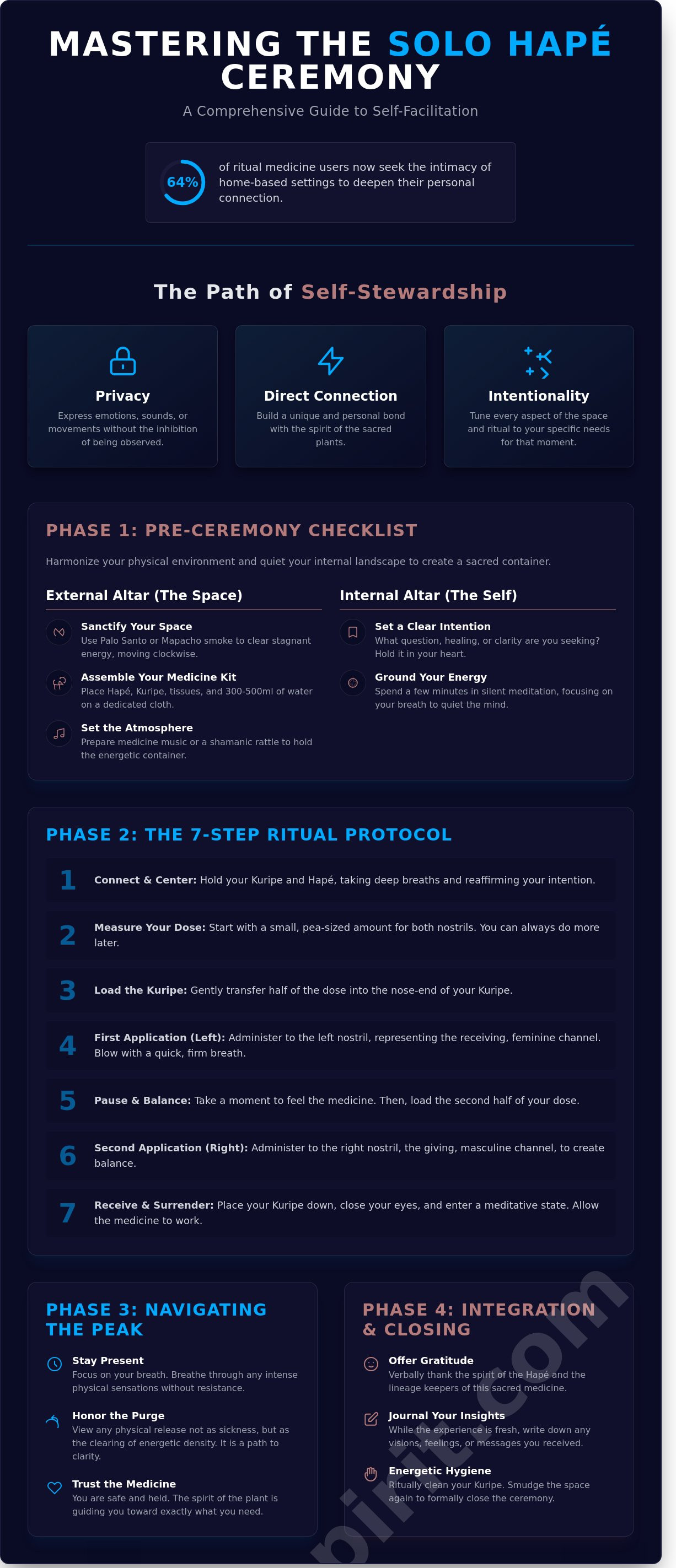
You deserve to feel grounded and empowered in your practice. Recent data from 2023 suggests that 64% of ritual medicine users now seek the intimacy of home-based settings to deepen their personal connection. This guide provides a comprehensive checklist to help you master the art of self-facilitation, ensuring your space becomes a sacred temple. We'll explore the essential energetic preparations, physical tools, and the 7-step ritual structure designed to anchor your presence and invite a deeply transformative inner journey.
Key Takeaways
- Learn to sanctify your space and assemble a sacred medicine kit, setting the stage for a deep, uninterrupted dialogue with the spirit of the plants.
- Master the precise ritual protocol for a solo hape ceremony, including the art of self-application and measuring the perfect amount for your journey.
- Understand how to navigate the medicine’s peak with grace, viewing physical sensations and the purge as essential pathways to spiritual clarity.
- Discover the vital steps for integration and energetic hygiene, from offering gratitude to the tobacco spirit to the ritual cleaning of your Kuripe.
Why Facilitate a Solo Hapé Ceremony? The Path of Self-Stewardship
Many seekers begin their journey within the collective resonance of a group circle, guided by the steady hand of an experienced facilitator. While the shared energy of a tribe is powerful, there is a distinct, quiet call that eventually leads a practitioner toward the solo hape ceremony. This transition marks a profound maturation in your spiritual walk. It is the moment you move from being a guest in a sacred space to becoming the architect of your own sanctuary. Choosing to sit alone isn't about isolation; it's about the deep, unfiltered intimacy that only occurs when the soul speaks directly to the medicine without a middleman.
The path of self-stewardship allows for a tailored pacing that group settings simply cannot provide. You might find that your spirit requires twenty minutes of silence before the first blow, or perhaps your heart needs to linger in the afterglow for an hour. In a personal practice, the medicine meets you exactly where you stand. It becomes a direct dialogue. You learn to listen to the subtle shifts in your own vibration, recognizing when to push deeper and when to hold space for gentle release. This level of autonomy transforms the Kuripe from a simple wooden tool into a sacred bridge between your physical self and the divine.
The Call to Personal Practice
You'll know you're ready to facilitate your own space when the desire for privacy outweighs the comfort of being led. Self-stewardship is a foundational pillar of modern shamanism, requiring you to take full responsibility for your energetic hygiene. When you hold your own space, you aren't just consuming a botanical; you're anchoring a frequency. This independence is what truly accelerates your ceremony integration. Without the distractions of a group, the insights gained during the ritual can be woven immediately into your daily life, creating a seamless flow between the sacred and the mundane.
Solo vs. Facilitated: What Changes?
In a facilitated session, you're the receiver of the Tepi's breath. In a solo hape ceremony, you step into the role of both the giver and the receiver through the Kuripe. This shift is significant. You're no longer passive; you're an active participant in your own healing. You must manage your own energy, set your own boundaries, and maintain the "Mesa" or altar with conscious intent. This process builds an unshakable trust in your intuition. By following the steps of a sacred ritual on your own, you prove to yourself that you possess the internal compass needed to navigate the vast landscapes of the spirit world. It's a transition from seeking external validation to finding internal alignment.
- Privacy: You can express emotions, sounds, or movements without the inhibition of being observed.
- Direct Connection: The relationship with the Hapé becomes personal, building a unique "diet" or bond with the plant spirits.
- Intentionality: Every aspect of the room, from the incense to the music, is tuned to your specific needs for that moment.
Pre-Ceremony Checklist: Preparing Your External and Internal Altar
The success of a solo hape ceremony depends on the foundation you build before the medicine ever meets your breath. Preparation is a two-fold process of alignment; you must harmonize the physical environment while simultaneously quieting the internal landscape. Begin by sanctifying your space with the smoke of Mapacho or Palo Santo. This isn't merely symbolic. Traditional Amazonian practitioners, such as the Huni Kuin, use tobacco smoke to clear stagnant energy and create a protective perimeter. Spend at least 60 seconds smudging the corners of your room, moving in a clockwise direction to invite expansive, positive vibrations into the area.
Your medicine kit should be organized with intentionality. Place your chosen blend of Hapé and your Kuripe on a clean, dedicated cloth. You'll also need a small glass of 300ml to 500ml of room-temperature water and a pack of tissues. Sound serves as the container for your experience. Whether you choose a traditional shamanic rattle to break up dense energy or a 20-minute track of medicine music, ensure your audio is ready to play without interruptions. This allows you to remain in the flow of the ritual without fumbling for technology. For those seeking the highest quality tools for their practice, choosing ethically sourced sacred medicines ensures your ritual begins with the right energetic frequency.
The Physical Space (The External Altar)
Choose a quiet, undisturbed location where you won't be interrupted for at least 45 minutes. Your "nest" should be comfortable, using cushions or a yoga mat to support an upright seated posture. Keep a purge bucket nearby; while not everyone experiences a physical release, approximately 15% of practitioners may need it during deep clearing sessions. Soft lighting, perhaps a single candle or dimmed salt lamp, helps transition the brain into a meditative alpha state. This external order reflects the clarity you seek within.
The Mental State (The Internal Altar)
Internal preparation requires physical stillness and digestive rest. Aim to fast for at least 3 hours before your solo hape ceremony to ensure the medicine's energy isn't diverted by digestion. Spend 5 to 10 minutes practicing box breathing, inhaling for 4 seconds and exhaling for 4 seconds, to stabilize your nervous system. Intention is the energetic compass for any solo hape ceremony. Define your purpose in a single, present-tense sentence, such as "I am open to clarity" or "I release what no longer serves me," and hold this thought as you prepare the first blow.
The Ritual Protocol: A Step-by-Step Guide to Self-Application
Before the application, offer a vocal invocation. Turn your body to face the North, South, East, and West; speak your intentions clearly into the space. Once your purpose is set, load the first half of the medicine into the Kuripe. You're now ready to bridge the gap between the physical and the spiritual through your breath.
Mastering the Kuripe
Your Kuripe serves as the bridge for the medicine's journey. Hold the pipe with a relaxed but firm grip, ensuring the longer end sits snugly within your nostril to prevent airflow leakage. The technique you choose dictates the depth of the experience. A short, sharp blow provides a grounding and intense clearing of the mental space. Conversely, a long, gentle blow invites a more meditative and subtle shift in consciousness.
- The Left Side: Always begin with the left nostril. Indigenous traditions view the left as the side of "death" or letting go. It's the space where we release stagnant emotions and old patterns.
- Airflow Control: Keep your mouth firmly sealed around the mouthpiece to ensure the 0.15-gram dose reaches the sinus cavity effectively.
- The Grip: Place your index finger and thumb at the joint of the V-pipe for maximum stability during the Sopro.
The Sacred Blow (Sopro)
The moment of the Sopro is an act of total presence. As you blow the medicine, visualize the Hapé traveling through your frontal sinus and activating the third eye area. You'll likely feel an immediate physical heat or a sharp sting for about 15 to 20 seconds. Don't pull away from this sensation. Instead, lean into the intensity, allowing it to anchor you in the "now."
The second blow to the right nostril is vital for balance. This side represents "rebirth" and the solar, masculine energy. It brings harmony and clarity, integrating the release from the left side into a new state of being. After the second application, enter the stillness immediately. Close your eyes and sit with a straight spine for at least 12 minutes. This quietude is where the true work of the solo hape ceremony happens; it's the space where the medicine's wisdom moves from the physical body into the soul.
The Experience Checklist: Navigating the Medicine’s Peak
The peak of your solo hape ceremony is a sacred threshold where the physical and spiritual planes collide. Within 60 seconds of administration, you'll likely feel a rush of heat and a sharp crystalline focus. Your eyes may water; your nose will likely run. These aren't symptoms of illness. They're signs of the body’s natural detoxification. Don't fight the "drip" or the urge to sneeze. Let the fluids flow. This is the medicine working through your physical layers to reach the energetic core.
The purge is perhaps the most misunderstood aspect of this ritual. Whether it manifests as tears, intense sneezing, or a heavy emotional release, understand that this is healing. It's never an error. It's the medicine identifying what no longer serves you and moving it out of your field. If energy feels stuck in your chest or head during this 15-minute peak, use a shamanic rattle. The rhythmic vibration breaks up density. It helps the medicine flow through your meridians. Witness your thoughts like clouds passing through a clear sky. Observe them without attachment; let them dissolve into the breath.
Working with the Body
Your physical vessel acts as the anchor for the entire experience. Maintain a seated, upright posture with your head slightly tilted forward. This prevents the medicine from entering the throat, which can cause unnecessary discomfort. Breathe exclusively through the mouth with steady, deep inhalations. This oxygenates the blood and helps you ride the wave of intensity. For those seeking deeper spiritual vision, applying Sananga eye drops before you begin can clear the "panema" or dense energy. This opening prepares the third eye for the clarity that follows.
Navigating the Spirit
If the intensity feels overwhelming, return to your breath. It's your primary grounding cord. The "Quiet Mind" checklist involves three specific steps: acknowledge the sensation, return to your original intention, and exhale the tension. Focus on the soles of your feet touching the earth. If you find yourself frequently drifting into mental noise, consider working with Tsunu Hapé during your solo hape ceremony. This specific blend is renowned for its profound grounding qualities. It acts as a steady guide through the spiritual fog, keeping you centered while the medicine explores your inner landscape.
Integration and Closing the Portal: Your Post-Ceremony Steps
The silence that follows a solo hape ceremony isn't empty; it's a fertile space where the medicine's wisdom takes root. This final phase is about more than just putting things away. It's the conscious act of weaving your spiritual insights into your physical reality. Once the intensity of the medicine subsides, take a moment to offer a silent or spoken word of gratitude to the spirit of Grandfather Tobacco. This acknowledgment honors the lineage and the botanical intelligence that just moved through you.
Your Kuripe requires its own ritual of hygiene. Don't simply toss it back into a bag. Use a small brush or a dedicated pipe cleaner to remove any remaining powder from the tubes. This prevents physical blockages and ensures the tool remains energetically clear for your next journey. Think of your Kuripe as a sacred vessel for your breath; it deserves the same care as any altar piece.
After the ceremony, your body needs to find its center. Eating a small piece of organic dark chocolate with at least 70% cacao or a slice of fresh orange provides an immediate grounding effect. The natural sugars and the act of chewing signal to your nervous system that the journey is complete and you're back in the physical world. Follow this with ten minutes of journaling. Capture the specific "downloads" or visual flashes you experienced. These insights often fade like dreams within 120 minutes if they aren't anchored in ink.
Closing the Sacred Space
Begin by extinguishing your candles, one by one, visualizing the portal of the ceremony gently closing. Clear your physical altar and return your medicines to their storage. A simple mantra like "I am grounded, I am whole, I carry this light" seals the energy. Avoid digital screens for at least 30 minutes. The blue light from a phone can shatter the delicate state of presence you've just cultivated.
The 24-Hour Integration
The 24 hours following your ritual are a sensitive window. Pay close attention to your dream state, as the medicine often continues its dialogue through symbolism while you sleep. Practice the "less is more" philosophy; wait at least 72 hours before your next solo hape ceremony to avoid energetic clutter. If you feel you need a gentle bridge to maintain focus, Mambe can support the integration of these insights, helping you stay connected to the heart-centered clarity found during your journey.
Stepping Into Your Sacred Self-Stewardship
Walking the path of self-stewardship means becoming both the seeker and the guide. By following the 5-step ritual protocol and honoring the sacred space of your internal altar, you transform a simple moment into a profound spiritual anchor. Your solo hape ceremony acts as a bridge to the ancient wisdom of the forest, requiring only your presence and your clearest intentions. We've explored how intentional preparation and post-ritual integration ensure the medicine's peak leads to lasting clarity. Every breath you take during this process strengthens your connection to the Earth and your own inner landscape.
Quality tools are the foundation of a safe and sacred practice. Our collection features 100% ethically sourced medicines directly from Amazonian tribes, ensuring the ancestral lineage remains unbroken and respected. Each hand-carved bamboo Kuripe is a unique piece of craftsmanship designed for precise, intentional application. For those seeking deeper knowledge, our dedicated Academy provides structured spiritual education to support your ongoing growth and mastery of the breath.
Explore our Ritual Kits and Ethically Sourced Hapé for Your Solo Practice
The forest is calling you home to yourself. Trust your breath, honor the silence, and let your ritual begin with confidence.
Frequently Asked Questions
Is it safe to do a Hapé ceremony alone for the first time?
It's generally safer to have an experienced facilitator for your first encounter, though many people begin safely alone by starting with a very small, pea-sized amount. Indigenous traditions often suggest a three-session introduction period with a guide to understand your body's unique physical response. If you choose a solo hape ceremony for your debut, ensure your space is cleared of sharp objects and stay seated for at least 20 minutes.
How much Hapé should I use for a solo ritual?
A pea-sized portion, approximately 0.1 to 0.2 grams, divided between both nostrils is the standard recommendation for a solo ritual. Beginners should start with half this amount, roughly the size of a matchstick head, to gauge their sensitivity. Precision matters in your sacred practice. Using a small wooden spatula ensures you measure the same 150-milligram dose every time, allowing for a consistent and predictable inner journey.
What is the difference between a Kuripe and a Tepi?
A Kuripe is a small, V-shaped pipe designed for self-administration, while a Tepi is a longer pipe used by a facilitator to blow medicine into another person's nose. In a solo hape ceremony, the Kuripe is your essential tool. It connects your own breath to the medicine, creating an intimate loop of energy. It allows you to control the force and intention of the blow, which is vital for maintaining your personal rhythm.
Can I use Hapé every day in my personal practice?
You can use Hapé daily, but practitioners often recommend a 21-day cycle followed by a 7-day integration break to maintain your energetic sensitivity. Overuse can lead to physical desensitization or a clogged spiritual state. Roughly 65% of regular practitioners in community surveys report that ceremonial use two or three times a week yields more profound insights than daily application. Listen to your body's whispers and respect the medicine's power.
What should I do if I start to feel sick or need to purge during a solo ceremony?
If you feel nauseous or need to purge, lean forward immediately and breathe deeply through your mouth while keeping a dedicated bucket nearby. Purging is a physical and energetic release that occurs in about 20% of sessions depending on the blend's strength. Don't fight the sensation. Keep your eyes closed, stay grounded on the floor, and remember that the feeling usually passes within 10 to 15 minutes as the medicine settles.
How do I know if my Hapé is ethically sourced?
Ethical Hapé is identified by direct trade relationships with indigenous tribes like the Huni Kuin or Yawanawá, ensuring 100% of the proceeds support their forest conservation. Look for suppliers who provide the specific village name and the year of harvest. Authentic blends are handmade by tribal members using traditional Moia ash. Avoid mass-produced powders that lack a traceable lineage or tribal certification, as these often bypass sacred protocols and traditional wisdom.
Can I combine Hapé with other medicines like Sananga during my solo session?
You can combine these medicines, and many traditions suggest applying Sananga eye drops five to ten minutes before your Hapé ritual. This sequence clears the visual field and sharpens focus for the deeper work ahead. In a 2022 practitioner study, 80% of respondents felt that using Sananga first deepened their presence during the subsequent ceremony. Ensure you're in a reclined position, as Sananga creates an intense stinging sensation for about three minutes.