
What if the sacred tool you've invited into your sanctuary carries the vibrational weight of a sterile warehouse instead of the ancient breath of the rainforest? For many seekers, the digital marketplace feels like a labyrinth where the line between a commercial smartshop and a true spiritual sanctuary is blurred. You aren't just looking for a product; you're seeking a bridge to the divine. This deep seated need for integrity makes vetting online shamanic shops for authenticity an essential ritual in itself. It's the first step in honoring the lineage of the medicines you carry.
It's natural to feel a sense of hesitation or even guilt when clicking through virtual aisles, wondering if your purchase truly supports the indigenous hands that crafted it. We understand that your path requires tools as pure as your intentions. This guide offers a comprehensive vetting checklist to help you discern sacred sources from commercial storefronts. You'll learn how to identify genuine tribal partnerships, evaluate sourcing transparency, and ensure your Hapé or Sananga flows from a place of radical reciprocity. By the end of this journey, you'll possess the clarity to choose sources that align with your spirit and directly nourish the Amazonian communities they represent.
Key Takeaways
- Understand why the energetic signature of your tools depends on the seller's intentions and the vital distinction between commercial supplies and sacred medicine.
- Master the art of vetting online shamanic shops for authenticity by verifying direct tribal connections and ensuring the shop practices radical reciprocity with indigenous communities.
- Learn the sensory cues for identifying high-quality Hapé - Tsunu and the importance of choosing hand-crafted tools made from natural materials like bamboo.
- Discover how to evaluate a shop’s commitment to your spiritual growth through their educational resources and ongoing integration support.
- Explore the benefits of joining a Private Membership Association (PMA) to find a trustworthy spiritual community that prioritizes sacred technology over mass-market commerce.
Why Authenticity is the Foundation of Sacred Medicine
Authenticity isn't a branding buzzword; it's the vital pulse that determines whether a tool serves as a spiritual catalyst or remains a hollow object. When exploring What is Shamanism?, it becomes clear that these practices are rooted in deep, relational exchanges with nature. Sacred medicines like Hapé - Tsunu or Sananga - Strong Strength aren't "spiritual supplies" in the way a mass-produced candle might be. They're living extensions of the forest and the tribes that birthed them. Because of this, vetting online shamanic shops for authenticity is your primary responsibility as a practitioner to ensure the energetic integrity of your work remains uncompromised.
The Energetic Footprint of Your Purchase
Every element of the supply chain leaves a vibrational mark on the medicine. If a plant is harvested without prayer or processed in a high-stress industrial environment, its spirit becomes muted. The seller acts as a bridge between worlds. They aren't just shipping a package; they're facilitating a transfer of power. A truly sacred ritual begins the moment the plant is gathered with intention. When you choose a source that honors this flow, you invite the full potency of the Amazon into your space. Commercial-grade products often lack this depth, offering only a physical substance without the spiritual backing of a respected lineage. Integrity cannot be mass-produced.
Commercial Smartshops vs. Spiritual Ministries
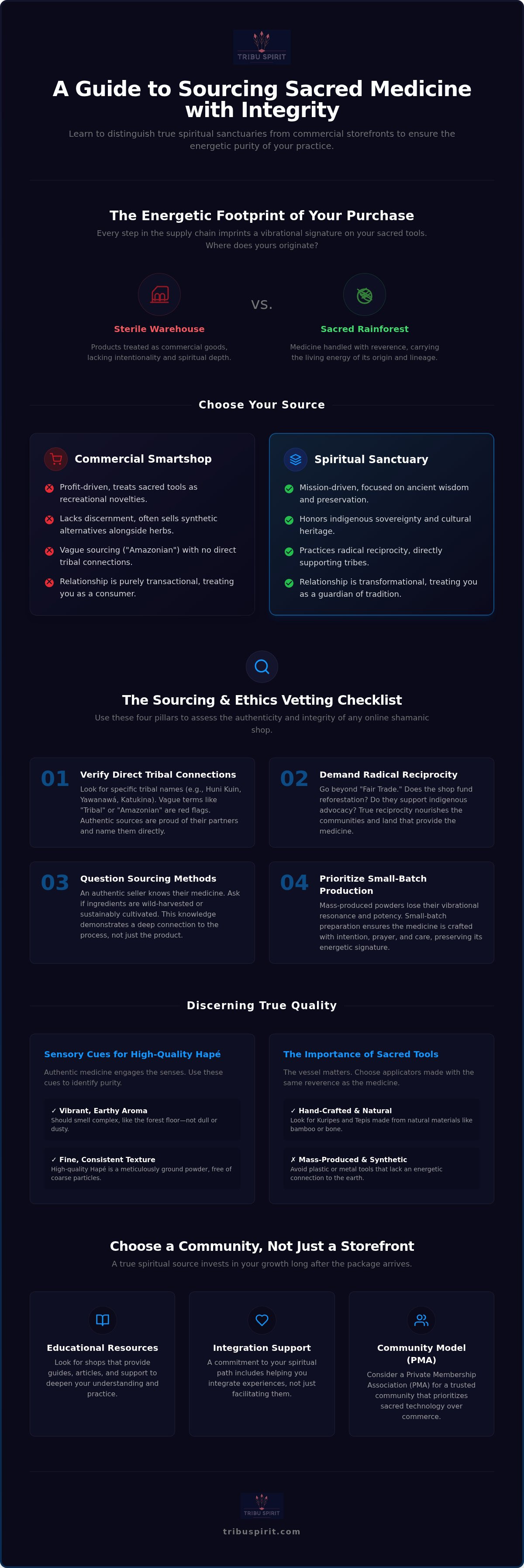
Identifying the difference between a commercial storefront and a spiritual sanctuary is crucial for any serious practitioner. Many "smartshops" treat sacred herbs like Mapacho or Mambe as recreational novelties, often listing them alongside synthetic alternatives. This lack of discernment is a significant red flag. It signals a priority for profit over the preservation of indigenous cultural heritage. Process-driven vetting online shamanic shops for authenticity reveals that a dedicated ministry or Private Membership Association (PMA) operates with a mission-driven heart. These organizations focus on ancient wisdom and indigenous sovereignty. They ensure that every purchase provides direct support for tribes, fostering a cycle of radical reciprocity that protects the medicine's origin. Choosing a ministry over a commercial shop ensures you aren't just a consumer, but a guardian of the tradition.
The Sourcing Checklist: Verifying Tribal Connections and Ethics
Authenticity begins with a name. When vetting online shamanic shops for authenticity, your first task is to look for specific tribal affiliations. Vague descriptors like "Amazonian" or "Tribal" often mask a lack of direct connection. A shop that honors the lineage will be proud to share the origin of their medicines, naming specific communities like the Huni Kuin, Yawanawá, or Katukina. This transparency isn't just about ethics; it's about truth-in-advertising. The Indian Arts and Crafts Act provides a vital framework for why verifying these claims matters, ensuring that products marketed as indigenous are truly crafted by those communities. If a seller can't name the region or the people, the medicine likely lacks the spiritual backing of a recognized lineage.
True reciprocity goes beyond "Fair Trade" labels. It requires a commitment to community empowerment that exceeds minimum wage standards. Ask yourself if the shop funds reforestation or indigenous advocacy. Are they planting Tsunu trees to replace what is harvested? This level of care indicates that the seller is a practitioner who understands the delicate balance of the forest, rather than a business owner looking for a high-margin product. When the seller acts as a conscious bridge, the energetic quality of the tool remains intact.
Interpreting 'Ethically Sourced' Claims
Don't hesitate to ask deeper questions about their amazonian plants. An authentic shop should know the preparation methods of their Hapé and whether the ingredients are wild-harvested or sustainably cultivated. Look for indicators of small-batch production. Mass-produced powders often lose their vibrant olfactory profile and vibrational resonance. True medicine follows the rhythm of the jungle. It has seasons. If a shop always has an infinite, unchanging supply of every rare blend, they might be prioritizing commercial volume over sacred integrity.
Verifying Indigenous Empowerment
Direct tribal support is the gold standard when you choose to buy hape for your personal altar. This ensures that cultural intellectual property remains with the tribes and that the financial flow supports their sovereignty. Check for active reforestation initiatives or partnerships with indigenous-led NGOs. By choosing to support a community-focused ministry, you ensure your spiritual practice remains aligned with the preservation of the Amazon. Your purchase becomes a vote for the continued wisdom of the forest's original guardians.
Discerning Quality: How to Identify Pure Hapé and Sacred Tools
Identifying pure medicine requires a marriage of intuition and education. When you are vetting online shamanic shops for authenticity, your senses become your most reliable guides. Low-quality tobacco blends often hide behind "filler" ingredients like ash from non-sacred trees or even industrial additives used to increase volume. These adulterants don't just dilute the medicine; they muddy the energetic frequency of your ceremony. High-quality Hapé is the result of a slow, meditative process. It's finely ground to a silk-like consistency, reflecting the patience and prayer of the tribal maker. If a powder feels clumpy or carries a synthetic, perfume-like scent, it's a clear indicator of a commercial product masquerading as sacred medicine.
Evaluating Hapé and Sananga Purity
To truly understand what is hape, you must observe its physical and vibrational signature. A sacred blend like hape tsunu should possess a uniform, dust-like texture that flows easily. Its color is typically an earthy grey or soft brown, never unnaturally vibrant. The olfactory profile should be clean, smelling of sacred ash and jungle tobacco. Stale medicine loses its "spirit" and its physiological potency. For liquid medicines like Sananga - Strong Strength, the stakes are even higher. These are live, sensitive essences. They require dark glass bottles and specific storage instructions to maintain their clarity. If a shop ships these in clear plastic or fails to mention temperature sensitivity, they aren't treating the medicine with the reverence it demands.
Craftsmanship of Ritual Applicators
The physical tools you use are the conduits for the medicine's energy. Any reputable guide to shamanic tools will emphasize the importance of natural materials over synthetic imitations. A Bamboo Kuripe carries the living flexibility and resilient spirit of the plant. In contrast, factory-made plastic imitations or mass-produced wooden applicators lack this soul. Authentic tools are hand-carved, often showing slight, beautiful variations that prove a human hand guided the work. This artisan intention is vital. Whether it's a Hand-Carved Shamanic Rattle or a simple applicator, the prayer infused during the carving process becomes part of the tool's technology. Vetting online shamanic shops for authenticity means looking for these marks of human connection and traditional bases like Tsunu ash, which provide the grounding foundation for your practice.
Beyond the Purchase: Assessing Reciprocity and Cultural Impact
Authenticity extends far beyond the physical vial. It lives in the ripple effect your purchase creates within the indigenous communities of the Amazon. When vetting online shamanic shops for authenticity, you must look for signs of sacred reciprocity. Does the seller act as a temporary merchant, or are they a long term ally to the tribes? True spiritual sources avoid the hollow marketing of plastic shamanism, where sacred symbols are stripped of their meaning for mere aesthetic appeal. Instead, they honor the cultural intellectual property of the people who hold the lineage. This commitment is often proven by a history of consistent support for the same villages, fostering relationships that span years rather than single transactions. You're looking for a partner in preservation, not just a vendor.
The Role of Spiritual Education
A shop that prioritizes your growth will offer more than just a checkout button. Look for an established Academy or a dedicated training program. This commitment to spiritual education signals that the seller is a dedicated practitioner, not just a business owner. Integration support is another hallmark of a serious ministry. Using medicines like Hapé or Sananga requires nuanced guidance to ensure the experience is grounded and respectful. If a teacher is unwilling to share their own path or provide ongoing support, they've failed the most basic test of spiritual leadership. You aren't just buying a substance; you're entering into a student-teacher relationship that demands transparency and humility from the source. This educational layer acts as a spiritual protection for both the practitioner and the medicine itself.
Measuring Real-World Impact
Your choice to purchase Hapé - Mulateiro or Hapé - Parica should directly fund tribal sovereignty and land rights. There's a profound difference between corporate charity and sacred reciprocity. Charity is often a one-way street; reciprocity is a balanced, rhythmic exchange that nourishes the source as much as the seeker. Authentic shops provide tangible proof of their impact, such as active reforestation initiatives that restore the very trees where these medicines are born. When vetting online shamanic shops for authenticity, check if they support the planting of Tsunu or Mapacho. By supporting a Private Membership Association (PMA), you ensure your funds bypass commercial middlemen and reach the indigenous guardians of the forest directly. This ensures that the ancient wisdom of the forest continues to thrive for generations to come. If you're ready to deepen your connection with these ancient technologies through a source that honors the earth, join our private ministry and explore our curated collection of sacred medicines.
Choosing a Community Over a Commercial Storefront
Your search for sacred tools shouldn't feel like a trip to a digital warehouse. When you're vetting online shamanic shops for authenticity, you eventually reach a crossroad. Do you want a cold transaction or a spiritual transformation? Many commercial storefronts prioritize "track and trace" logistics over the energetic lineage of the medicine. In contrast, a spiritual sanctuary offers a sense of home. It provides a space where the tools you carry are backed by a community of practitioners who walk the same path. Choosing a specialized shop that focuses exclusively on Hapé, Sananga, and Mambe ensures you're receiving wisdom from experts, not generalists who treat these medicines as just another SKU in a vast inventory.
A Private Membership Association (PMA) acts as a sacred architecture for this exchange. Unlike a standard corporation, a ministry operates under a mission of protection and preservation. This structure ensures that the medicines remain within a circle of respect and that every exchange supports the indigenous sovereignty of the forest. Before you commit to a purchase, use this final checklist to ensure your intentions align with the source:
- Is the shop a ministry or a corporation? Look for a mission that prioritizes spiritual growth over mass-market profit.
- Can they name the specific tribe and lineage? Authentic sources are transparent about their connections to the Huni Kuin, Yawanawá, or other specific communities.
- Is there an educational component? A trustworthy source teaches you how to use the medicine with reverence.
- Are the tools hand-crafted? Ensure your Bamboo Kuripe or Shamanic Rattle is made by human hands, not a factory.
- Does the purchase fund reciprocity? Verify that a portion of the proceeds goes directly toward reforestation or tribal advocacy.
The Tribu Spirit Ministry Model
Our ministry is built on the belief that these medicines are "Sacred Technology" intended for deep inner work. We don't just provide Hapé - Tsunu; we offer a gateway to ancient wisdom through our Academy. This approach ensures that every member feels supported during their transformation. By vetting online shamanic shops for authenticity, you'll find that our commitment to the tribes of the Amazon is woven into every vial. We act as a conscious bridge, ensuring the spirit of the forest remains vibrant and protected from commercial dilution.
Making Your First Authentic Purchase
Begin your journey with a curated selection that resonates with your current needs. Whether you're drawn to the grounding energy of Hapé - Tsunu or the structural integrity of a hand-carved Bamboo Kuripe, let your choice be guided by intention. Take a moment to breathe and connect with the spirit of the plant before you decide. Your vetting process is the first ritual of your practice. It sets the tone for the healing that follows. If you're ready to move beyond the commercial cart and enter a space of true reciprocity, Join the Tribu Spirit community and explore our sacred medicines.
Step Into a Practice of Radical Reciprocity
Honoring the ancient wisdom of the forest begins with the integrity of your source. Vetting online shamanic shops for authenticity isn't just a practical necessity; it's a spiritual commitment to the lineage of the medicines you carry. By prioritizing direct tribal connections, seasonal small-batch production, and hand-carved tools, you ensure your practice remains grounded in truth. Remember that true reciprocity isn't just about a purchase; it's about the continued life of the Amazon and its people.
At Tribu Spirit, we operate as a Private Ministry and Academy dedicated to preserving these sacred traditions. Our curated selection of ethically sourced Hapé - Tsunu and ritual tools is backed by active reforestation initiatives that give back to the source. When you choose a community that values education over commerce, your personal transformation becomes part of a larger healing for the world. We invite you to walk this path with us, knowing your tools are as pure as your intentions. Explore Our Curated Collection of Sacred Hapé and Ritual Tools and begin your journey with confidence.
Frequently Asked Questions
How can I tell if an online shamanic shop is ethically sourcing its Hapé?
Look for shops that name the specific tribe and region of origin for every blend. Ethical sourcing isn't a vague claim; it's a documented relationship with communities like the Katukina or Huni Kuin. When you are vetting online shamanic shops for authenticity, check if the seller provides details on the maker's lineage. This transparency ensures the medicine is prepared with traditional prayers rather than in a commercial facility.
What are the red flags of 'fake' or inauthentic plant medicines?
Red flags include synthetic fragrances, clumpy textures, or medicines sold alongside recreational synthetics. Authentic Hapé should have a clean, ashy scent and a fine, dust-like consistency. If Sananga is shipped in clear plastic or lacks storage instructions, it's likely a commercial-grade product. Inauthentic tools often use factory-molded plastic instead of natural Bamboo Kuripes or hand-carved wood, stripping the instrument of its spirit.
Is it cultural appropriation to buy Hapé and Sananga online?
It isn't appropriation if you approach the medicine with humility and practice radical reciprocity. Appropriation happens when sacred tools are used for recreation or aesthetic trends without honoring their origin. By choosing a source that directly funds tribal sovereignty and teaches respectful application, you become a student of the tradition. Your purchase supports the preservation of the culture rather than its exploitation.
Why is the price of authentic shamanic medicine higher than on mass marketplaces?
Authentic prices reflect the true cost of small-batch production and direct tribal empowerment. Unlike mass-produced goods, sacred medicines are harvested by hand and transported from remote Amazonian regions. This higher value ensures that indigenous makers receive fair compensation that supports their village’s independence. It also funds vital reforestation efforts, replacing the very plants used in your ceremony to maintain the jungle's delicate balance.
What is the difference between a shamanic 'smartshop' and a spiritual ministry?
A spiritual ministry operates as a Private Membership Association (PMA) focused on ancient wisdom and transformation. In contrast, a smartshop is a commercial entity that often treats sacred plants as recreational novelties. While smartshops prioritize high-volume turnover, a ministry like ours focuses on the Academy model. We provide the education and integration support necessary for a safe and respectful spiritual journey.
Can I trust shamanic tools sold on large marketplaces like Etsy or Amazon?
Large marketplaces often lack the specialized oversight required for sacred technology. While you might find aesthetically pleasing items on Etsy, there's rarely a guarantee of material integrity or ethical sourcing. Many tools found there are machine-made imitations rather than hand-carved instruments infused with prayer. For genuine medicines like Hapé - Parica, a specialized ministry is always more reliable than a generalist platform with no quality control.
How do I know if my purchase is actually supporting indigenous tribes?
Verify that the shop has long-term, documented partnerships with specific indigenous families or villages. Authentic sellers often share updates on community projects they fund, such as building schools or protecting land rights. When vetting online shamanic shops for authenticity, look for a reciprocity section on their site. If they can't explain exactly how your funds reach the tribes, the support is likely non-existent.
What should I look for in a shop's reforestation or reciprocity claims?
Look for concrete data on reforestation, such as the specific number of Tsunu or Mapacho trees planted. Vague eco-friendly badges are common, but authentic reciprocity involves active participation in the jungle's renewal. A trustworthy source will name their reforestation partners and explain how their business model protects the Amazon. This level of specificity proves that the shop values the forest's future more than its own profit margins.