
In the quiet depths of the Amazonian rainforest, tobacco isn't viewed as a modern vice, but as the "Grandfather Spirit," a foundational pillar of spiritual clarity. Many seekers today feel a deep call toward indigenous medicine yet find themselves hesitating due to the shadow of commercial cigarettes. It's completely understandable to feel a sense of caution or even fear regarding nicotine when the only version you've known is industrial and addictive. However, truly understanding the connection between hapé and tobacco requires us to step away from the laboratory and back into the sacred grove. Here, the plant is a teacher, a protector, and a vital carrier for the subtle energies of the forest.
This article invites you to rediscover this ancient relationship through a lens of reverence and botanical truth. You'll learn the vital distinctions between sacred Mapacho and the chemical-laden products of the modern market, ensuring you feel safe and informed before your next ceremony. We'll explore how the tobacco spirit provides the energetic structure for other plant medicines to flourish within the blend. By the end, you'll see why this synergy is the key to a deeper, more grounded shamanic practice that honors both your body and the ancestral wisdom of the earth.
Key Takeaways
- Understand that traditional Hapé is an inseparable union of medicinal tree ashes and sacred tobacco, forming the essential foundation for deep spiritual work.
- Discover how the connection between hapé and tobacco relies on ancient Nicotiana rustica, a wild ancestor far removed from the hybridized and chemical nature of commercial products.
- Learn to view tobacco as the "Master Carrier," a bridge between worlds that delivers the healing properties of forest plants directly into your energetic system.
- Distinguish between ceremonial ritual and modern habit to ensure your practice remains a conscious path toward clarity rather than a cycle of routine.
- Identify the sacred technology needed for your practice, including how to use tools like the Kuripe to honor the tobacco spirit with proper intention.
Defining the Sacred Union: What is the Connection Between Hapé and Tobacco?
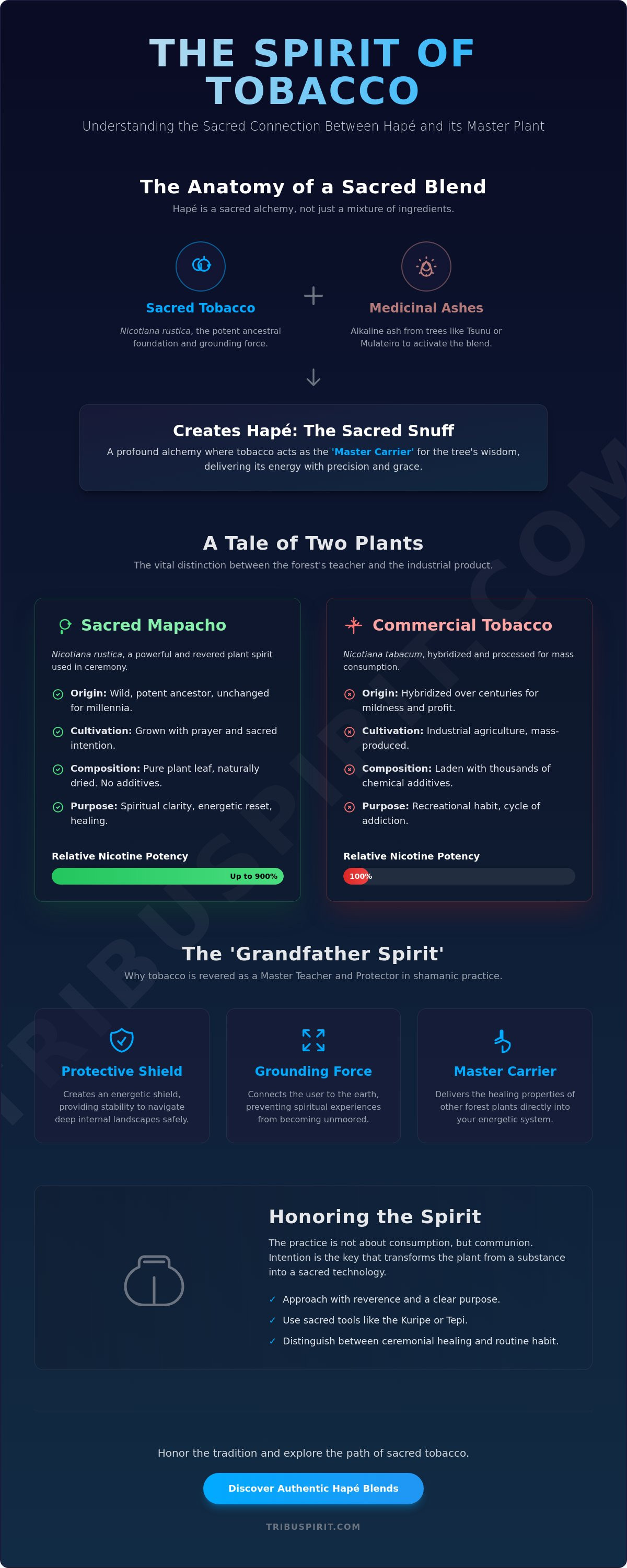
To truly understand the essence of Hapé, one must first look beyond the physical powder and into the spirit it carries. The connection between hapé and tobacco isn't merely a matter of ingredients; it's a sacred architecture that has supported indigenous cultures for millennia. In the heart of the Amazon, Hapé is crafted as a complex, ceremonial snuff that blends potent Mapacho with the alkaline ashes of medicinal trees. Without this specific tobacco base, the mixture simply isn't Hapé. It's the grounding force that allows the medicine to land in the body with both precision and grace.
Within the shamanic tradition, tobacco is revered as the "Grandfather" spirit. It acts as a protective energetic shield, providing the stability needed to navigate deep internal landscapes. When the tobacco leaf meets the medicinal ash, a profound alchemy occurs. The ash raises the pH of the blend, making the plant's properties more bioavailable, while the tobacco provides the "carrier" that delivers the tree's wisdom into the seeker's consciousness. It's a partnership of strength and subtlety.
The Anatomy of a Sacred Blend
The foundation of every authentic blend is Nicotiana rustica, a wild and potent ancestor of the tobacco varieties common in the West. Unlike commercial plants, this sacred leaf is grown and harvested with prayer. Artisans then introduce medicinal ashes, such as those from the Tsunu or Mulateiro trees. These ashes are essential partners that define the energetic "flavor" of the medicine. The fine-grinding process is a meditative act, often requiring days of rhythmic labor to ensure the powder is as light as air. This delicate texture is vital for the medicine to be received comfortably through the breath.
Hapé vs. Rapé: Understanding the Terminology
You'll often hear this medicine called "Rapé" in Brazil or "Hapé" in other regions. These are linguistic echoes of the same ancestral truth. For many Westerners, the term "tobacco snuff" can be misleading because it carries the weight of recreational habit. In a ceremonial context, we always refer to it as "medicine." This distinction matters deeply. It's about the intention behind the ritual. Calling it a medicine honors the lineages that have preserved these traditions and recognizes the internal transformation it facilitates. It's a tool for the spirit, not a product for the shelf.
Nicotiana Rustica vs. Commercial Tobacco: A Vital Distinction
To many in the West, tobacco is a word synonymous with habit, health risks, and industrial processing. However, when we explore the sacred forest traditions, we find a plant that bears little resemblance to the contents of a commercial cigarette. The fundamental difference lies in the species itself. While the global industry relies on Nicotiana tabacum, traditional Hapé is built upon the foundation of Nicotiana rustica, also known as Mapacho. This wild, potent ancestor is the key to understanding the connection between hapé and tobacco as a path of healing rather than a source of depletion.
Commercial tobacco has been hybridized over centuries to be mild, sweet, and easy to inhale in large quantities. This modification serves mass production but strips the plant of its original strength. In contrast, Mapacho remains in its primal, unadulterated state. It's a plant that demands presence. When you approach this medicine, you aren't engaging with a recreational product; you're entering into a dialogue with a powerful biological and spiritual force that has remained unchanged for thousands of years.
The Botanical Power of Mapacho
The physical potency of Mapacho is rooted in its chemistry. Scientific analysis shows that Nicotiana rustica can contain up to nine times more nicotine than commercial varieties. While this high alkaloid content might seem daunting, it serves a specific shamanic purpose. In the right hands, this intensity acts as a catalyst for the human nervous system, forcing a "reset" that clears mental fog and resets the energetic body. Indigenous traditions view Mapacho as a "Master Teacher" because its strength requires the practitioner to stay grounded and respectful. Every leaf is grown in the Amazon with prayer and intention, ensuring the plant’s spirit remains vibrant and clear.
Why Additives Change the Spirit of the Plant
The modern tobacco industry often introduces over 3,000 chemical additives into its products. These range from burn-accelerants to artificial flavorings and preservatives. These substances don't just harm the lungs; they fracture the plant's spiritual "signature." Using industrial tobacco often leads to a scattered, anxious energy that pulls the spirit away from the center. Authentic Hapé, however, honors the purity of Traditional Tobacco by excluding all synthetic fillers. Mapacho is the unadulterated heart of shamanic tobacco. By removing the chemicals, the medicine can work with the body's natural rhythms rather than against them.
This purity is why Mapacho feels centering while cigarettes feel agitating. One scatters your focus; the other brings you home to yourself. If you're ready to experience the difference that ancestral purity makes, beginning your journey with authentic Mapacho ensures your practice is built on a foundation of respect and clarity. It's a return to the source, where the plant is once again a sacred ally.
The Shamanic 'Grandfather': Why Tobacco is the Master Carrier
In the deep lineage of Amazonian healing, tobacco is never seen as a solitary actor. It's the Grandfather Spirit, a wise elder who holds the space for all other plant wisdom to arrive safely. This is the essence of the connection between hapé and tobacco: the leaf provides the energetic vehicle, while the medicinal ashes provide the specific direction of the healing. Without the tobacco spirit, the medicine would lack the "legs" to travel into the deepest layers of our being. It acts as a bridge, anchoring the ethereal insights of the spirit world into the physical density of the Earth.
Indigenous tribes often use Hapé to clear "Panema," a term describing a cloud of heavy energy, stagnation, or persistent bad luck that can settle over a person's life. The tobacco spirit acts like a broom for the soul. It sweeps away these energetic densities, leaving the practitioner clear and revitalized. This process is amplified by the "Sopro" or sacred blow. When the breath of the giver meets the spirit of the tobacco, it creates a vibrational frequency capable of shifting internal blockages that have been held for years. It's a moment of total presence.
Opening the Portals of the Body
The medicine moves swiftly through the nasal passages, stimulating the nervous system and clearing the mental field. Many practitioners find that this ritual helps in decalcifying the pineal gland, effectively opening the third eye to more subtle realms of perception. Because tobacco is so deeply grounding, it serves as a vital stabilizer during intense spiritual downloads or visions. It ensures that as you reach for the heights of consciousness, your feet remain firmly planted in the soil. It's the anchor that prevents the spirit from drifting too far from the body.
The Synergy of Tree Ash and Leaf
The true magic lies in the chemical and spiritual synergy between the tobacco leaf and the alkaline tree ash. The ash isn't just a filler; it activates the alkaloids in the Traditional Sacred Tobacco, allowing the medicine to cross the blood-brain barrier with efficiency. For instance, Tsunu Hapé is renowned for its high ash content, which provides an exceptionally grounding and clearing experience. This blending requires "Kura," a focused spiritual intent. It's this intention that weaves the two elements into a single, unified medicine capable of profound transformation. Every pinch of Hapé is a testament to this ancestral chemistry.
Healing vs. Habit: Addressing Concerns About Tobacco in Hapé
When we speak about the connection between hapé and tobacco, we must address the concern that lingers in many modern minds: the fear of addiction. This hesitation is a natural response to a society that has seen tobacco stripped of its sanctity and turned into a commercial commodity. However, the path of the medicine is fundamentally different from the cycle of a habit. While a cigarette is often used as an unconscious escape or a quick hit of dopamine, Hapé is a call to total presence. It's a mirror that reflects your internal state rather than a crutch to hide from it.
The pharmacological profile of Nicotiana rustica also sets it apart from industrial tobacco. Beyond its high nicotine content, Mapacho is rich in beta-carbolines, including harmala alkaloids that act as natural MAOIs. These compounds don't just create a fleeting "buzz"; they facilitate a deeper, more sustained state of introspection. Because the experience is often accompanied by a physical purge or an intense sensory shift, the body naturally respects the plant. You don't "crave" a purge. Instead, you approach it with the gravity it deserves. Addiction is often a result of a lost connection to the plant's spirit.
Ritual Integrity vs. Recreational Use
Using Hapé as a quick fix for daily stress without a sacred ritual can cloud the medicine's clarity. When the ritual is removed, the plant spirit may withdraw its guidance, leaving only the physical stimulation. The "Grandfather" spirit is a teacher, and teachers require periods of integration. If you find yourself reaching for the medicine out of boredom or simple routine, it's a sign to pause. True healing happens in the space between ceremonies, where the lessons of the tobacco are woven into your daily life.
Safety and Contraindications
Because Hapé is a potent botanical tool, it's not for everyone. Those with serious heart conditions, high blood pressure, or individuals who are pregnant should avoid tobacco-based medicines due to the rapid shift they cause in the circulatory system. Purity is your greatest safeguard. Always ensure your medicine is sourced from ethical, prayer-aligned communities that honor the forest. Begin your journey with intention by exploring our ancestral Mapacho and Hapé blends to ensure you're working with the highest vibrational quality. Respecting these boundaries ensures your practice remains a path of expansion rather than one of depletion.
Honoring the Spirit: How to Approach Your Sacred Tobacco Practice
Approaching Hapé is less like taking a supplement and more like visiting a wise elder. To truly benefit from this medicine, you must initiate a conscious relationship with the spirit of the tobacco. This begins the moment you open your container. Take a breath. Sit in stillness. Acknowledge the lineage and the hands that prepared the blend. By treating the powder with reverence, you strengthen the connection between hapé and tobacco within your own energetic field. It's a dialogue, not a transaction. When you respect the plant, the plant respects you in return.
Your tools are the physical bridges for this spiritual work. Choosing the right Kuripe or Tepi is a deeply personal process. These instruments are sacred technology, designed to direct the medicine with precision and intent. Once the medicine is administered, the most vital part of the ritual begins: the silence. In the minutes following the blow, your breath becomes a tool for stabilization. Allow the tobacco to settle your thoughts. Don't rush to move. Let the medicine's warmth permeate your system as you listen to the subtle shifts in your awareness. This stillness is where the healing actually takes root.
Setting a Ceremonial Intention
Before you use your applicator, hold your intention in your heart. You might ask the tobacco spirit for clarity on a specific challenge or for the strength to release an old emotional burden. In these early stages, remember that less is more. A small, focused amount of sacred tobacco is often more effective than a large, overwhelming dose that leaves you struggling to breathe. The "Sopro," or the sacred blow, is the physical manifestation of your prayer. Whether you use a short, sharp blow for clearing or a long, gentle one for grounding, your breath carries your intent into the spirit world. It's the bridge between your will and the plant's power.
Post-Ceremony Integration
Integration is the bridge between the ceremony and your daily life. After the intense presence of the tobacco spirit begins to soften, take time to ground yourself. Drink pure water. If possible, step outside and place your bare feet on the earth. Journaling your insights during this "afterglow" can help anchor the lessons you've received before they fade into the noise of the day. The tobacco spirit often leaves a lingering sense of peace and mental sharpness that can stay with you for hours. To deepen your understanding of these master teachers, explore our Amazonian plants collection and find the blend that resonates with your current path. Every ceremony is a step toward a more centered version of yourself.
Deepening Your Path with the Grandfather Spirit
Embracing the ancestral path of Hapé means stepping into a world where plants are respected as living teachers. By understanding the connection between hapé and tobacco, you've moved past the misconceptions of the modern world and closer to the heart of the Amazon. You now know that the synergy of sacred Mapacho and medicinal ashes creates a bridge for profound grounding and spiritual clarity. This practice isn't about routine. It's about a conscious return to your center.
When you're ready to integrate these master teachers into your life, choosing a source that honors the earth is essential. We invite you to Discover Ethically Sourced Hapé and Sacred Tools at Tribu Spirit. Our offerings are sourced directly from indigenous tribes and supported by our Private Ministry & Academy, ensuring every blend carries the true frequency of the forest. Your choice also supports vital reforestation initiatives in the Amazon, giving back to the soil that sustains us. May your journey be filled with clarity and quiet strength.
Frequently Asked Questions
Is the tobacco in Hapé the same as the tobacco in cigarettes?
No, the tobacco found in authentic Hapé is fundamentally different from the tobacco used in commercial cigarettes. While cigarettes rely on Nicotiana tabacum, which is hybridized for mass production and mildness, Hapé is crafted from Nicotiana rustica, also known as Mapacho. This wild ancestor is grown without pesticides or industrial additives, preserving its original spiritual signature and botanical purity.
Can I get addicted to Hapé because of the tobacco content?
While nicotine is a naturally occurring alkaloid in the medicine, the ceremonial context of Hapé significantly changes the potential for habit-forming behavior. The intense physical experience and the potential for a "purge" naturally discourage the casual, recreational use seen with cigarettes. When you maintain the sanctity of the ritual, you engage with the plant as a teacher rather than a crutch for mindless habit.
Why is tobacco necessary in a Hapé blend?
Tobacco serves as the "Master Carrier" and the energetic foundation of the medicine. In the Amazonian tradition, the connection between hapé and tobacco is foundational because the tobacco spirit provides the grounding and protection needed to receive other plant wisdom. It acts as the vehicle that delivers medicinal tree ashes deep into your system, ensuring the experience remains anchored and focused.
What is the difference between Nicotiana rustica and Nicotiana tabacum?
The primary difference lies in their potency and ancestral lineage. Nicotiana rustica is a wild, potent variety that can contain significantly higher nicotine levels than the hybridized Nicotiana tabacum. Beyond chemistry, rustica is considered a "Master Teacher" plant in shamanic traditions, held in high regard for its ability to clear energetic density and provide deep spiritual grounding during ceremony.
How often can I sit with Hapé without disrespecting the tobacco spirit?
There's no universal schedule for Hapé, as every individual's path is unique. The key is to ensure every session is approached with a clear intention and a sense of ritual. If you find yourself reaching for the medicine out of boredom or simple routine, it's a sign to pause and integrate. Respecting the spirit means listening when the medicine tells you it's time to step back and reflect.
Will Hapé show up on a nicotine test?
Yes, Hapé will result in a positive nicotine test. Because Nicotiana rustica is a potent form of tobacco, its alkaloids are absorbed into your system and will be detectable as nicotine or cotinine in standard screenings. If you're subject to workplace or medical testing for nicotine, it's important to be aware that this sacred medicine will be identified by those tests.
Does Hapé contain the same harmful chemicals as commercial tobacco?
Authentic Hapé is entirely free from the thousands of synthetic additives, burn-accelerants, and chemical flavorings found in commercial tobacco products. It's a pure blend of organic tobacco leaf and medicinal tree ashes prepared through traditional methods. By removing the industrial chemicals, the medicine works in harmony with your body's natural energetic field rather than causing the agitation associated with cigarettes.
How do I know if I am using Hapé too frequently?
You may be overusing the medicine if your sessions start to feel like a "quick fix" rather than a sacred inquiry. Signs of frequency issues include using it without a clear intention, feeling scattered rather than grounded, or noticing a diminished sense of reverence for the ritual. Understanding the connection between hapé and tobacco as a spiritual dialogue helps you recognize when you need more time for integration and less time with the applicator.