

What if the true preparation for your sacred journey began not in the maloca, but in the quiet steam of your own kitchen? Most seekers feel a sense of dread when they encounter the strict boundaries of a traditional dieta. You might feel restricted by the sudden absence of salt, sugar, and spice, or find yourself staring at a bowl of plain grains with a heavy heart. It's common to feel that these restrictions mean a loss of joy. However, these shamanic diet recipes are not about deprivation. They are a deliberate recalibration of your senses, designed to thin the veil between your physical vessel and the spirit world.
Key Takeaways
- Understand how a traditional 'Dieta' purifies the physical vessel to heighten sensitivity and harmonize your energetic body with plant spirits.
- Master the "Golden List" of nourishing staples like quinoa and tubers while learning why avoiding salt and sugar is vital for spiritual openness.
- Explore tradition-honoring shamanic diet recipes, such as the Morning Grounding Bowl, that prove flavor-neutral cooking can be deeply soul-satisfying.
- Learn to transform your kitchen into a sacred space by integrating mindful ritual and energetic cleansing into your daily food preparation.
- Discover how sacred medicines like Hapé and Mambe complement your physical cleanse by sustaining focus and deepening your spiritual connection.
What is a Shamanic Diet and Why Does it Matter?
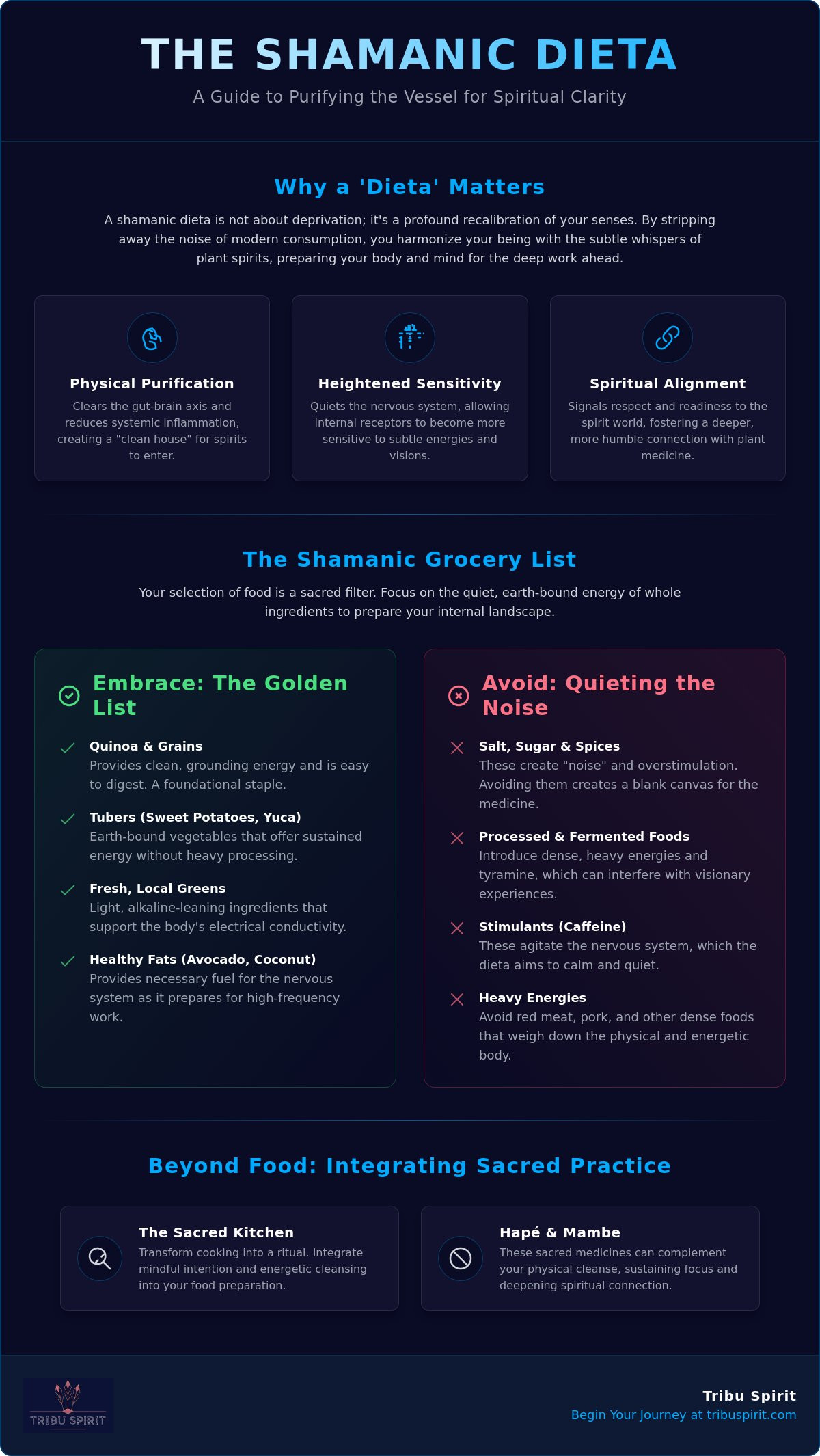
A 'Dieta' isn't just a restrictive meal plan; it's a profound process of physical and energetic purification designed to harmonize your being with the subtle whispers of plant spirits. By stripping away the noise of modern consumption, you create a hollow bamboo, a vessel ready to be filled with ancient wisdom. When you begin exploring shamanic diet recipes, you're essentially learning a new language of vibration. It's about more than just what's on the plate. It's about the frequency you carry into your ceremony and the respect you show for the medicine's path.
To understand the depth of this practice, one must look at the roots of What is Shamanism in its original context. It's a system where every action is a ritual act. Spiritual hygiene dictates that the density of the food we consume directly impacts the clarity of our inner sight. If the body is bogged down by heavy, processed energies, the visions remain clouded and the connection feels distant. Eating becomes a form of prayer, a steady preparation that signals to the spirit world that you're ready to listen with an open, humble heart.
There's a biological underpinning to this spiritual architecture that bridges the gap between the mystical and the physical. Reducing tyramine, fermented foods, and stimulants isn't an arbitrary punishment. It's a way to quiet the nervous system and open the pathways that allow for deeper endogenous DMT experiences. By lowering the threshold of external stimulation, your internal receptors become incredibly sensitive. This physiological thinning is what allows the medicine to work with precision rather than struggling against a wall of chemical interference. Integrating specific shamanic diet recipes into your routine helps maintain this delicate balance, ensuring your spirit remains receptive to the light.
The Tradition of 'La Dieta' in the Amazon
Indigenous curanderos in the Amazon have used isolation and restricted eating for millennia to 'hear' the spirits of the forest. These powerful master plants require a clean, quiet house to enter and share their secrets. While most of us can't retreat into the jungle for months at a time, we can bring this reverence into our modern urban lives. It starts with choosing ingredients that honor the spirit, shifting our focus from mindless convenience to conscious connection. We don't need to be in the rainforest to practice the humility and discipline that this tradition demands.
Physiological Benefits of Shamanic Eating
Shamanic eating focuses on reducing systemic inflammation and clearing the gut-brain axis, which often becomes cluttered by modern diets. When we choose alkaline-leaning ingredients, we support the body's electrical conductivity, which is essential for the high-frequency energy work that occurs during ritual. This physical lightness translates directly into emotional resilience and mental clarity, providing a stable foundation for deep exploration; to further sustain this vitality, you might explore Women's Health Supplements that promote long-term hormonal and physical balance. Post-Diet Integration is the essential bridge that ensures the changes you've made during this process become the foundation for lasting transformation in your life.
The Shamanic Grocery List: What to Embrace and Avoid
Walking through the aisles of a market during your preparation becomes an exercise in deep mindfulness. You aren't just looking for sustenance; you're seeking vibrational alignment. The ingredients you choose for your shamanic diet recipes act as the building blocks for your upcoming experience. This selection process is a sacred filter. It requires you to look past the bright, artificial lures of modern food and focus on the quiet, earth-bound energy of whole ingredients. By choosing foods that are "flavor-neutral," you allow your internal landscape to become a blank canvas, ready for the intricate brushstrokes of plant medicine.
The "Golden List" of the dieta focuses on purity and ease of digestion. Quinoa, tubers like sweet potatoes and yuca, and fresh, local greens form the foundation of this practice. These foods provide grounding energy without the heavy, dense baggage of processed alternatives. Research on the shamanic dieta suggests that this specific selection isn't merely about nutrition. It's a traditional method of establishing a spiritual alliance with the plant kingdom. When your vessel is clean, the plants can speak more clearly. You'll find that healthy fats, such as avocado or fresh coconut, provide the necessary fuel for your nervous system as it prepares for high-frequency work.
On the other hand, the "Shadow List" identifies substances that dull your sensitivity or ground your energy too aggressively. Salt and refined sugar are the primary obstacles. They create a "loud" physical experience that can drown out subtle spiritual insights. Pork is strictly prohibited in almost every lineage because of its dense, complex vibrational history. Additionally, you must be wary of the fermentation factor. Aged foods like soy sauce, hard cheeses, and even some vinegars contain tyramine. This can lead to dangerous interactions with certain sacred plants. Instead of heavy salts, embrace the vibrancy of fresh cilantro and ginger to bring life to your meals. As you cleanse your physical palate, you may find that your energetic sensitivity heightens, making the subtle notes of ceremonial Hapé feel more profound and resonant.
Protein Sources for the Modern Seeker
Nourishing your body doesn't require heavy meats that tie your energy to the lower realms. Plant-based powerhouses like lentils, which remain an accessible staple at approximately 0.15 dollars per pound, offer clean strength. Organic tofu and chickpeas are also excellent choices for maintaining your physical integrity. If you feel the need for animal protein, egg whites or small portions of wild-caught white fish can be included. These options provide structure without the "heavy" grounding effect of red meat, which can make your spirit feel tethered during deep meditation.
Sweetness Without Sugar
Finding sweetness during a dieta is a lesson in subtlety. Focus on low-glycemic fruits like green apples and tart berries to satisfy the palate without causing a spike in your blood sugar. Coconut water is a gift in this process, providing natural hydration and a delicate, earthy sweetness. While honey and maple syrup are natural, they should be used sparingly or avoided entirely during the most intense phases of your preparation. True sweetness during this time comes from the clarity of your mind and the lightness of your step.
Nutrient-Dense Shamanic Recipes for Your Practice
Flavor-neutral cooking is an art form that invites you to find the "soul" within simple, unadorned ingredients. When you strip away the aggressive masks of salt and processed sugars, the true essence of the earth begins to reveal itself to your senses. These shamanic diet recipes are designed to sustain your physical energy while keeping your spiritual channels clear and receptive. You'll find that a "Morning Grounding" bowl of organic quinoa and steamed papaya provides a gentle, earthy start to your day. For a mid-day boost, a "Rainforest Vitality" salad featuring earthy beets, creamy avocado, and a bright lime-herb dressing offers grounding nutrients without heaviness. Even a simple "Ancestral Tuber" mash, made from sweet potatoes and a delicate coconut milk reduction, can feel like a profound offering to your body.
Adopting these culinary rituals is a core component of the Amazonian Shamanic Diet, where the act of preparation is as important as the consumption itself. By choosing ingredients that vibrate with life-force, you're actively participating in your own healing process. This mindful approach ensures your vessel remains light and your mind stays focused during the deep work of ceremony. It's about shifting from eating for entertainment to eating for enlightenment.
Breakfast: Quinoa and Warm Fruit Compote
Begin your morning by slow-simmering organic quinoa in unsweetened coconut milk until it reaches a soft, porridge-like consistency. This gentle cooking method ensures you retain the maximum life-force, or Prana, within the grain. Fold in a handful of fresh blueberries and a generous dusting of cinnamon. Cinnamon provides a natural, comforting warmth that satisfies the palate without the need for inflammatory sugars. At approximately 2.12 dollars per pound for quinoa, this is an accessible way to ground your energy for the day ahead.
Lunch: The Heart-Opening Avocado and Lentil Plate
Lunch should be your largest meal during the preparation phase, providing the necessary fuel for your afternoon meditations. Combine beluga lentils with slices of ripe avocado, fresh basil, and a sprinkle of hemp seeds for a complete protein profile. Since salt is absent, use the "no-salt hack" by combining fresh lemon zest with high-quality, cold-pressed olive oil. This pairing creates a depth of flavor that highlights the natural nuttiness of the lentils and the richness of the avocado, leaving you feeling satisfied and heart-centered.
Dinner: Steamed White Fish with Turmeric Roots
Keep your evening meal light to encourage deep, lucid dreaming and a restful night. Steam a piece of wild-caught white fish, such as Cod, alongside fresh turmeric roots, bok choy, and parsnips. Turmeric plays a vital role as a potent anti-inflammatory, preparing your physical tissues for the high-intensity energy work of the coming days. A light dinner ensures your digestive system isn't overworked, allowing your consciousness to remain buoyant as you drift into the dream world.
The Sacred Kitchen: Cooking as a Ritual Act
Your kitchen is a portal, a sanctuary where the raw elements of the earth are transformed into life-sustaining medicine. While selecting the right ingredients is the foundation, the energy you bring to the preparation is what truly activates your shamanic diet recipes. When you approach the stove with a scattered mind, the food absorbs that static. Conversely, when you cook with presence, every stir of the wooden spoon becomes a prayer. This is the art of the sacred kitchen. It's a practice of slowing down until your heartbeat syncs with the rhythm of the blade against the cutting board. Silence is a nutrient here. We often drown out our intuition with podcasts or music, but the dieta asks for a different kind of listening. By removing media from your cooking space, you allow the plants to speak to you before they ever reach your lips.
Before you begin, it's essential to clear the energetic residue of the day. You can use specific shamanic tools like Mapacho smoke or a sacred spray to reset the room's vibration. This physical act of cleansing signals to your nervous system that you're entering a ritual space. As you chop your vegetables, treat the manual labor as a meditation. Feel the texture of the organic tubers and the crispness of the greens. Speak to your ingredients. Thank the quinoa for its grounding strength and the lentils for their nourishment. This conscious dialogue weaves your intention into the very fibers of the meal, ensuring that your shamanic diet recipes support your spiritual opening with maximum potency.
Setting the Altar in Your Kitchen
You don't need a massive shrine to invite the sacred into your meal prep. Placing a small shamanic rattle or a clear quartz crystal near your workspace creates a focal point for your attention. This small altar serves as a reminder of the elemental connection present in every dish. You're working with the fire of the stove, the water in the pot, and the earth in the roots you're peeling. Before taking your first bite, pause for a moment of profound gratitude. This simple "gratitude pause" bridges the gap between the physical act of eating and the spiritual purpose of the dieta.
Breathwork and Prep
Your emotional state is the most influential seasoning in your kitchen. If you feel rushed or anxious, that frequency taints the nourishment you're creating. We recommend practicing a few minutes of shamanic breathwork to center your energy before you even touch a knife. This transition from "doing" to "being" is what differentiates a chore from a ritual. As you breathe deeply, imagine your hands becoming conduits for healing light. Every meal becomes an opportunity to practice the presence you'll need in the ceremony space. If you feel called to deepen your ritual practice, you can explore our collection of hand-crafted shamanic tools to support your journey.
Beyond Food: Integrating Hapé and Mambe into Your Diet
Purification doesn't end when you put down the fork. While the physical nourishment provided by your shamanic diet recipes creates a stable foundation, the integration of sacred forest medicines deepens the architecture of your preparation. These substances aren't mere supplements; they're spiritual nutrients that bridge the gap between the material and the ethereal. A disciplined diet acts as a tuning fork for your body. When you remove the heavy interference of salt and sugar, you become remarkably sensitive to the subtle frequencies of Amazonian plants. This synergy allows the medicine to work with surgical precision, cutting through mental static that might otherwise remain untouched.
Using Ambil after a light shamanic meal can provide a necessary anchor. This concentrated tobacco paste helps ground the energy back into the physical body, ensuring you remain present and centered after a day of deep contemplation. It's a practice of balance. You're thinning the veil through food while maintaining your roots through the tobacco spirit. This dual approach ensures that your journey is both expansive and safely contained within your physical vessel.
Hapé and Appetite: Finding Balance
Cravings are often just energetic echoes of old habits. When mental fog or the desire for restricted foods arises, sitting with Hapé Tsunu can clear the field. Instead of reaching for a snack, the ritual of the blow invites you to confront the source of the hunger. You'll find that a clean physical vessel amplifies Hapé's effects, allowing the grounding presence of the tobacco and ash to permeate your being more fully. It's a way to find stillness in the moments when the ego tries to reclaim its old patterns through the tongue.
Mambe as a Ceremonial Ally
Mambe, a traditional blend of coca leaf and cecropia ash, serves as a vital ally during "word-circles" and long periods of fasting. It provides a steady stream of clarity and physical endurance, which is particularly helpful if your shamanic diet recipes leave you feeling lighter than usual. Mambe serves as a powerful tool for elevating the vibration of the throat chakra, helping you speak your truth with precision and grace during the diet. Unlike the jagged spikes of caffeine, it offers a smooth, sustained focus that honors the slow, meditative rhythm of the dieta process.
The Path of Tribu Spirit
Your journey is deeply personal, but it's also connected to the wider web of the forest. We invite you to explore ethically sourced medicines that honor the traditions they come from. At Tribu Spirit, we believe the connection between reforestation, indigenous support, and your personal healing is inseparable. When you choose medicine that's been handled with respect, you bring that integrity into your own process. Discover our collection of sacred medicines to support your dieta and ensure your preparation is as potent and authentic as possible.
Embracing the Path of the Clean Vessel
Your preparation is a sacred dialogue between your physical body and the spirit world. By embracing these shamanic diet recipes, you've begun to thin the veil and prepare your temple for deep, transformative work. You now understand that every ingredient chosen and every mindful chop in the kitchen is an act of devotion. This process of purification isn't a temporary restriction but a profound recalibration of your entire being. It's a journey of returning to your most authentic, resonant self.
As you move forward, remember that your physical discipline is beautifully supported by the subtle guidance of forest medicines. Our Private Ministry and Academy is dedicated to providing you with the highest quality tools for this transition. We take pride in our fair-trade indigenous partnerships and our commitment to Amazonian reforestation, ensuring that your healing journey also supports the breath of the planet. The path of the seeker requires both humility and the right allies. We invite you to Explore Ethically Sourced Hapé & Sacred Tools for Your Ritual as you continue to refine your vessel. Trust in the wisdom of the plants, honor the stillness you've created, and step into your ceremony with a heart that's wide open to the light.
Common Questions on the Path of Purification
Is salt really forbidden on a shamanic diet?
Salt is traditionally avoided because it acts as a dense physical anchor within the body. It retains water and creates a noisy internal environment that can dampen your sensitivity to subtle plant energies. By omitting it, you allow your nervous system to become more conductive and receptive. Use fresh lemon juice or zest to bring brightness to your meals without the grounding weight of sodium.
Can I drink coffee or tea while following these recipes?
You should avoid coffee and caffeinated teas as they are powerful stimulants that can over-activate your nervous system. The goal of the dieta is to achieve a state of calm, meditative receptivity. Stimulants create a jagged energy that interferes with the smooth flow of medicine. Instead, choose gentle herbal infusions like chamomile or lemongrass to soothe your spirit and maintain a steady vibration.
How long should I follow the shamanic diet before a ceremony?
Most practitioners recommend beginning your preparation at least seven days before your ceremony. This window allows your body to clear out processed toxins and begin the process of energetic thinning. For more intensive work, such as a Master Plant Dieta, this period can extend to several weeks or even months under the guidance of a curandero. Consistency during this time is the key to a clear experience.
Are there any specific shamanic diet recipes for vegans?
Most shamanic diet recipes are naturally vegan or can be easily adapted, as they focus heavily on the gifts of the earth. Grains like quinoa, tubers like sweet potatoes, and legumes like lentils provide all the necessary nutrients for your journey. These plant-based options are often preferred because they carry a lighter vibrational load than animal products, keeping your energy buoyant and your mind clear.
What happens if I accidentally eat something from the avoid list?
If you accidentally consume something restricted, the most important step is to return to your intention without self-judgment. Your emotional state and the honesty of your effort are paramount in this sacred work. Simply acknowledge the slip, drink plenty of pure water, and return to your disciplined path with a renewed sense of presence. The spirit of the plants values your sincerity above perfect adherence.
Can I use spices like black pepper or chili in my cooking?
Black pepper, chili, and other hot spices are strictly avoided because they overstimulate the digestive tract and the energetic body. These ingredients create heat and friction that can be disruptive during deep meditation or ceremony. Stick to cooling, aromatic herbs like fresh basil, mint, or cilantro to add character to your dishes without causing internal turbulence or distracting the senses.
How does the diet change after the ceremony is over?
The diet doesn't end abruptly; it transitions into a vital phase of integration. Slowly reintroducing foods is essential to avoid shocking your heightened system. Start with a small amount of salt, then healthy fats like avocado. Wait several days before reintroducing fermented foods, red meat, or stimulants to ensure the lessons and the high-frequency energy of the medicine remain deeply rooted in your vessel.