

Holding a Kuripe for the first time feels less like holding a simple tool and more like holding a key to a hidden door within yourself. It's a moment of profound potential, yet it often comes with a whisper of anxiety about the physical intensity or the correct ritual sequence. You aren't alone if you've hesitated, wondering if your breath is too strong or if you're honoring the tradition correctly. Learning how to self-administer hapé safely is not just about the mechanics of the pipe; it's about establishing a respectful dialogue with the plant spirits of the Amazon.
This guide serves as your modern mentor, bridging ancient wisdom with the practical clarity you need to begin your journey. We'll walk you through the delicate art of the self-blow, ensuring you move from a place of uncertainty to one of deep, meditative confidence. You'll learn the vital differences between various Sopro breath patterns and how to balance your energetic centers through the left and right nostrils. We'll explore how to choose your dosage and how to anchor your presence in a safe, intentional container. Your practice is about to shift from a physical act into a true shamanic ceremony of presence.
Key Takeaways
- Discover why Hapé is a sacred Amazonian tool for presence rather than a recreational substance, setting the foundation for a respectful practice.
- Learn exactly how to self-administer hapé safely by mastering the "Sopro" breath technique and avoiding common physical discomforts.
- Prepare your environment and tools, such as the Bamboo Kuripe, to create a dedicated sacred space that supports your spiritual alignment.
- Gain clarity on measuring dosages and the significance of the left and right nostrils to maintain energetic balance throughout your ceremony.
- Understand the vital role of integration and grounding to help you carry the clarity of the medicine into your daily life.
Understanding the Sacred Path: What is Hapé and Why Does Safety Matter?
Hapé, often whispered in ceremonial circles as Rapé, is far more than a simple botanical powder. It is a sacred Amazonian snuff, a finely ground alchemy of Nicotiana rustica and the transformative ashes of medicinal trees like Tsunu or Mulateiro. To the indigenous tribes of the Amazon, this medicine is a living prayer. It isn't a recreational escape or a casual habit; it is a tool for profound alignment. While modern culture often views tobacco through the lens of addiction and leisure, the shamanic tradition invites us to see "Grandfather Tobacco" as a grounding, protective force that clears the mental fog and anchors the spirit into the physical body.
The history of shamanic snuff reveals a lineage of healing that stretches back through centuries of forest wisdom. When you begin your journey, you aren't just using a product; you are participating in an ancient dialogue. This is why learning how to self-administer hapé safely is a dual responsibility. It requires attention to physical safety, such as protecting your nasal health and avoiding over-saturation, but it also demands spiritual safety. You are creating an energetic container. Without the right intention, the medicine remains a mere substance; with it, it becomes a bridge to your higher self.
The Role of Nicotiana Rustica in Shamanic Practice
The heart of Hapé lies in Nicotiana rustica, a potent ancestor of the common tobacco found in cigarettes. Rustica contains a significantly higher concentration of nicotine and life-affirming alkaloids, making it a powerful catalyst for presence. It represents the "earth" element, providing a weighted, stabilizing energy that pulls scattered thoughts back to the center. This plant doesn't just stimulate the senses; it bridges the physical and spiritual realms, allowing the practitioner to feel deeply rooted while their consciousness expands. It is a demanding teacher that requires humility and a quiet heart.
Spiritual Hygiene and the Solo Practitioner
When you choose to work alone, you step into the roles of both the healer and the seeker. This self-sovereignty requires a heightened level of spiritual hygiene. Before you even touch your Kuripe, your body should be a clean vessel. Many practitioners find that "dieting" for a few hours before a session, avoiding heavy foods or digital distractions, creates a more resonant experience. Establishing a slow, respectful relationship with the medicine is vital. Don't rush into high dosages. Start with a small, intentional amount to understand how your unique energy field responds to the plant's vibration. True mastery of how to self-administer hapé safely is found in the patience of the process rather than the intensity of the blow.
Preparing Your Sacred Container: Tools and Environment
The journey of the solo practitioner begins with the Kuripe, a small, V shaped pipe that serves as the bridge between your breath and your spirit. This sacred tool isn't just an applicator; it's a symbolic connection between the heart and the mind. When you hold it, you're holding the means to direct your own life force. To learn how to self-administer hapé safely, you must first respect the physical container you're creating. This means moving beyond simply finding a quiet room and instead consciously "building" a temple for your experience. Your environment should reflect the quality of the stillness you seek within.
Preparation involves more than just the medicine. You'll want to have specific supplies within arm's reach to maintain your presence without interruption. Keep soft tissues nearby for the inevitable clearing of the sinuses, and have a "purge bucket" ready, even if you don't expect to use it. A grounding stone, such as obsidian or a heavy river rock, can provide a physical anchor if the energy becomes particularly intense. While we treat this as a sacred ritual, it's essential to remain aware of health guidelines, such as the FDA information on smokeless tobacco, which highlights the physiological impact of nicotine-based products. Being informed is a vital part of your safety protocol.
For those just beginning this path, the choice of blend is paramount. We often recommend starting with Tsunu Hapé because of its gentle yet profound grounding properties. It acts as a supportive guide, allowing you to acclimate to the sensation of the medicine without being overwhelmed by its power. If you feel called to begin, choosing a hand-crafted bamboo kuripe can help you establish a more intimate connection with your breath.
Selecting Your Kuripe: Bamboo vs. Wood vs. Bone
The material of your applicator carries its own unique vibration. Bamboo is light and flexible, perfect for a swift, airy blow. Wood offers a sturdy, earthy connection, while bone is often used for deep, ancestral work. Beyond the material, pay close attention to the "fit." The angle of the V must match your facial structure, ensuring the ends sit flush against your nostril and mouth. An airtight seal is crucial for a controlled, safe administration; if air escapes, the powder may distribute unevenly, causing unnecessary irritation. You can explore more about these distinctions in our guide to Essential Shamanic Tools.
Setting Intentions: The Compass of Your Journey
An intention is the energetic blueprint of your ceremony. It's the difference between a passing wish and a committed prayer. As you measure your powder, hold your intention in your heart. You might say, "I blow this medicine to clear my vision," or "I ask for the strength to let go of what no longer serves me." This simple invocation opens the space, signaling to the spirit of the plant that you're approaching with humility. Understanding the alignment of your heart is just as important as knowing how to self-administer hapé safely through physical technique.
The Art of the Sopro: Mastering the Sacred Blow
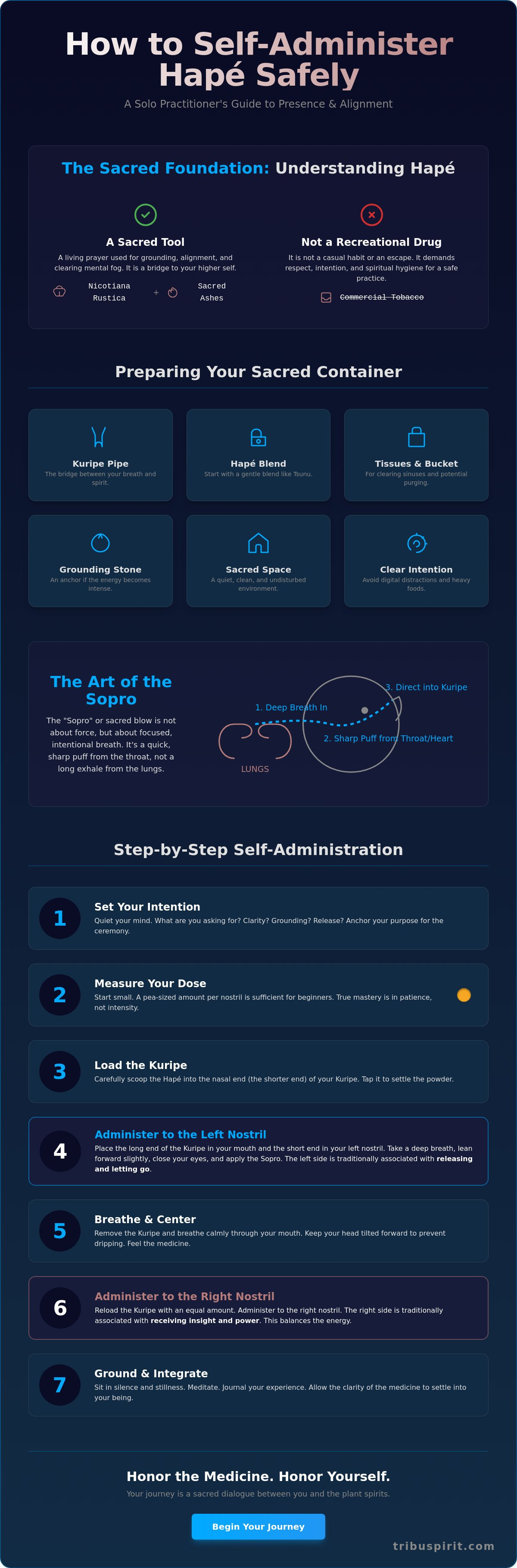
The Sopro is the soul of the Hapé ceremony. It is the invisible force that transforms a botanical powder into a spiritual catalyst. When you hold your Kuripe, you aren't just using a delivery system; you are preparing to release a prayer through your breath. This is the most technical part of the process, and understanding its nuances is essential for anyone learning how to self-administer hapé safely. The breath must never be an inhalation. Instead, the air is pushed from the mouth or, more effectively, the diaphragm. This distinction is vital for your physical well-being and the integrity of the ritual.
Inhaling the powder can lead to it entering your lungs, which causes intense coughing and respiratory distress. To prevent this, you must master the "lock." This involves closing the back of your throat, much like you would when holding your breath underwater. This creates a pressurized chamber in your mouth and nasal passage, ensuring the medicine stays exactly where it belongs. The intensity of this air stream directly dictates the medicinal effect. A sharp, sudden burst will provide an immediate, grounding shock, while a long, steady stream invites a slower, more contemplative descent into the self. Mastering this breath is how you bridge the physical and the ethereal.
Three Traditional Sopro Techniques
The lineage of the Amazon offers three primary breath patterns, each calling upon a different animal spirit to guide the medicine. These techniques allow you to tailor the experience to your current needs.
- The Jaguar (The Great Blow): This is a strong, fast, and short burst of air. It is designed for intense clearing, cutting through heavy mental chatter and grounding the practitioner instantly. It is the "warrior" breath for moments of profound stagnation.
- The Turtle (The Long Blow): A slow, steady, and sustained stream. This Sopro is ideal for deep meditation and introspection, allowing the medicine to unfold gradually within the consciousness over several minutes.
- The Hummingbird (The Gentle Blow): A light and airy touch. Use this for subtle energetic shifts and heart opening ceremonies where a softer, more delicate approach is required to feel the plant's vibration.
Finding Your Natural Rhythm
Before you introduce any medicine, practice your blow with an empty Kuripe. Focus on using your diaphragm rather than just puffing your cheeks. A diaphragmatic blow provides a consistent, powerful air stream that is easier to control and less likely to cause a "misfire" of the powder. This practice builds the muscle memory necessary to stay calm and present during the actual administration. The Sopro is the bridge between the physical tool and the spiritual effect. By refining this skill, you ensure that your practice remains a safe and sacred dialogue with the plant spirits. If you're looking to refine your ritual tools, our Bamboo Kuripe collection offers the perfect balance of form and function for mastering these techniques.
Learning how to self-administer hapé safely means being patient with your own learning curve. Don't be discouraged if your first few attempts feel uncoordinated. The more you practice the "lock" and the diaphragmatic push, the more natural the Sopro will become. Eventually, the breath and the intention will merge into a single, fluid motion that opens the door to deep shamanic presence.
Step-by-Step Guide to Self-Administration
Mastering how to self-administer hapé safely requires a blend of physical precision and spiritual surrender. The ritual begins with the measurement of the medicine. Place a small, pea-sized amount of powder into the palm of your hand. This portion is for the entire session; you'll divide it into two equal halves, one for each nostril. Use the long end of your Kuripe to gently scoop or tap the first half of the powder into the pipe. Give the Kuripe a soft tap against your wrist to ensure the powder settles at the bottom, preventing it from falling out before you're ready.
Posture is your foundation for safety. Sit with your spine straight but not rigid. When you are ready to blow, tilt your head slightly forward. This simple adjustment is crucial. It uses gravity to keep the medicine in the nasal passage and prevents "back-drip," where the powder slides down the throat. Back-drip is often the primary cause of physical discomfort and can interrupt your meditative focus. By keeping the head forward, you ensure the medicine stays where it can be most effective. To begin your own practice with the right tools, you can find hand-carved Kuripes designed for this exact ergonomic balance.
The Ritual of the Left and Right
In shamanic tradition, the order of administration is never accidental. You must always begin with the left nostril. This side represents the lunar energy, the past, and a symbolic "death" or letting go of what no longer serves you. Once the left side is complete, move immediately to the right nostril. The right side represents the solar energy, the future, and your "rebirth" into a new state of clarity. Skipping the second nostril is more than a technical error; it creates an energetic imbalance that can leave you feeling "unzipped" or scattered. Stay present through the initial sting of the first blow to honor the completion of the cycle.
Navigating the Physical Response
The medicine is a powerful cleanser, and your body will respond. It's common to experience watering eyes, a running nose, or a sudden warmth in the face. These are not side effects to be feared; they are signs of the "purge" or clearing. In some cases, the intensity may lead to a need to vomit. If this happens, lean into the process without judgment. Use your breath to move through the peak of the intensity. After the medicine has sat for five to ten minutes, you can gently clear your nose. Understanding how to self-administer hapé safely means knowing that the physical intensity is often the threshold to the spiritual peace that follows.
Integration, Sovereignty, and Ethical Sourcing
The silence that follows a Hapé ceremony is where the medicine speaks most clearly. While the physical act of the blow creates the initial shift, the true healing takes root during the integration phase. Learning how to self-administer hapé safely means understanding that the ceremony doesn't end when you put down the Kuripe. It ends when your spirit is fully anchored back into your physical body, carrying the insights of the plant with you. Closing your sacred space is a vital act of sovereignty. It signals to your subconscious and the spirit world that the work is complete for now. Gently put away your tools, extinguish any candles, and take a moment to offer gratitude for the guidance received.
Your energetic integrity is also deeply tied to the source of your medicine. When you understand what is Hapé in its true, indigenous context, you realize that you're consuming the intention of the maker. Cheap or anonymous sources often lack this sacred lineage, potentially carrying discordant energies that can disrupt your solo practice. True safety is as much about the vibration of the powder as it is about the technique of the blow. By choosing ethically sourced medicine, you ensure that your personal healing journey is built on a foundation of respect and reciprocity.
Post-Ceremony Integration Techniques
Once the initial intensity of the medicine subsides, resist the urge to immediately return to your phone or daily tasks. Spend at least fifteen minutes in total silence. This is the perfect time for journaling, allowing the raw insights to flow onto paper before the analytical mind begins to filter them. Some practitioners choose to use Sananga immediately after Hapé to further clear their physical and energetic vision, creating a complete sensory reset. Finally, ground yourself by eating something earthy, like a piece of fruit or bread, or by simply placing your bare feet on the soil. This physical contact helps settle any remaining high-frequency energy.
Supporting Indigenous Sovereignty
Every bottle of Hapé is a bridge to the Amazon. At Tribu Spirit, we ensure that this bridge supports the very people who guard these traditions. Every purchase contributes directly to Amazonian reforestation and tribal sovereignty, creating a cycle of healing that extends far beyond your own meditation cushion. There is a profound energetic link between the tribe’s intention and your personal breakthrough. When the medicine is harvested and prepared with prayers for the earth, those prayers become part of your experience. Knowing how to self-administer hapé safely involves honoring this connection and recognizing that your well-being is inextricably linked to the health of the forest and its guardians.
Awakening the Shamanic Presence Within
Your journey with this ancient medicine is a path of deep self-sovereignty and respect. By mastering how to self-administer hapé safely, you've moved beyond mere curiosity into a space of intentional healing. You now understand that the power of the medicine is carried by your breath and anchored by your preparation. Whether you're clearing old energies through the left nostril or inviting new solar clarity through the right, your commitment to the ritual is what creates the transformation. The silence that follows is your space for rebirth.
True mastery is a continuous dialogue with the plant spirits. We invite you to explore our ethically sourced Hapé blends and sacred Kuripes, each one brought to you through direct partnerships with the Yawanawá and Huni Kuin tribes. Through our Private Ministry and Academy, we provide the spiritual guidance you need to deepen your practice with confidence. Remember that every purchase directly supports Amazonian reforestation, ensuring that your personal growth contributes to the healing of the Earth. Trust your breath, honor the silence, and step forward into your new state of clarity.
Frequently Asked Questions
Is it safe to use Hapé every day by myself?
Daily use is a matter of personal attunement, but we generally advise against it for solo practitioners. Hapé is a tool for sacred ritual rather than a daily supplement. Using it too frequently can dull your sensitivity to the medicine's subtle spiritual messages and lead to a dependency on the plant for grounding rather than finding that stability within yourself.
What happens if I accidentally inhale the Hapé powder?
If you accidentally inhale the powder, you'll likely experience immediate coughing and a sharp burning sensation in the throat. This usually occurs when the "lock" at the back of the throat isn't fully engaged during the blow. Stay calm, drink some water, and remember that this minor discomfort is a common part of learning how to self-administer hapé safely.
Why do I feel like I need to vomit after using Hapé?
Feeling the need to vomit is a traditional physical response known as a "purge." This isn't a sign of illness, but rather a profound clearing of stagnant physical or emotional energy. It's the medicine's way of removing what no longer serves your highest good, allowing you to reach a deeper state of shamanic presence.
Can I use Hapé without a Kuripe or Tepi?
You shouldn't attempt to use Hapé without a proper Kuripe or Tepi. These sacred tools are specifically engineered to provide the correct air pressure and delivery angle into the nasal cavity. Attempting to sniff the powder directly or using improvised tools can cause the medicine to enter the lungs, which is neither safe nor effective for the ritual.
How much Hapé should a beginner use for their first solo session?
Beginners should start with a total amount of powder no larger than a single pea. You'll divide this small portion equally between both nostrils. It's always better to begin with a gentle dose and slowly increase it over several sessions as you build a respectful relationship with the plant's spirit and understand your own tolerance.
What should I do if the "sting" feels too intense to handle?
If the initial sting feels overwhelming, focus your entire awareness on your exhales. The sensation is temporary and typically peaks within sixty seconds before subsiding into a deep, meditative calm. Resisting the sensation often makes it feel more intense, so try to surrender to the heat as a form of purification.
How do I know if my Hapé has gone bad or lost its potency?
You'll know your medicine has lost its integrity if it develops a musty odor or becomes clumpy due to moisture. Fresh Hapé should be a fine, bone-dry powder with a sharp, clean scent. Always store your sacred blends in airtight containers in a cool, dark place to preserve their energetic and physical potency for as long as possible.
Is it normal to have a "runny nose" for hours after administration?
A runny nose is a standard part of the sinus clearing process, but it typically subsides within thirty minutes. If drainage persists for several hours, you might be using too much powder or blowing too forcefully into the nasal passage. This can cause unnecessary irritation to the delicate lining of your nose, so consider reducing your dosage next time as you learn how to self-administer hapé safely.