
What if the persistent whisper you've been hearing isn't just your imagination, but a direct invitation from the earth itself? Many of us feel a deep, aching disconnect from our own spirits and the rhythmic pulse of the natural world. It's common to feel lost in the noise of modern life. You might be questioning how to know if plant medicine is for you or if you're merely seeking an escape from the mundane. It's a delicate threshold. True discernment is the first step of the journey. The call is personal. The response must be intentional.
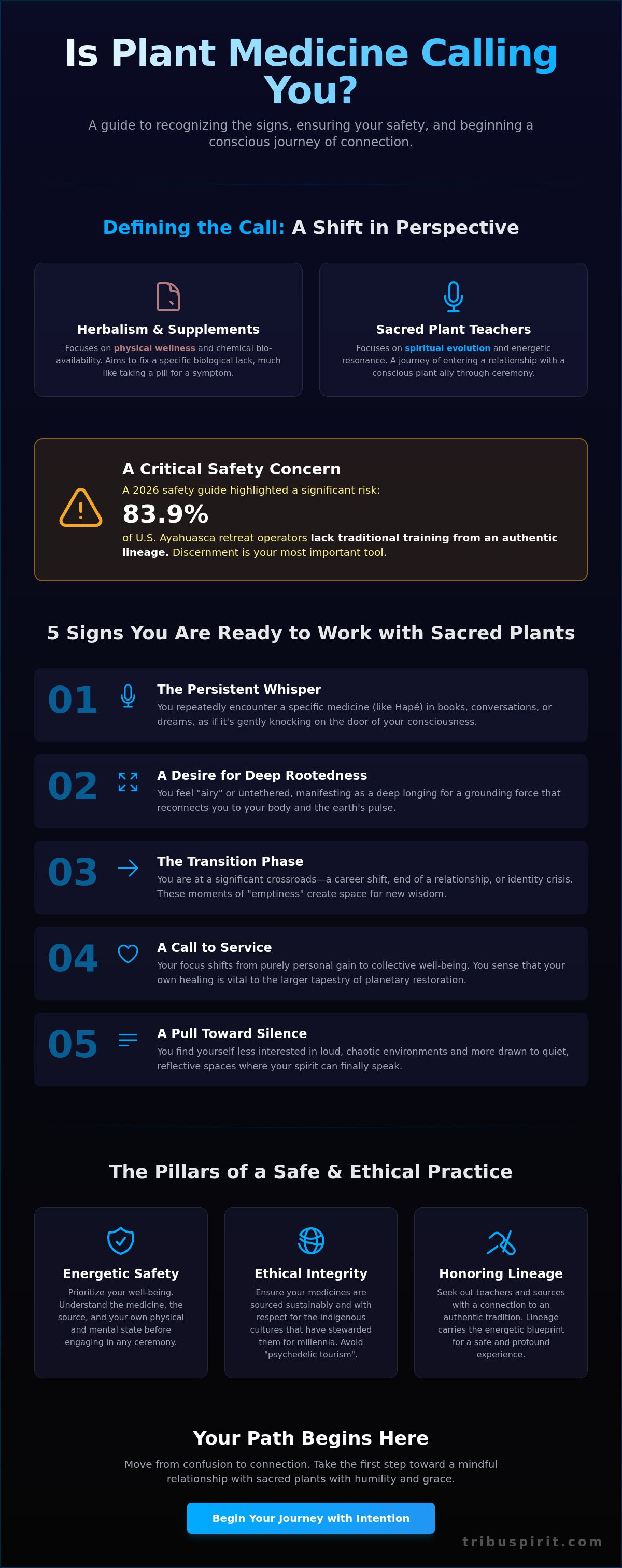
You deserve clarity before stepping into such a powerful energetic space, especially when a 2026 safety guide noted that 83.9% of ayahuasca retreat operators in the U.S. lack traditional training from an authentic lineage. This guide will help you recognize the intuitive signs of readiness while addressing the vital importance of ethical sourcing and spiritual alignment. You'll discover the essential differences between herbalism and shamanic medicine, ensuring you have a safe, respectful roadmap for your first experience. This is your invitation to move from confusion to connection. Your path begins here.
Key Takeaways
- Distinguish between physical herbalism and the spiritual evolution offered by sacred plant teachers to understand the depth of your personal call.
- Recognize the subtle, persistent signals and intuitive shifts that reveal how to know if plant medicine is for you and your current spiritual path.
- Learn to match your specific intentions with the unique vibrations of different medicines, such as the grounding and clearing energy of Hapé.
- Prioritize energetic safety and ethical integrity by understanding the importance of lineage and the origins of the sacred tools you welcome into your space.
- Take the first steps toward a mindful relationship with the plants by establishing a dedicated altar and beginning with gentle, solo ceremonies.
Defining the Call: What Does Plant Medicine Mean for You?
The modern world often feels like a series of fragmented moments, leaving us yearning for something deeper and more grounded. When you start asking how to know if plant medicine is for you, you're likely responding to a soul-level thirst for reconnection. This isn't just about physical wellness or finding a quick fix for stress. While many turn to traditional medicine systems to soothe bodily ailments, sacred plant medicine operates on a different frequency. It moves beyond the symptom. It addresses the spirit. This journey is about remembering who you are beneath the layers of societal expectation.
Sacred plants are often called "Master Plants" because they are viewed as conscious teachers with specific lineages and ancient stories. They aren't mere ingredients to be consumed. They are allies to be honored. In indigenous cultures, these plants are respected as elders who offer guidance, clarity, and deep spiritual evolution. They carry the vibration of the earth itself. Plant medicine serves as a bridge between ancestral wisdom and modern holistic healing. It invites us to slow down and listen to the subtle whispers of nature.
The Difference Between Supplements and Sacred Teachers
A supplement is often judged by its chemical bio-availability, designed to fix a specific biological lack. In contrast, sacred medicines focus on energetic resonance. It's the difference between taking a pill and entering a relationship. Ceremony is the key that unlocks this relationship, activating the "spirit" of the plant through intention and prayer. For those beginning this path, understanding what is hape often provides a foundational entry point. This sacred Amazonian snuff offers a gentle yet profound way to experience grounding and mental clarity without the overwhelming intensity of larger ceremonies.
The Evolution of the Plant Medicine Movement in 2026
The landscape of spiritual exploration is shifting significantly this year. We're seeing a move away from "psychedelic tourism" and toward integrated, daily spiritual practices that honor the sacred in the ordinary. It's about consistency and respect rather than just chasing an experience. The rise of "Micro-Ceremony" allows individuals to work with tools like Hapé or Sananga in the quiet of their own homes. These small, intentional moments help maintain the clarity gained in larger experiences. As you explore how to know if plant medicine is for you, digital communities like the Tribu Spirit Academy are becoming vital. They bridge the gap, preserving ancient wisdom and providing a safe, curated space for modern seekers to learn the nuances of these sacred traditions with humility and grace.
5 Signs You Are Ready to Work with Sacred Plant Teachers
Readiness is rarely a loud, demanding bell. Instead, it's a soft resonance in the heart that feels more like a remembering than a new discovery. While your mind might seek a logical checklist, the soul recognizes an invitation through subtle shifts in your inner and outer reality. Understanding how to know if plant medicine is for you requires a willingness to look beyond the surface of curiosity and into the depths of your current life path. The plants don't call everyone in the same way, but their invitations often share common threads.
- The Persistent Whisper: You find yourself repeatedly encountering the name of a specific medicine, perhaps Hapé or Sananga, in books, conversations, or dreams. It's as if the plant is gently knocking on the door of your consciousness.
- A Desire for Deep Rootedness: You feel "airy" or untethered from your physical body. This disconnect often manifests as a deep longing for a grounding force that reconnects you to the earth's pulse.
- The Transition Phase: You stand at a significant crossroads. Whether it's a career shift, the end of a relationship, or a total identity crisis, these moments of "emptiness" create the space for new wisdom to enter.
- A Call to Service: Your focus has shifted from purely personal gain to collective well-being. You sense that your own healing is a vital thread in the larger tapestry of planetary restoration.
- A Pull Toward Silence: You find yourself less interested in loud, chaotic environments and more drawn to the quiet, reflective spaces where the spirit can speak.
Intuition vs. Impulse: Discerning the Source of Your Interest
It's vital to distinguish between a soul-led "call" and an ego-driven "trend." Modern interest in these traditions is growing, and a global perspective on traditional medicine shows that millions are returning to ancestral roots for holistic health. However, you must ask yourself if you're seeking an experience to "add" to your identity or a transformation to "shed" what no longer serves you. A healthy sense of nervousness is often a beautiful sign of respect. It shows you recognize the power of the medicine. If you feel a quiet, steady pull despite your fears, you're likely moving in the right direction. Sit in meditation with the image of a Hand-Carved Shamanic Rattle or a simple piece of Mapacho, and notice what arises in your body.
Physical and Mental Foundations for Readiness
Before you engage with these teachers, assess your "container." Is your daily life stable enough to support the deep processing that follows a ceremony? The plants act as catalysts; they don't do the work for you. Maintaining a clean diet and a quiet mental space in the weeks leading up to your first encounter is essential. This is why ceremony preparation is often considered 50% of the healing process. It demonstrates your commitment to the teacher and prepares your vessel to receive the high-frequency transmissions of the medicine. When you treat the preparation as sacred, the medicine responds with equal depth.
Matching Your Intention to the Right Medicine
Selecting a sacred plant ally is not a matter of clinical prescription, but of energetic resonance. Each plant carries a unique vibration, a specific "personality," and a distinct purpose within the spiritual ecosystem. When you explore how to know if plant medicine is for you, the answer often lies in the clarity of your intention. Are you seeking to ground your scattered thoughts, or do you need to pierce through a veil of emotional stagnation? The plants are ready to meet you exactly where you are, provided you approach them with a clear heart and a humble spirit.
The study of Ethnobotany reveals that indigenous cultures have long understood this deep relationship between human consciousness and the botanical world. It's a sacred technology. Mapacho, often referred to as the "Grandfather medicine," serves as a cornerstone of this practice. It's used primarily for protection and as a vehicle for carrying prayers to the divine. It doesn't just clear the air; it creates a fortified container for your spiritual work, ensuring that your journey remains focused and held in a high-frequency space.
Finding Clarity with Hapé (Rapé)
Hapé is known as the "medicine of the wind." It's a sacred Amazonian snuff that works rapidly to align the chakras and quiet the ego's chatter. If you feel "airy," anxious, or disconnected from your physical vessel, learning how to know if plant medicine is for you often begins with Hapé Tsunu. This specific blend is celebrated for its profound grounding qualities. Other varieties, like Mulateiro or Parica, offer different nuances, from deep ancestral connection to sharp mental focus. To work with these medicines effectively, you must use the proper shamanic tools, such as a hand-carved Kuripe. The ritual of self-administration becomes a meditative act of self-love and presence.
The Piercing Truth of Sananga
Sananga is a powerful eye drop medicine derived from the roots and bark of the Tabernaemontana undulata shrub. It's often called the "medicine of vision" because it clears "panema"—a term used by Amazonian tribes to describe a cloud of negative energy, bad luck, or spiritual heaviness. If you feel like you're looking at the world through a dirty lens, Sananga may be your teacher. The experience is physically intense, yet this heat is what burns away the mental fog. It invites you to find stillness in the center of discomfort. By integrating these amazonian plants into your lifestyle, you aren't just seeking a temporary shift; you're cultivating a long-term relationship with clarity and truth.
The Pillars of Discernment: Safety, Ethics, and Lineage
True discernment is the bridge between curiosity and commitment. As you explore how to know if plant medicine is for you, you must look beyond the individual experience and consider the entire ecosystem of the practice. This journey involves more than just your personal healing; it's a participation in a lineage that spans generations. Safety isn't merely a physical checklist. It's an energetic responsibility. Protecting your field during a journey requires a foundation of respect for the medicine's origin and the spirits that govern it. Without this grounding, even the most profound experience can leave one feeling scattered or untethered.
Sacred Reciprocity is the vital cycle of giving back to the land and people that provide the medicine. In the Amazonian tradition, this is known as Ayni. It's the understanding that we cannot truly receive healing if we are taking from a source that is being exploited. When you choose to work with these teachers, you're entering into a contract with the earth. This means ensuring your presence in this space supports indigenous sovereignty and the preservation of the very forests that breathe life into these traditions.
Medical Contraindications and Physical Safety
While the call of the spirit is powerful, the wisdom of the body must be honored first. "Natural" doesn't always mean "safe" for every individual at every moment. You should avoid certain plant medicines if you're currently taking SSRIs or other psychiatric medications, as these can lead to dangerous interactions. Heart conditions and pregnancy also require extreme caution and often serve as a sign to wait. Be radically transparent with your facilitators. If you're practicing at home with grounding tools, ensure your environment is stable. If you feel any hesitation regarding your physical health, it's a signal from your intuition to pause and seek further guidance before proceeding.
Vetting Your Source: Avoiding the "Spiritual Supermarket"
The modern world has turned many sacred things into commodities, creating what some call a "spiritual supermarket." To maintain the integrity of your practice, you must vet your source with a discerning eye. Ask the hard questions. Is the medicine fair-trade? Was it harvested with prayer by indigenous hands? The vibration of the seller directly affects the vibration of the medicine you receive. At Tribu Spirit, we focus on tribal empowerment and reforestation to ensure that every element we offer is held in a container of integrity. When you choose tools that are ethically sourced, you're strengthening your own energetic field. You can explore our collection of sacred tools to find medicines that honor these ancient lineages and support the tribes who protect them.
Cultivating Your Practice: Next Steps on the Path
Once the inner compass settles and you understand how to know if plant medicine is for you, the path shifts from contemplation to dedicated practice. This transition is a sacred threshold. It’s the moment you stop standing at the edge of the forest and begin to walk among the trees. Starting small is the most respectful way to build a relationship with these powerful teachers. A solo Hapé ceremony in the quiet of your home allows you to listen to the medicine’s subtle language without the influence of a group’s collective energy. It’s a private dialogue between your soul and the plant spirit.
Creating a sacred space is your next vital step. An altar serves as a physical anchor for your intentions and a sanctuary for your tools. It doesn't need to be elaborate; a simple cloth, a candle, and a few natural elements like stones or feathers will suffice. This space becomes a mirror of your inner landscape. When you sit before it, you're signaling to the universe that you're ready to receive. Integration is where the real work unfolds. The ceremony provides the vision, but the days following the experience are where you ground that vision into your daily life. It’s not about the peak; it's about the roots.
Building Your Shamanic Toolkit
Selecting your first tools is an act of deep intention. Whether you're drawn to a Bamboo Kuripe for self-administration or a larger Tepi, choose the one that resonates with your current energy. These aren't just objects. They're living extensions of your breath and your prayer. Sound also plays a crucial role in directing the flow of energy. Using a Hand-Carved Shamanic Rattle can help clear stagnant vibrations and call in protective spirits during your practice. Care for these tools with the same reverence you'd show an elder. Keep them clean, store them on your altar, and remember that they carry the frequency of every prayer you've ever whispered through them.
Your Invitation to the Tribe
You don't have to walk this path alone. While the journey is deeply personal, having a supportive community provides the structure needed for a grounded experience. The Tribu Spirit Academy was created to bridge the gap between ancient Amazonian wisdom and the complexities of modern life. It offers educational resources and practitioner training to ensure your journey is held in a container of safety and integrity. If you feel the call to begin, the time for hesitation has passed. Trust your discernment. Explore our ethically sourced Hapé collection and start your journey today. The plants are waiting to meet you.
Step into Your Sacred Evolution
The path of sacred discernment is a quiet unfolding, a transition from simply seeking answers to living them. You've explored the intuitive signs of readiness and the vital importance of matching your intention with the right botanical ally. Understanding how to know if plant medicine is for you isn't about finding a perfect moment; it's about trusting the resonance you feel in this very heartbeat. By prioritizing lineage and ethical integrity, you ensure that your personal growth contributes to the healing of the whole.
As a member of the Tribu Spirit Ministry PMA, we take our role as bridge-builders seriously. Every medicine we offer is ethically sourced from the Katukina, Huni Kuin, and Yawanawá tribes, providing direct support for Amazonian reforestation and indigenous sovereignty. You aren't just purchasing a tool; you're participating in a cycle of sacred reciprocity. The time has come to honor the whisper of your spirit. Begin your sacred journey with our ethically sourced Hapé and tools and discover the profound clarity that awaits you. You're ready to walk this path with grace.
Frequently Asked Questions
How do I know if I am ready for a plant medicine ceremony?
Readiness is felt as a steady, quiet pull from within rather than a loud or impulsive urge. You'll know how to know if plant medicine is for you when your curiosity is replaced by a deep sense of respect and a willingness to face whatever the medicine reveals. It's also essential that your physical environment and mental health are stable enough to support the deep processing that follows a journey.
What is the difference between Hapé and other plant medicines?
Hapé is a grounding, air-element medicine primarily used for mental clarity and energetic alignment without the intense visionary states of larger ceremonies. While medicines like Ayahuasca lead you through deep subconscious journeys, Hapé acts as a focal point to clear the mind and anchor your spirit in the present moment. It serves as a foundational tool for maintaining daily spiritual hygiene and focus.
Can I use plant medicine if I am taking prescription medication?
You must be extremely cautious, as many sacred plants interact dangerously with pharmaceutical drugs, particularly SSRIs and heart medications. Certain alkaloids can cause severe physical reactions, such as serotonin syndrome, if combined with modern prescriptions. Always consult with a knowledgeable facilitator and your healthcare provider before beginning any work with plant teachers to ensure your physical vessel is safe.
How do I ensure my plant medicine is ethically sourced?
Ethical sourcing means the medicine was harvested with prayer and intention by indigenous hands, such as the Katukina, Yawanawá, or Huni Kuin tribes. Look for providers who practice sacred reciprocity, ensuring that a portion of every purchase supports tribal empowerment and reforestation efforts in the Amazon. Knowing the exact lineage of your medicine protects the energetic integrity of your personal practice.
Is it safe to use sacred medicines like Hapé alone at home?
It is safe to use Hapé alone if you've created a stable, intentional environment and are using the correct tools like a bamboo Kuripe. Starting your practice in a familiar, quiet space allows you to build a personal relationship with the plant spirit at your own pace. Always begin with a small amount and treat the moment as a sacred ritual rather than a casual activity.
What does 'integration' mean in the context of plant medicine?
Integration is the active process of weaving the spiritual insights gained during a ceremony into the fabric of your daily life. It's the bridge between the high-frequency experience and your physical reality. Without integration, a ceremony remains just a memory; with it, the experience becomes a lasting transformation that changes how you speak, act, and relate to the world around you.
How often should I work with plant teachers?
There's no fixed schedule, as the frequency should be dictated by the medicine itself and your own inner guidance. Some practitioners work with grounding tools like Hapé daily for spiritual alignment, while others wait months between deeper ceremonies. If you find yourself using medicine to escape reality rather than to engage with it more deeply, it's time to pause and focus on your integration.
What is the best way to set an intention for my first ceremony?
The most effective intentions are heart-centered and focused on growth rather than demanding specific outcomes. Instead of asking for a quick fix, try asking for "clarity on my path" or "the strength to release what no longer serves me." A humble, open-ended intention allows the plant spirit to show you what you truly need to see, which is often different from what the ego wants.