
What if the plant you've been taught to fear is actually the key to a profound, grounded presence? For many, the word tobacco evokes images of industrial additives and empty habits, yet indigenous tribes in the Amazon have utilized hape tobacco for over 4,000 years as a tool for spiritual purification. You likely feel the weight of a busy world and seek a way to return to your center without the shadows of modern addiction. It's understandable to feel confused when commercial narratives cloud the ancient wisdom of the forest.
This guide promises to illuminate the profound difference between industrial products and the master plants of the forest, giving you the confidence to use this medicine for deep spiritual grounding. It's natural to feel hesitant when sacred traditions meet modern misconceptions. You'll learn how to distinguish sacred snuff from recreational habits and discover the specific ways it can clear energetic blockages. We'll explore the lineage of the Huni Kuin people, the proper use of the Kuripe pipe, and the essential steps to creating a safe, intentional ritual in your own space.
Key Takeaways
- Deepen your understanding of the sacred Amazonian lineage, tracing the roots of Hapé back to the ancient wisdom of the Yawanawá and Huni Kuin tribes.
- Learn to distinguish between industrial products and the pure, additive-free power of Mapacho, the biological foundation of authentic hape tobacco.
- Deconstruct common misconceptions about addiction by exploring the profound shift from habitual consumption to intentional, ritualized practice.
- Gain practical wisdom on preparing your sacred space and internal state, ensuring a grounded and transformative experience for your first ceremony.
- Discover how ethical sourcing and direct tribal partnerships protect indigenous heritage while elevating the spiritual integrity of your personal journey.
What is Hapé Tobacco? Defining the Sacred Snuff
Hapé isn't a product; it's a prayer in powdered form. This sacred Amazonian snuff, often pronounced "ha-peh," represents a millennium of indigenous wisdom concentrated into a fine, velvet-like dust. Unlike the mass-produced cigarettes found in modern convenience stores, hape tobacco serves as a profound tool for spiritual alignment and physical cleansing. It's a sophisticated blend of ground tobacco and the alkaline ashes of sacred trees, prepared through a process that requires both technical precision and deep meditative intent. This medicine acts as a bridge between the physical and spiritual realms, offering a moment of absolute presence in an increasingly distracted world.
The Ancient Origins of Shamanic Snuff
For centuries, tribes like the Yawanawá and Huni Kuin have used this medicine to navigate the unseen territories of the soul. Archeological evidence from South American ritual sites suggests that tobacco use in ceremonial contexts dates back over 2,500 years. Within these forest communities, the Pajé, or shaman, oversees the preparation, infusing the blend with specific blessings and songs. Tribes use Hapé for social bonding during communal gatherings, yet its primary role remains spiritual initiation and healing. It grounds the restless soul. It clears the mental fog. It connects the human spirit to the ancient heartbeat of the rainforest.
The Anatomy of a Hapé Blend
Every authentic blend begins with a potent base of Nicotiana rustica, a wild tobacco species containing significantly higher nicotine and alkaloid levels than common commercial varieties. This isn't tobacco for recreation; it's a chemical catalyst for profound clarity. Makers then mix this base with the filtered ashes of medicinal tree barks, such as the Tsunu or Murici trees. These ashes provide the necessary alkalinity to carry the medicine effectively into the system while adding their own unique energetic signatures to the experience.
The physical ingredients are only half of the story. In the tradition of the Tribu, the "vibration" of the maker defines the medicine's character. A blend prepared in silence and reverence carries a different energy than one made in haste. This is why hape tobacco is often called "spirit medicine." It's an artisanal craft where the intention of the creator becomes part of the user's journey. You aren't just using a botanical mix. You're participating in an ancient lineage of healing that values the soul's evolution over mere physical sensation.
The Myth of "Just Tobacco": Nicotiana Rustica vs. Tabacum
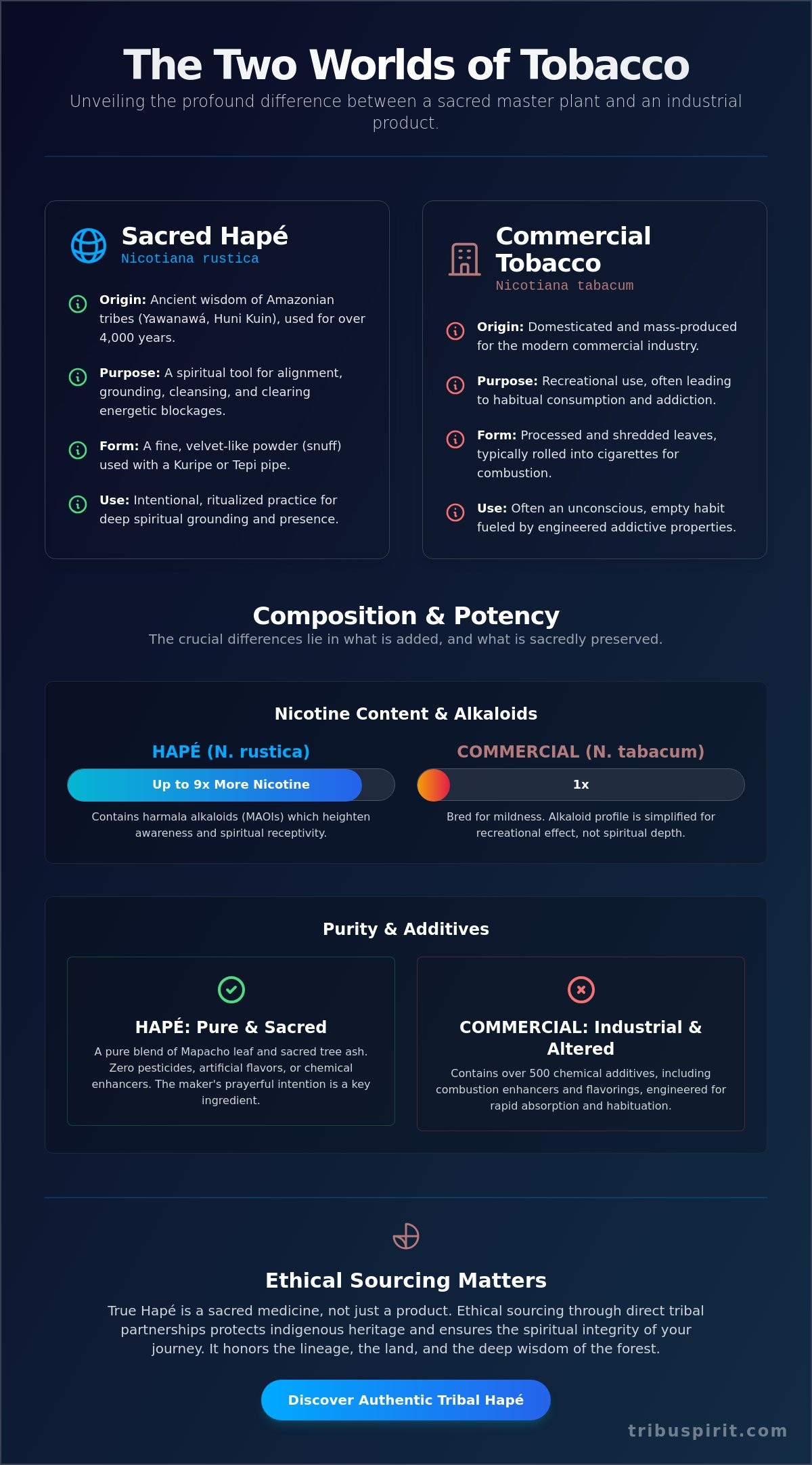
To truly understand hape tobacco, we must first unlearn the associations we carry from the commercial cigarette industry. The tobacco found in mass-produced products, Nicotiana tabacum, is a distant, domesticated relative of the potent Nicotiana rustica used in sacred snuff. While commercial varieties are bred for mildness and high yield, Nicotiana rustica remains a wild, high-potency ancestor to modern tobacco that carries the raw, unadulterated spirit of the forest. This ancestral plant contains up to nine times more nicotine than its commercial cousin, but its power isn't just in its strength. It possesses a complex profile of harmala alkaloids, including harman and norharman, which act as mild monoamine oxidase inhibitors. These compounds deeply influence the nervous system's receptivity, allowing for a state of heightened awareness rather than a simple chemical buzz.
Indigenous cosmology doesn't view this plant as a recreational habit; it's a protector, a healer, and a profound teacher. Research into the Therapeutic Uses of Tobacco in Peruvian Amazonian Medicine highlights how this botanical serves as a cornerstone for spiritual and physical cleansing. In the hands of a master blender, the leaf is transformed into a tool for clarity, far removed from the addictive cycles of the modern world.
Chemical Purity vs. Industrial Additives
The distinction between these two worlds is most visible in their composition. Traditional hape tobacco contains zero pesticides, artificial flavorings, or chemical combustion enhancers. While industrial cigarettes are engineered with over 500 additives to ensure rapid absorption and habituation, the sacred snuff used in ritual is a pure marriage of leaf and ash. The leaves are harvested with intention, sun-dried, and cured before being pulverized. This slow, prayerful process ensures the medicine remains a clean, vibrational tool for the body. Nicotiana rustica is a wild, high-potency ancestor to modern tobacco.
The Vibrational Profile of Sacred Tobacco
In the Amazonian tradition, Mapacho acts as a "grounding cord" for the human energetic field. There's a stark contrast between the "scattered" energy of smoking, which often pulls the consciousness upward and away from the body, and the "centered" energy of Hapé. This medicine is specifically used to clear Panema, a term indigenous tribes use to describe a cloud of heavy energy, bad luck, or spiritual lethargy that can accumulate in our daily lives.
By snapping the mind back into the present moment, the ritual provides an immediate anchor. If you're curious about the deeper mechanics of this process, our guide on what is hape explores how these botanical blends interact with the subtle body to restore balance. It's a practice of shedding what no longer serves us to make room for new intentions. You can explore our curated collection of ceremonial tools and blends to find the right frequency for your own path.
Is Hapé Tobacco Addictive? Myth-Busting the Addiction Narrative
When you hear the word tobacco, your mind likely jumps to the 1.3 billion cigarette smokers worldwide and the cycle of physical dependency that follows. This association creates a significant hurdle for those curious about hape tobacco. However, the context of the Amazonian forest is worlds apart from the industrial cigarette factory. The fear of addiction often stems from a misunderstanding of how nicotine behaves when stripped of its sacred origins and loaded with chemical additives.
The delivery method changes everything. Cigarette smoke enters the lungs, reaching the brain's dopamine centers in less than 10 seconds. This rapid spike and subsequent crash drive the compulsive "habitual smoker" cycle. In contrast, Hapé is administered through the nasal membranes. This creates a slower, more grounded absorption that bypasses the frantic "hit" associated with pulmonary inhalation. You don't use Hapé to escape; you use it to arrive.
Nicotine: Medicine vs. Poison
In its pure, botanical form, nicotine functions as a potent nootropic. Research, including studies cited by the National Institutes of Health, suggests that pure nicotine may offer neuroprotective benefits, potentially shielding the brain from cognitive decline. In the world of the Tribu, we view this molecule as a key that unlocks focus and presence. The physical experience of Hapé also provides its own safeguard against abuse. The "purge," which can include watering eyes, sneezing, or a deep energetic clearing, ensures the medicine is respected. You can't casually "chain-blow" Hapé the way someone might smoke a pack of cigarettes. The intensity of the experience demands a pause, making recreational abuse nearly impossible for the conscious practitioner.
- Physical Craving: A restless, itchy need to numb an emotion or satisfy a chemical dip.
- Spiritual Call: A quiet, intuitive internal nudge to seek clarity or ground your energy before a task.
- The Barrier: The stinging heat of the powder acts as a natural deterrent to mindless, frequent use.
Ritual vs. Habit: The Power of Intention
The primary difference between an addiction and a practice is intentionality. A habit is an unconscious loop; a sacred ritual is a conscious prayer. When you approach hape tobacco with a specific "sankalpa" or intention, you're engaging in a dialogue with the plant spirit rather than a transaction with a substance. This distinction is vital for maintaining a healthy relationship with the medicine.
A healthy practitioner uses Hapé as a tool for transition, perhaps to mark the end of a workday or the beginning of a meditation. Signs of a balanced relationship include the ability to go weeks without the medicine without irritability. If you find yourself reaching for the Kuripe every time you feel a minor stressor, you've drifted from ritual into an emotional crutch. True mastery of this snuff involves knowing when to put the pipe down and simply breathe in the silence the medicine has helped you create.
How to Approach Hapé: Guidelines for a Sacred Practice
Approaching hape tobacco requires more than curiosity; it demands a shift in consciousness. This isn't a substance to consume on the go or in a distracted state. It's a botanical teacher that asks for your full presence and a heart open to transformation. For a beginner, the first sitting should be approached with the same gravity as any deep meditative practice. You're not just using a powder; you're engaging with a tradition that has sustained Amazonian tribes for centuries.
Start by measuring a small, pea-sized amount of the blend. This portion is divided equally for both nostrils to maintain energetic balance. The medicine works on the duality of our nature, aligning the masculine and feminine sides of the soul. Always begin with the left nostril, which symbolizes a death or letting go, followed by the right, representing rebirth and new life.
Preparing Your Space and Self
Your environment acts as the container for your journey. Choose a quiet corner where the air feels still and the lighting is soft. You can anchor the energy of the room using shamanic tools like Palo Santo, white sage, or a simple beeswax candle to clear the field. Silence your phone and ensure you won't be interrupted for at least 30 minutes.
Internal preparation is just as vital. Consult a hape ceremony checklist to ensure you've fasted for at least three hours before the ritual. This prevents physical discomfort and allows the medicine's energy to move freely. Sit with a straight spine, either on a cushion or a chair. This posture allows the breath to flow through your chakras without obstruction. Close your eyes, breathe deeply into your belly, and let your intention become a clear, singular focus in your mind.
The Application and The "Sopro" (Blow)
The Kuripe is the most common tool for self-administration. This V-shaped pipe connects your breath directly to the medicine. Place the long end in your nostril and the short end in your mouth. The "Sopro," or the spirit blow, is the most vital part of the ritual. It isn't merely air; it's the transmission of your intent into the body. Different intensities produce varied results. A short, strong blow can provide a sharp clearing, while a long, soft blow might lead to a more meditative, lingering state.
As the powder enters, you'll immediately notice various hape effects such as a rush of heat, increased focus, or a temporary "purge." This purge might manifest as tears, sweating, or a need to clear the sinuses. Don't resist these reactions. They are physical signs of the body releasing energetic blockages and emotional weight. Stay with your breath, keep your eyes closed, and allow the medicine to ground you into the present moment.
Ready to begin your own ritual? Explore our collection of sacred tools and find your path.
Ethical Sourcing: Why the Origin of Your Hapé Matters
The journey of hape tobacco begins long before it reaches your hands. It starts in the deep, humid breath of the Amazon, where the forest floor meets the roots of sacred trees. Today, the global interest in indigenous medicines has created a complex landscape. Commercialized shamanism often separates the medicine from its spirit, turning a sacred ritual into a mere transaction. When you choose a blend, you aren't just buying a powder; you're entering into an energetic exchange with the forest and its guardians. Treating this medicine as a commodity strips away its power. It's a sacred ally, not a consumer product.
Supporting Indigenous Sovereignty
True medicine carries the "Asha," the spiritual force that only comes from prayer, intention, and traditional preparation. Mass-produced versions lack this vitality. They're often created without the proper lineage or respect for the plants. Ethical sourcing ensures that funds flow directly back to the Yawanawá, Huni Kuin, or Katukina people. This financial sovereignty allows tribes to protect their land from illegal logging, which destroyed over 10,000 square kilometers of the Amazon in 2022. By honoring the source, your practice becomes a shield for the rainforest. Your purchase helps fund schools, healthcare, and cultural preservation projects in the heart of the jungle.
Choosing Your Blend at Tribu Spirit
Selecting your medicine is a quiet conversation with your soul. You might feel drawn to the grounding stability of hape tsunu, a blend renowned for clearing mental fog and anchoring your energy. Don't rush this choice. Listen to your intuition. The right blend will call to you, offering the specific frequency your spirit requires at this moment. At Tribu Spirit, we prioritize direct relationships with the makers. This ensures every jar of hape tobacco we offer supports reforestation projects and preserves the oral traditions of the elders. Our commitment to ethical sourcing includes:
- Direct-from-tribe partnerships that bypass exploitative middle-men.
- Support for reforestation initiatives that replant the very trees used in the ash.
- Fair compensation that respects the artisanal nature of the medicine.
- Transparent practices that honor the sanctity of the Amazonian ecosystem.
We invite you to join the Tribu Spirit community for ongoing support on your path. Here, we don't just share products; we share the wisdom of the ritual. Let your connection to this medicine be a bridge to a more conscious, grounded way of living. Treat each breath of the snuff as a prayer for the forest and a step toward your own inner clarity.
Stepping Into the Breath of the Forest
Embracing this ancient medicine means moving beyond common myths and into a space of true presence. You've learned that hape tobacco is fundamentally different from commercial products; the Nicotiana rustica plant used in these sacred blends contains up to 9% nicotine, offering a potent energetic clearing that standard commercial varieties simply can't match. It's a tool for the spirit, not a habit for the body. By honoring the 5,000 year old traditions of the Amazon, you transform a simple moment into a profound ritual of reconnection. Your choice matters. When you prioritize ethical origins, you support reforestation efforts that have protected vital hectares of rainforest since 2021. Our Private Ministry and Academy stand ready to guide you through this journey with expert wisdom and deep respect for the forest. The path to clarity is open. It's time to listen to what the earth is telling you.
Explore our ethically sourced, tribal Hapé blends at Tribu Spirit
May your journey be filled with light and grounded in the strength of the ancient traditions.
Frequently Asked Questions
Is Hapé tobacco legal in the United States and Europe?
Hapé tobacco is legal in the United States and most European countries because it's classified as a traditional tobacco product. In the US, the FDA regulates these products under the Family Smoking Prevention and Tobacco Control Act of 2009. European distribution follows the guidelines set by the 2014 Tobacco Products Directive. It’s a legal botanical tool for your personal ritual and spiritual exploration.
Can I get addicted to the nicotine in Hapé tobacco?
Yes, the nicotine in hape tobacco can lead to physical dependency if you don't approach the medicine with sacred intention. Nicotiana rustica, the primary ingredient, contains up to 9 times the nicotine concentration found in common commercial cigarettes. It’s a powerful teacher that requires deep respect. Use it to ground your soul and find presence, rather than using it to satisfy a physical craving.
What is the difference between Hapé and standard snuff?
The primary difference lies in the sacred intention and the pure, alkaline composition of the blend. Standard snuff often contains up to 30 synthetic additives or artificial flavorings for mass consumption. Sacred Hapé consists only of organic mapacho and the ashes of medicinal trees like Tsunu or Murici. It’s a handcrafted ritual tool born from months of prayer, not a processed consumer commodity.
How often should I use Hapé tobacco in my spiritual practice?
Many dedicated practitioners find that using the medicine 1 to 3 times per week preserves the sanctity of the experience. A 2023 survey of ceremonial leaders suggests that over-frequent use can lead to spiritual desensitization or "habitual fog." Let the medicine breathe within you. Allow the insights from one ceremony to fully integrate into your life before you begin your next inner journey.
What are the side effects of using sacred Hapé?
Physical purging, temporary dizziness, and increased heart rate are common side effects during the initial stages of a session. Approximately 40 percent of users experience a "purge," which may involve sweating, nausea, or watery eyes as the body releases toxins. These sensations are an energetic clearing of the vessel. They typically subside within 20 minutes, leaving behind a state of profound stillness and clarity.
Can I use Hapé if I am a former smoker?
Former smokers can use hape tobacco, but they must remain vigilant due to the high nicotine content. The 5 to 9 percent nicotine concentration in these blends is significantly higher than what's found in standard tobacco, which might trigger old neurological patterns. Set a firm, clear boundary before you begin. Focus on the spiritual prayer rather than the physical sensation to ensure the ritual remains a path to freedom.
How do I know if my Hapé is ethically sourced?
You can verify ethical sourcing by looking for direct partnerships with indigenous communities like the Yawanawá or Huni Kuin. Authentic medicine is never mass-produced in factories; it's prepared by hand in the heart of the forest. Ethical suppliers ensure that tribes receive fair compensation that exceeds standard market rates. True medicine carries the vibration of the land and the ancestral wisdom of the people who created it.
Is Hapé tobacco safe for everyone to use?
No, Hapé isn't safe for everyone, particularly those with cardiovascular issues or respiratory conditions. Individuals with high blood pressure or those who are pregnant should avoid this practice entirely. It’s a potent force that demands a healthy physical temple. Always honor your body by consulting a healthcare provider if you take SSRIs or other medications that affect the nervous system before starting your ritual.