

What if the fire that clears your spiritual vision is actually a warning sign for your physical sight? Many practitioners approach the sacred sting of Sananga with a blend of deep reverence and a quiet, persistent fear. You've been told the intense heat is the medicine working to strip away "panema" or dense energy. Still, as the drops land, a visceral question often arises. Can sananga damage your cornea if used improperly? It's a valid concern that deserves more than a vague spiritual platitude, especially when dealing with one of your most delicate senses.
We understand that the path to clarity shouldn't be paved with anxiety. While this tradition is ancient, modern application requires a bridge between indigenous wisdom and contemporary hygiene. Because these drops are typically non-sterile preparations, the risk often lies in bacterial contamination or improper storage rather than the plant itself. We'll show you how to distinguish between the medicinal burn of the Tabernaemontana plant and the dangerous irritation of an infection. You'll learn the specific red flags of a compromised bottle, the essential protocols for safe application, and how to honor your eyes as the sacred windows they are. Let's ensure your quest for insight remains a safe, transformative evolution.
Key Takeaways
- Discover why the primary physical risk isn't the medicine itself, but rather the bacterial contamination that occurs when sacred tools are handled without modern hygiene.
- Learn the specific answer to the question: can sananga damage your cornea if used improperly, and identify the visual red flags of a compromised or expired bottle.
- Identify critical contraindications, including the necessary waiting periods for those who wear contact lenses or have recently undergone ocular surgeries like LASIK.
- Master the "Drop and Blink" technique and the spiritual preparation required to ensure the alkaloids in Sananga - Strong Strength work in harmony with your body.
- Understand the perishable nature of these forest drops and why consistent refrigeration is the most vital step in preserving the purity of your sacred medicine.
The Science and Spirit of Sananga: Why Does it Sting?
Sananga is often called the forest eye drops, a title that barely captures the visceral, fiery experience of its application. This sacred juice, extracted from the roots and bark of the Tabernaemontana undulata shrub, has been used for millennia by the Yawanawá and Matsés tribes. The experience is defined by an immediate, intense stinging sensation that can last several minutes. For a newcomer, this intensity often triggers a survival instinct. You might wonder, can sananga damage your cornea if used improperly, or is this fire a necessary part of the healing? Understanding the distinction between a healthy pharmacological reaction and a physical injury is the first step toward a safe, grounded practice.
While a store-bought saline drop is designed to be invisible, Sananga is designed to be felt. It's a dialogue between the plant's spirit and your nervous system. Chemical irritation is the intended path of the alkaloids, but physical injury only enters the conversation when hygiene is neglected or contraindications are ignored. The medicine asks for your trust, but it also rewards your discernment.
Alkaloids and the Ocular Response
Monoterpene indole alkaloids are the active biochemical compounds in Sananga that orchestrate its profound effects. When the drops touch your eyes, these alkaloids trigger an immediate inflammatory response. It's vital to recognize that this is not a thermal burn; there's no actual heat damaging the delicate surface of your eye. Instead, it's a pharmacological interaction that causes rapid vasodilation. This increased blood flow helps clear the tear ducts and encourages a state of heightened visual sensitivity. This biological reset is why many practitioners report a crystalline quality to their vision once the initial fire subsides. The sting is the chemical key unlocking the door to clarity.
The Concept of Panema and Energetic Clearing
In the heart of the Amazon, the sting isn't just a side effect; it's the medicine's voice. Tribes use Sananga to clear panema, a term describing a cloud of spiritual malaise, bad luck, or heavy energy that clings to the soul. This energetic clearing serves several purposes:
- The Hunting Gaze: Warriors use it to sharpen their focus before a hunt, stripping away the mental fog that hinders precision and presence.
- The Pain as Teacher: The intensity demands total presence. You cannot hide from the sting; you can only breathe through it and surrender.
- Spiritual Breakthrough: As the physical pain dissolves, it often takes emotional blockages with it, leaving a sense of profound peace and inner alignment.
By surrendering to the discomfort, you learn to remain centered amidst the storms of life. The pain is not an enemy to be feared, but a guide leading you back to your own center. When used with respect, the medicine facilitates a deep inner cleansing that modern eye drops simply cannot replicate.
Can Sananga Damage Your Cornea? Fact vs. Fiction
The cornea is a marvel of biological engineering. It acts as a protective shield, filtering light and guarding the inner eye against environmental invaders. While it's incredibly resilient and capable of healing minor surface cells within 24 hours, it's also the most sensitive part of your body. This sensitivity is exactly why the question of safety arises so frequently. You might ask: can sananga damage your cornea if used improperly? The short answer is that the medicine itself, when pure and handled with reverence, isn't a corrosive agent. Damage usually occurs not from the plant's chemistry, but from human error, lack of hygiene, or mechanical trauma during the application process.
Fear often stems from a misunderstanding of the sting. The fire you feel is a pharmacological interaction, not a chemical burn. In the tradition of the forest, this intensity is a purifying force. However, when we bring these ancient tools into a modern context, we must respect the physical boundaries of our anatomy. When you choose a high-vibrational source like Tribu Spirit, you're opting for medicine that honors these boundaries through ethical sourcing and purity.
Normal Reactions vs. Red Flags
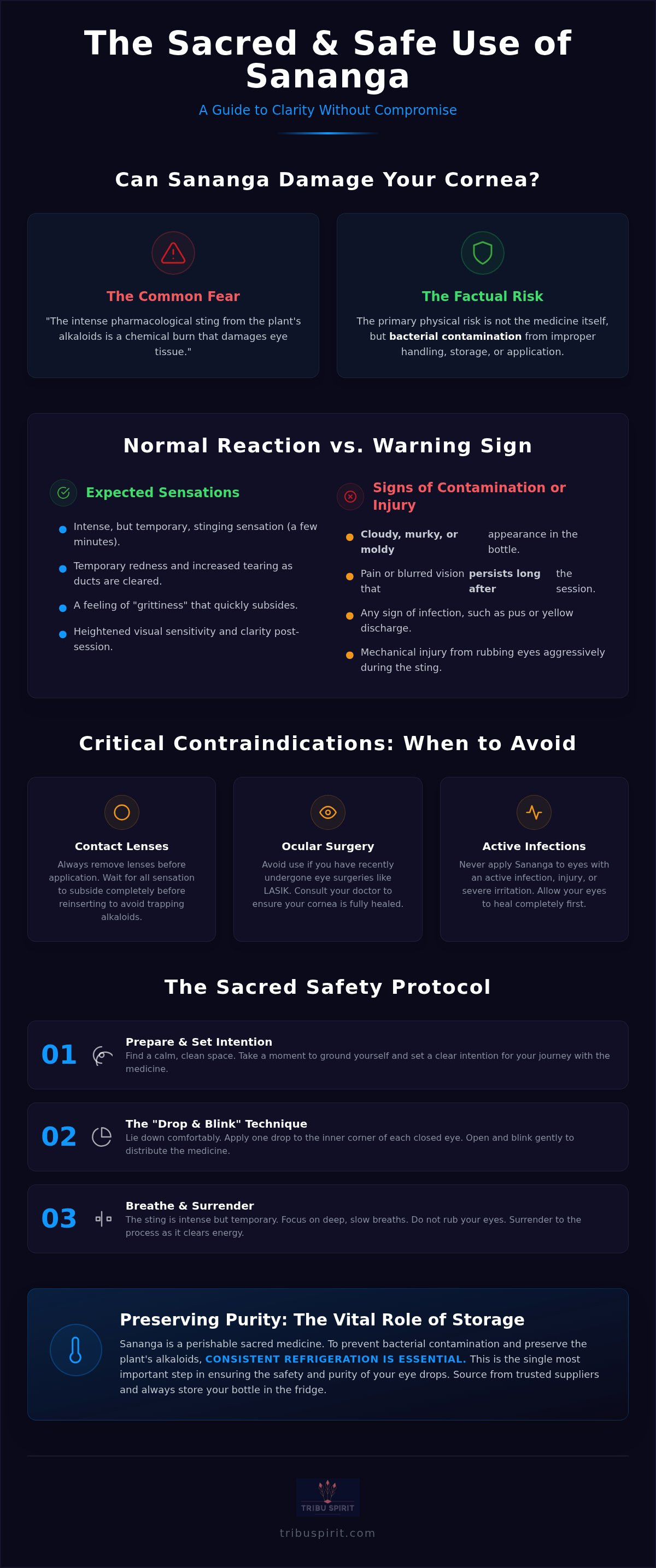
Distinguishing between the sacred "work" of the medicine and a genuine physical injury is essential for your peace of mind. During a typical session, you should expect intense stinging, heavy tearing, and significant redness. These are signs of increased blood flow and energetic clearing. These sensations usually peak within 5 to 10 minutes and fade completely within 20 minutes. If you experience the following red flags, your eye may have suffered a mechanical scratch or an infection from a contaminated bottle:
- Persistent Pain: Sharp, stabbing pain that lasts for hours after the ceremony has ended.
- Light Sensitivity: An inability to look at normal indoor lighting the following day.
- Foreign Body Sensation: Feeling like there's a piece of sand or glass stuck in your eye that won't blink away.
- Cloudy Discharge: Yellow or green mucus, which is a sign of bacterial infection, not spiritual purging.
The Dangers of Improper Application
Most documented cases of corneal irritation aren't caused by the Tabernaemontana plant, but by how it's administered. The most common culprit is the dropper tip. In the middle of the intense sting, it's easy to lose spatial awareness. If the plastic dropper touches the surface of the eye, it can cause a corneal abrasion. This physical scratch is what leads to lasting pain, not the liquid itself.
Contact lenses are another critical risk factor. You must never use Sananga while wearing them. The lenses can trap the alkaloids and any potential contaminants against the cornea, preventing the eye from naturally flushing itself through tears. This trapped environment can lead to severe irritation or even chemical keratitis. Finally, the urge to rub your eyes during the sting is powerful. Resist it. Rubbing forces the eyelids against the cornea with great pressure, which can lead to microscopic scratches if any dust or particles are present. Surrender to the tears; they are your body's natural way of protecting your sight.
Contraindications: When to Avoid Sananga
A sacred practice begins with an honest assessment of your physical vessel. While the spirit may be ready for the fire of Tabernaemontana, your eyes must be structurally sound to receive it. We've established that the medicine itself isn't corrosive, yet the question remains: can sananga damage your cornea if used improperly or at the wrong time? There are specific windows of vulnerability where the eyes are simply too fragile for the intense physiological response Sananga triggers. Honoring these boundaries isn't a sign of fear, but an act of deep respect for the medicine and your body.
Recent Eye Surgeries and Procedures
If you've recently undergone a surgical procedure, your eyes are in a delicate state of reconstruction. For LASIK patients, the corneal flap requires significant time to achieve full stability. The vigorous tearing and the natural, intense squinting that occurs during a Sananga ceremony could potentially interfere with this healing process. Most practitioners recommend a minimum waiting period of six months after such surgeries. The risk of flap displacement or introducing non-sterile liquid into a healing incision is a serious concern. If the structural integrity of the eye is compromised, even the most sacred medicine can become a source of physical stress. Always consult your ophthalmologist to ensure your eyes have fully transitioned from "patient" to "practitioner" before integrating these drops.
Chronic Conditions and Sensitivity
Chronic conditions require a mindful, educated approach. Glaucoma is a primary concern because Sananga induces rapid vasodilation and stinging, which can temporarily fluctuate intraocular pressure. While these effects are usually brief, they may pose a risk to those already managing high pressure. Similarly, individuals with severe dry eye syndrome may find that the medicine exacerbates irritation rather than clearing it. You must also consider the following before your session:
- Active Infections: Never use Sananga while fighting conjunctivitis or any other ocular infection. The medicine's non-sterile nature can complicate an existing bacterial load.
- Pharmaceutical Interactions: If you're using prescription eye drops for chronic conditions, allow at least 24 hours between the synthetic and the sacred.
- Contact Lenses: As previously mentioned, these must be removed. Using them creates a trap for the medicine, and can sananga damage your cornea if used improperly by being held against the surface for too long? Absolutely.
Physical health is the foundation of spiritual exploration. Approaching the medicine with a body that's already in crisis creates resistance rather than surrender. By waiting for the right moment, you ensure that your journey toward clarity remains a path of expansion rather than a source of unnecessary physical injury. Trust the timing of your healing just as much as you trust the medicine itself.
The Sacred Safety Protocol: How to Use Sananga Properly
Proper application is the bridge between a fearful experience and a transformative one. When you approach the medicine, you aren't just using eye drops; you're entering into a dialogue with the forest's intelligence. While many ask, can sananga damage your cornea if used improperly, the answer often lies in the ritualistic precision of your hygiene and posture. By following a structured protocol, you minimize mechanical risks and maximize spiritual receptivity. This medicine demands respect, and that respect begins with how you prepare your physical vessel.
Step-by-Step Application Guide
Success with Sananga requires stillness and surrender. Follow these steps to ensure a balanced experience:
- Step 1: Purity of Hand and Heart. Wash your hands thoroughly with unscented soap. Clear your energetic space using Mapacho or incense to set a container for your healing.
- Step 2: The Inner Corner Method. Lie down in a comfortable, quiet position. Close your eyes and apply one drop to the inner corner of each eye. This prevents the dropper from hovering directly over the pupil, reducing the risk of accidental contact or poking.
- Step 3: The Bilateral Blink. Open both eyes simultaneously. Blink rapidly to distribute the medicine evenly across the ocular surface. Applying to both eyes is essential for maintaining energetic and neurological balance.
- Step 4: Breath as an Anchor. As the fire arrives, don't fight it. Use deep, rhythmic belly breaths to move the energy through your body. Keep your hands away from your face to avoid the urge to rub, which could cause physical scratches.
Hygiene as a Sacred Duty
In the Amazon, the medicine is often prepared fresh from the root. In our modern world, we must compensate for the journey the medicine has taken. The most critical rule is that the dropper tip must never touch any surface, including your skin or the eye itself. This prevents the introduction of bacteria into the bottle, which is the primary cause of ocular irritation. Balancing tradition with safety means creating a "ceremonial clinic" where your tools are respected and kept sterile. For deeper insights on how to hold this space with presence, explore The Art of Sacred Ritual. When you treat the bottle as a living entity, you protect both your vision and the medicine's potency. If you're ready to begin your journey with ethically sourced tools, you can find our curated selection at Tribu Spirit.
Once the fire subsides, usually after 10 to 15 minutes, keep your eyes closed for a few additional moments. This integration phase is just as vital as the application. Your eyes have undergone a significant physiological shift, and giving them rest allows the alkaloids to settle and the nervous system to recalibrate. Can sananga damage your cornea if used improperly? Yes, if you rush the process, ignore hygiene, or rub your eyes in a panic. But when done with patience and precision, the medicine remains a safe, high-vibrational tool for crystalline clarity.
Sourcing and Storage: Preventing Bacterial Contamination
Sananga is a living extract, a vibrant essence of the rainforest that remains sensitive to its environment long after it leaves the shade of the canopy. Unlike mass-produced pharmaceutical eye drops, sacred Sananga contains no synthetic preservatives or stabilizing chemicals. This organic purity is exactly what allows the medicine to interact so deeply with your energetic field, but it also means the liquid is highly perishable. When we consider the question, can sananga damage your cornea if used improperly, we must look beyond the application technique and examine the integrity of the medicine itself. A bottle that has been compromised by heat or bacteria poses a far greater risk to your physical sight than the natural sting of the plant.
Approaching your medicine with a spirit of stewardship ensures that every drop remains a catalyst for healing. By treating your bottle as a sacred, biological entity, you honor the tradition and protect the delicate windows of your soul. Your responsibility as a practitioner is to maintain the purity of the bridge between the forest and your home.
How to Store Your Sananga
Refrigeration is a non-negotiable requirement for liquid Sananga extracts. The cool environment of a refrigerator slows down the natural degradation of the monoterpene indole alkaloids and prevents the growth of harmful pathogens. Typically, a well-maintained bottle remains fresh and potent for approximately six months when kept consistently chilled. If you leave your medicine in a warm bag or on a sunny windowsill, you invite rapid bacterial bloom. This contamination is the primary cause of adverse ocular reactions. Before every ceremony, perform a mindful inspection of your medicine:
- The Scent Test: Fresh Sananga has a deep, earthy, and slightly woody aroma. If the liquid smells sour, "funky," or reminiscent of vinegar, it has likely spoiled and should be returned to the earth.
- Visual Clarity: While natural sediment is common and simply requires a gentle shake, you should watch for floating "clouds" or fuzzy white structures. These are signs of mold, not medicine.
- Consistency: The liquid should remain fluid. Any unexpected thickness or sliminess is a clear signal that the bottle is no longer safe for use.
Ethical Sourcing and Quality Control
The journey of the medicine from the root to your eyes involves several critical stages of filtration and care. "Cheap" or mass-marketed Sananga often lacks the rigorous, multi-stage filtration necessary to remove microscopic plant fibers that could irritate the corneal surface. When you choose to work with Amazonian Plants that are ethically sourced, you are investing in a process that prioritizes both spiritual potency and physical safety. At Tribu Spirit, we ensure that our Sananga - Strong Strength is prepared with the highest standards of cleanliness while honoring the indigenous sovereignty of the tribes who harvest it.
By supporting fair-trade practices, you ensure that the medicine is handled with the same reverence in the lab as it was in the forest. Clean sourcing is the ultimate safeguard. Can sananga damage your cornea if used improperly? It certainly can if the source is untrustworthy or the storage is neglected. However, when you combine a pure, ethically filtered extract with disciplined refrigeration, you create a safe container for your journey toward crystalline clarity.
Embracing the Fire with Wisdom and Clarity
Your journey toward crystalline vision is a sacred dance between ancient forest wisdom and modern discernment. We've explored how the intense sting of Tabernaemontana is a catalyst for energetic clearing, rather than a source of physical harm. While it's natural to wonder, can sananga damage your cornea if used improperly, you now possess the knowledge to distinguish between the medicinal burn and the risks of contamination or mechanical trauma. By prioritizing strict hygiene, consistent refrigeration, and honoring the necessary healing windows for your physical eyes, you transform a moment of intensity into a lifetime of insight.
At Tribu Spirit, we offer more than just medicine; we provide a bridge to indigenous sovereignty and Amazonian reforestation. Our high-vibrational extracts are ethically sourced and supported by our Private Ministry and Academy, ensuring you have the guided resources to practice with absolute confidence. Explore our ethically sourced Sananga collection and begin your path to clarity. Trust in the medicine, respect the protocol, and allow the fire to lead you back to your most authentic self. The path is open; walk it with a clear heart and steady breath.
Frequently Asked Questions
Can Sananga cause permanent blindness if used daily?
Sananga hasn't been shown to cause permanent blindness; however, daily use requires extreme vigilance regarding bottle sterility. The alkaloids are potent and provide a deep reset, yet your eyes also need periods of rest to maintain their natural equilibrium. If you use it every day, you must ensure your bottle is perfectly preserved in the refrigerator. Introducing non-sterile liquid daily increases the risk of infection, which is where real ocular danger lies.
Is it normal for my eyes to stay red for an hour after using Sananga?
While the most intense redness typically subsides within 20 to 30 minutes, it's not uncommon for a slight pinkish hue to linger for up to an hour. This is a result of increased blood flow and vasodilation. However, if your eyes remain deep red, painful, or sensitive to light after 60 minutes, it could indicate a surface scratch or irritation. In such cases, avoid further applications and allow your eyes to rest.
Can I use Sananga if I have had LASIK surgery in the past?
You should wait at least six months after LASIK or any corneal surgery before using Sananga. The surgical flap needs time to heal completely and reach structural stability. The intense squinting and tearing caused by the medicine can put undue stress on a healing eye. Always consult your ophthalmologist to confirm your cornea is fully recovered. Rushing into spiritual practice with a physically vulnerable eye can lead to complications that are easily avoided.
What should I do if the Sananga dropper touches my eye?
If the dropper tip makes contact with your eye or any other surface, you must consider the bottle contaminated. Stop using that specific bottle immediately to prevent bacterial growth. Monitor your eye for signs of a corneal abrasion, such as a persistent feeling of grit or sharp pain. Because the dropper isn't sterile, this is a moment where you must prioritize physical safety over the desire to finish the session or the bottle.
How can I tell if my Sananga has gone bad or contains bacteria?
Trust your senses to detect if your medicine has been compromised. Spoiled Sananga often develops a sour or vinegary smell that differs from its usual earthy aroma. Look for any unusual cloudiness, fuzzy white spots, or a change in the liquid's viscosity. If the extract looks slimy or has floating debris, it likely contains bacteria. Using spoiled medicine is a primary way can sananga damage your cornea if used improperly.
Does Sananga damage the cornea if I accidentally rub my eyes?
Yes, rubbing your eyes during the intense stinging phase can lead to physical damage. The pressure of your fingers against the eyelid can cause microscopic scratches or a full corneal abrasion. This mechanical trauma is often misidentified as a chemical burn from the medicine itself. It's essential to keep your hands away from your face and allow the tears to flow naturally. Surrendering to the fire without physical resistance is the safest path.
Is it safe to use Sananga while pregnant or breastfeeding?
We recommend avoiding Sananga during pregnancy and breastfeeding. There's a lack of scientific research regarding how the monoterpene indole alkaloids might affect a developing fetus or pass into breast milk. Shamanic traditions often view pregnancy as a time of profound energetic sensitivity where the mother's field should remain undisturbed by intense purgative medicines. It's best to wait until after this sacred period of life to resume your work with the forest eye drops.
Can children or pets be exposed to Sananga?
Sananga is a powerful tool intended for adult practitioners who can consciously consent to the experience and follow safety protocols. Children have much more sensitive ocular tissues and cannot manage the intense pain or the urge to rub their eyes. Similarly, the medicine is not suitable for pets and could cause them significant distress or injury. Keep your bottles securely stored in the refrigerator and out of reach of any little ones or curious animals.