
Your home altar isn't just a shelf for beautiful curiosities; it's a living, breathing ecosystem that bridges the physical world with the spirit realm. In an age where 84% of people prioritize wellness yet feel increasingly untethered from the sacred, building a home altar for ceremony offers a vital anchor. It serves as a dedicated sanctuary where the rush of modern life finally slows to a whisper.
We understand the disconnect that comes with a busy home. You might feel unsure which tools are essential versus purely decorative, or perhaps you worry about honoring indigenous wisdom without crossing into cultural appropriation. It's a delicate balance to strike. This guide will help you transform a simple corner into a powerful portal for spiritual growth and plant medicine work. You'll discover how to master the sacred technology of shamanic tools, from the grounding presence of mapacho to the rhythmic call of a hand-carved rattle. We'll walk through creating a space that isn't just visually stunning, but energetically clear and deeply aligned with your personal path of evolution.
Key Takeaways
- Discover how to view your altar as a 'Mesa', a sacred landscape that mirrors your own spiritual evolution and protects your energy.
- Learn the specific elemental anchors required for building a home altar for ceremony that feels both grounded and spiritually potent.
- Understand why the frequency of indigenous-made tools is essential for authentic plant medicine work; it ensures a deeper, more respectful connection.
- Uncover the rhythmic process of calling in the four directions to activate your space and invite ancestral guidance.
- Gain insights into integrating your daily practice through breathwork and silence. This turns simple ritual into a lasting internal shift.
The Shamanic Home Altar: A Bridge to Ancient Wisdom
An altar is far more than a curated shelf of aesthetic objects or a quiet corner for reflection. In the wisdom traditions of the South, it's known as a Mesa; a living, breathing microcosm of the universe that acts as a spiritual map for the practitioner. When you begin building a home altar for ceremony, you aren't just decorating a room. You're installing a piece of sacred technology designed to facilitate deep personal transformation and provide a steady anchor in an increasingly chaotic world. It's a dedicated space where the mundane dissolves, allowing the high-frequency vibrations of your intentions to take root.
In 2026, as the global spiritual wellness market reaches nearly $194 billion, many are seeking more than just "spiritual decor." They're looking for authentic roots. Physical anchors like stones, feathers, or a hand-carved rattle aren't just symbolic; they're energetic stabilizers. They provide the tactile feedback our nervous systems need to transition from the "fight or flight" of modern life into the "rest and receive" state required for deep ritual. This space becomes your protection, a sanctuary where the energy is kept clear, focused, and high.
The Concept of the Mesa in Shamanic Practice
The Mesa is not a static display; it's a living entity that evolves alongside your own growth. It serves as a focal point for the wisdom passed down through generations of shamanic practices, acting as a bridge between your current reality and the ancestral realms. Every item placed upon it carries a specific frequency that resonates with the plant medicine path. Your intention is the catalyst. Whether you're seeking clarity, healing, or grounding, the Mesa holds that frequency for you, even when you aren't physically sitting before it. It breathes with you. It remembers your prayers. It grows as you grow.
Why Your Home Needs a Dedicated Ritual Portal
Establishing a permanent location for your practice creates a powerful psychological and energetic boundary. When you step toward your altar, your mind receives a signal that the workday is over and the sacred has begun. This consistency builds "ritual muscle memory," making it easier to enter meditative states quickly. For those working with Amazonian plant teachers, such as the grounding spirit of Mapacho or the heart-opening clarity of Hapé, having a dedicated portal is essential. It ensures that the medicine is approached with the reverence it deserves. Building a home altar for ceremony transforms your living space into a sanctuary of presence, ensuring that your connection to the divine is never more than a few steps away.
The Anatomy of a Sacred Space: Elemental Foundations
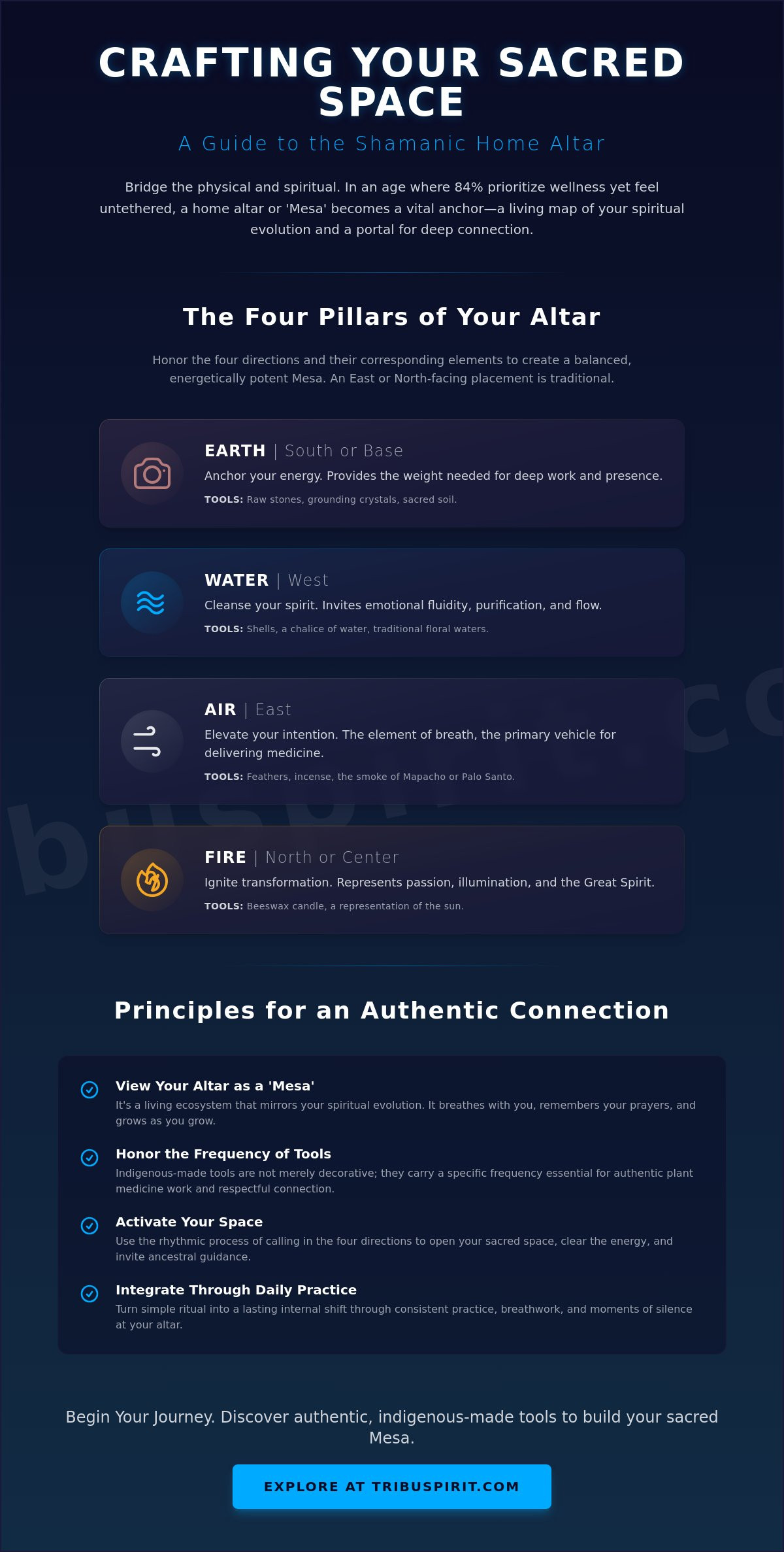
The physical structure of your altar is the skeleton upon which the spirit of your practice rests. When building a home altar for ceremony, you're creating a tangible anchor for the intangible. This begins with selecting a location that honors natural cycles. Traditionally, many practitioners prefer an East-facing placement to greet the rising sun and the energy of new beginnings, or a North-facing position to align with the wisdom of the ancestors and the element of Earth. Stability is paramount. Your Mesa should rest on a surface that feels solid and unshakeable, reflecting the internal groundedness you seek to cultivate.
Anthropologically, the concept of sacred space suggests that by setting boundaries, we transform an ordinary area into something transcendent. This isn't just about where the altar sits, but how it flows. The arrangement of your tools should follow a sense of sacred geometry that feels intuitive to your heart. When items are placed with intention, the energy moves in a circular, inclusive spiral rather than becoming stagnant. This intentionality ensures that every object serves as a conductor for the frequencies you wish to invite into your life.
Representing the Four Directions and Elements
A complete Mesa typically honors the four pillars of the natural world. Earth is often anchored in the South or at the base, represented by raw stones, grounding crystals, or a small vessel of sacred soil. This provides the weight needed to stay present during deep work. Moving to the West, Water finds its home through shells, chalices, or traditional floral waters, inviting emotional fluidity and cleansing. Air is traditionally placed in the East, symbolized by feathers or the rising smoke of incense. In shamanic traditions, Air is also the element of the breath, which is the primary vehicle for delivering medicine. Finally, Fire resides in the North or center. Whether it's a pure beeswax candle or the metaphorical eternal flame of your own heart, Fire provides the transformative heat necessary for alchemy. To ensure your tools are ready for this elemental dance, you might consider starting with a bamboo kuripe to connect your breath with the spirit of the wind.
Energetic Hygiene: Preparing the Physical Location
Before a single stone is placed, the physical area must be pristine. This process involves two distinct layers: physical cleaning and energetic clearing. Dust and clutter act as energetic noise that can distract the mind and muffle the frequency of your ritual. Once the surface is physically clean, use the smoke of Mapacho or Palo Santo to sweep away lingering vibrations from the day. Creating a container is the final step in preparation. This is a psychic perimeter that tells the universe this space is now reserved for the sacred. By blowing Mapacho smoke around the edges of your altar, you seal the area, ensuring that the work you do remains focused and protected from outside influences. This container allows you to dive deeper into the silence, knowing your sanctuary is secure.
Selecting Your Sacred Tools and Plant Teachers
Choosing the elements for your Mesa is an act of deep listening. While some might see these as mere accessories, in the context of indigenous wisdom, they're living allies that carry the frequency of their makers and the land they come from. When you're building a home altar for ceremony, the ethics of sourcing become paramount. Tools crafted by indigenous hands carry a distinct resonance, a lineage of prayer and intention that mass-produced items simply lack. This energetic integrity is what transforms a physical space into a true conduit for the divine.
According to the anthropological definition of sacred space, objects within an altar function as symbols that bridge the gap between the human and the supernatural. In shamanic traditions, this bridge is built through "sacred technology." This includes sound healing instruments like the hand-carved shamanic rattle, which clears the auric field, and the bell, which calls the spirit to attention. These aren't just musical instruments. They're extensions of your will. Alongside these, plant teachers like Mapacho and Sananga serve as anchors, holding the perimeter of your space and ensuring that your work remains focused and protected.
The Kuripe and Tepi: Sacred Applicators
The most intimate tools on your altar are the applicators used for Hapé. Choosing a bamboo kuripe offers a lightweight, natural connection to the element of Air, while hand-carved wooden versions often provide a more grounded, Earth-centric energy. The Kuripe is an extension of your own breath; it's the physical vessel through which your intention travels into the medicine. Store these tools with reverence, perhaps wrapped in a traditional cloth or placed on a dedicated wooden tray, ensuring they never touch the floor. This maintains the high vibration you've worked so hard to cultivate. Treat them as the sacred bridges they are.
Hapé: The Heart of the Shamanic Altar
No shamanic altar is complete without the presence of the plant teachers. Hapé Tsunu is often considered a foundational medicine for any Mesa due to its profound grounding and clearing properties. It acts as the "master of ceremonies" for your ritual. To honor the spirit of the medicine, always keep it in air-tight glass containers. This preserves its potency and prevents the sacred ash from losing its spirit. When building a home altar for ceremony, use specific shamanic tools like small bone or wooden spoons to measure your offerings. This prevents cross-contamination and ensures that every interaction with the medicine is a deliberate, conscious act of prayer. Every pinch is a conversation with the forest.
The Step-by-Step Ritual of Building Your Altar
Building a home altar for ceremony begins long before the first stone touches the surface. It starts with your breath and the conscious choice to step out of linear time. This process is a ceremony in itself, a slow dance of intention that weaves your personal energy into the fabric of the space. To begin, stand in the center of your room and find your center. Invoke the guardians of the four directions, starting in the East and moving clockwise, asking for their presence and protection. This invocation creates the invisible walls of your sanctuary, ensuring that only the highest frequencies remain within the perimeter.
Once the space is called in, lay down your foundational cloth. This fabric acts as the 'skin' of your Mesa, holding the energetic field of your tools together. As you place your elemental anchors, do so with the deliberate slowness of a prayer. Place the Earth in the South, Water in the West, Air in the East, and Fire in the North or center. This layering of energy isn't just about placement; it's about invitation. You're telling the spirits of the elements that they have a home here. The process of building a home altar for ceremony is complete only when you set your primary intention. Write a single, potent sentence on a small piece of paper and place it at the very center, under your primary anchor. This is the 'mission' of your altar, the north star for all your future rituals.
Activating Your Tools and Medicines
Your tools are your allies, but they must be woken up to perform their sacred work. To activate them, use the sacred breath of Mapacho to blow smoke over your Kuripe, your stones, and your medicines. This smoke carries your spirit and welcomes the tools into your service. If you've gathered new stones or crystals, charge them under the light of the full moon or the midday sun for at least four hours before placing them on the Mesa. This ensures they're cleared of previous imprints and ready to hold the specific frequency of your home sanctuary. Treat each tool as a living being with its own consciousness and purpose.
Daily Rhythms and Altar Maintenance
A Mesa is a living ecosystem; it requires regular nourishment to stay vibrant. Dedicate five minutes every morning to a simple greeting. Light a candle, refresh the water in your chalice, and offer a moment of silence. This daily rhythm keeps the connection between you and the spirit world open and clear. Maintenance also involves energetic hygiene. After deep ceremonial work or periods of emotional purging, cleanse the entire altar with Mapacho smoke or a high-quality floral water. Clear away spent candles or wilted flowers immediately. A clean, well-tended altar reflects a clear, well-tended mind, allowing your spiritual practice to flourish in a space of impeccable purity.
Deepening Your Connection: Ceremony and Integration
Once the physical structure of your Mesa is complete, the true work of transformation begins. Sitting before your altar is an invitation to enter the sacred ritual of presence, where the noise of the external world finally fades. This isn't just about the moments spent in prayer; it's about how that stillness informs your reactions to stress, your creativity, and your relationships. Building a home altar for ceremony creates a ripple effect that touches every corner of your existence. The silence you cultivate in front of your elemental anchors becomes a reservoir of peace you can draw from throughout the day. It's a living battery for your soul.
Breathwork is the fuel for this ongoing transformation. When you sit in silence, your breath acts as a bridge between the physical tools on your altar and your internal landscape. It's the sacred wind that carries your intentions into the spirit realm. By focusing on the rhythmic rise and fall of your chest, you synchronize your vibration with the natural world. This is where integration happens. It's the conscious process of taking the high-frequency insights gained during ceremony and weaving them into the mundane threads of your life. The altar isn't an escape from reality. It's a portal that helps you engage with reality more deeply.
The Altar as a Mirror of the Self
An altar is never truly finished. It's a reflection of your soul's current season. As you work with the wisdom of Amazonian plants, you'll likely find yourself drawn to different stones, colors, or arrangements. This is natural and should be celebrated. Your Mesa should breathe and evolve as you do. If you feel a specific cycle has ended, don't be afraid to deconstruct and rebuild your space. This act of renewal honors your growth and keeps the energy from becoming stagnant. Journaling your experiences in front of the space helps anchor these shifts, turning fleeting moments of clarity into lasting wisdom you can carry forward.
Joining the Global Tribe
You don't have to walk this path in isolation. The journey of building a home altar for ceremony is a bridge to a wider community of seekers and practitioners who value the old ways. Through the Tribu Spirit Academy, you can find the support and advanced training needed to deepen your understanding of these ancient traditions. Continuing education ensures that your practice remains respectful, safe, and rooted in authentic lineage. As you continue to refine your sacred space, remember that every tool and every prayer is a step toward a more conscious, balanced life. Explore our ethically sourced sacred tools to find the next ally for your journey and join a global community dedicated to spiritual evolution.
The Living Bridge: Your Journey into the Sacred Begins
Your journey into the deep wisdom of the forest doesn't end with reading these words; it begins the moment you clear a physical space for the divine. By understanding the Mesa as a living mirror of your soul and honoring the four elements, you've laid the groundwork for profound transformation. Building a home altar for ceremony is a continuous act of devotion that evolves as you do, providing a steady anchor in a fast-moving world. It's a commitment to your own growth and a bridge to the ancient traditions that sustain us.
To ensure your sanctuary vibrates with the highest frequency, choose allies that carry a true lineage of prayer. Our collection is handcrafted by master artisans and ethically sourced from Amazonian tribes. Each piece supports reforestation and indigenous sovereignty, ensuring your practice remains in harmony with the Earth. Build your sacred space with our ethically sourced Shamanic Tools and experience the potency of authentic sacred technology. Trust the call of your heart as you curate your portal. Your sanctuary is waiting for you to come home.
Frequently Asked Questions
What is the difference between a decorative shelf and a sacred altar?
A sacred altar is defined by its active ceremonial function and the presence of conscious intention. Unlike a decorative shelf, which is curated for visual appeal, an altar is a living ecosystem where you interact with the spirit world. Every object is placed with a specific purpose, acting as a conductor for energy rather than a static ornament. It's a place of work, prayer, and evolution.
Can I build an altar in a small apartment or bedroom?
You can absolutely create a potent sanctuary within a small apartment or a single bedroom. The spirit realm doesn't require vast acreage; it responds to the sincerity of your heart and the clarity of your focus. A small, dedicated corner or even a stable nightstand can serve as a powerful portal for building a home altar for ceremony as long as the space is kept physically clean and energetically clear.
Which plant medicines are essential for a beginner's shamanic altar?
For those beginning their journey, Hapé Tsunu and Mapacho are the most foundational plant teachers to include. Tsunu offers profound grounding and heart-centered clarity, making it an ideal anchor for daily ritual. Mapacho is essential for clearing the space and sealing the perimeter of your work. These medicines act as master teachers, guiding you safely into the deeper layers of shamanic practice and spiritual presence.
How often should I clean or reset the energy of my home altar?
You should physically clean your altar once a week and reset the energy through smoke clearing after every deep ceremonial session. If you use the space daily for meditation, a light clearing with Mapacho smoke every few days keeps the vibration high. Refreshing the water and removing spent candles immediately prevents energetic stagnation and maintains the impeccable sanctity of your Mesa.
Is it disrespectful to use indigenous tools if I am not from that culture?
Using indigenous tools is an act of deep respect when they're ethically sourced and used with humble intention. These tools carry the frequency of the lineage and the land, which supports your own spiritual evolution. By choosing items that support indigenous sovereignty and reforestation, you enter into a reciprocal relationship with the cultures that preserved this sacred technology for generations.
What should I do if I feel the energy of my altar has become stagnant?
If the energy feels heavy or dull, it's often a sign that the space needs a physical and spiritual reset. Remove all items, clean the surface with floral water, and blow Mapacho smoke over every tool to wake up its spirit. Sometimes, simply rearranging the elemental anchors or adding a fresh prayer of intention can reignite the flow and restore the altar's potency.
Can I include photos of ancestors or loved ones on my shamanic Mesa?
Including photos of ancestors or loved ones is a beautiful way to honor your personal lineage on your Mesa. In many shamanic traditions, the ancestors are the primary guardians who provide guidance and protection during ritual. Placing their images in the North or at the base of the altar acknowledges their presence as the roots from which your current spiritual path grows.
How do I choose the right Kuripe for my personal ceremonies?
Choosing the right Kuripe is an intuitive process that depends on whether you seek grounding or expansion. A bamboo kuripe is often preferred for its lightweight, airy connection to the breath, while hand-carved wood offers a denser, more Earth-centric feel. Hold the intention of your practice in your heart and see which material or carving resonates with your current energetic needs and spiritual goals.