

Have you ever emerged from the sacred silence of a Hapé ritual feeling as though your spirit is still floating somewhere high above the forest canopy while your body remains behind, heavy and unmoored? It's a delicate state of being. Many practitioners find themselves feeling "spaced out" or physically sensitive after the medicine clears their field, especially if the ceremony involved a deep purge. You aren't alone in this. This transition period is where the true work of integration begins. Your first meal acts as the primary anchor for your returning energy.
Learning what to eat after a hapé ceremony is more than just a matter of hunger; it's a continuation of the ritual itself. By selecting "earth-anchor" foods, you bridge the celestial clarity you've gained with the physical reality of your daily life. In this guide, you'll discover how to nourish your body to maintain your newfound mental stillness while supporting your natural detoxification. We'll explore the best grounding ingredients, clarify the differences between various plant medicine traditions, and provide a roadmap for a gentle, intentional return to your physical vessel. Your body is the temple that holds the medicine's wisdom. Feed it with reverence.
Key Takeaways
- Understand how your first meal acts as a bridge between the spiritual and physical realms to gently ground your energy.
- Master the "Earth Anchor" principle by discovering exactly what to eat after a hapé ceremony to stabilize your presence and focus.
- Identify the specific root vegetables and soothing grains that nourish your body without clouding the medicine's lingering clarity.
- Learn which common stimulants and processed foods can cause an energetic crash or disrupt the integration process.
- Explore how to transform your nourishment into a sacred ritual through mindful blessings and intentional presence.
The Energetic State: Why Post-Hapé Nutrition Matters
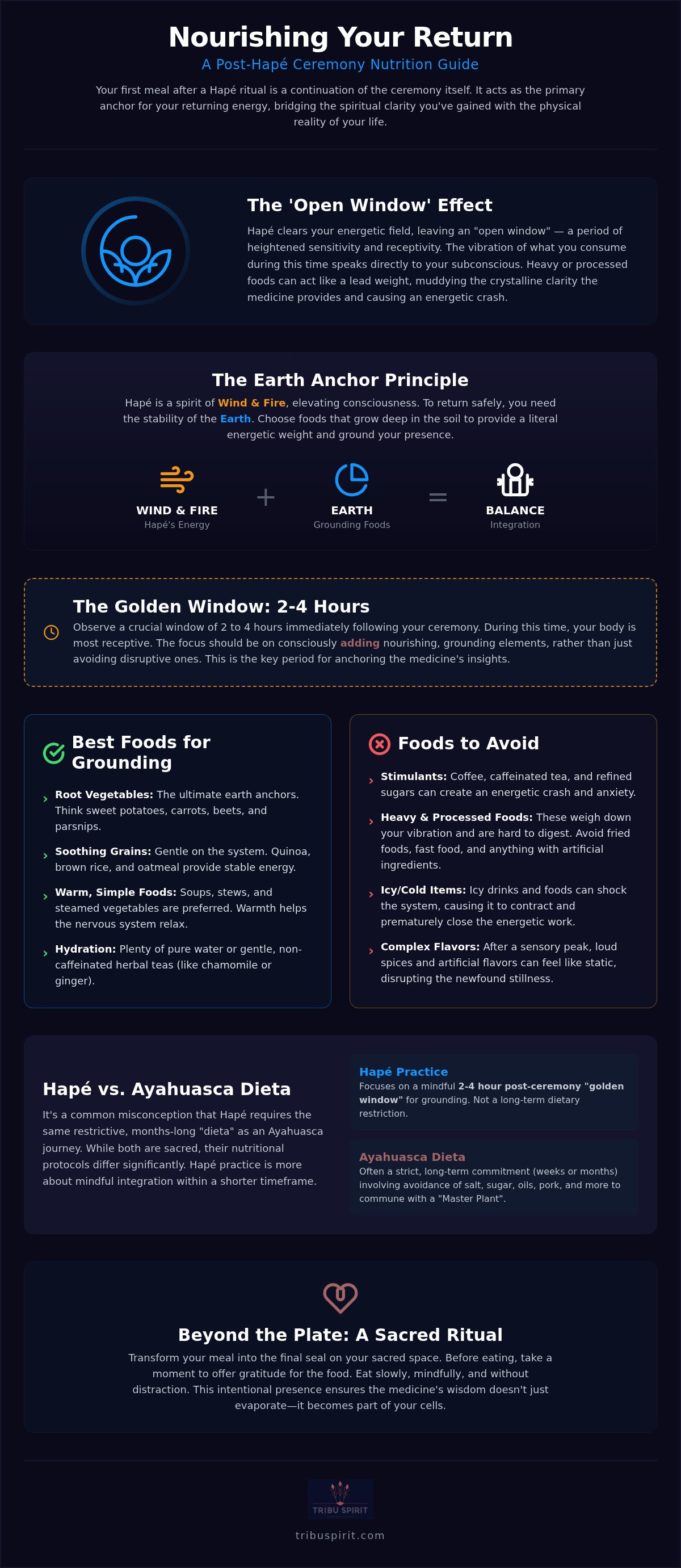
Hapé is a master of alignment. It moves with a swift, decisive force, clearing the mental fog of the crown chakra while simultaneously seeking a deep anchor in the root. When the spirit of the tobacco departs, it leaves behind an "open window" in your energetic field. This is a period of heightened sensitivity where your presence is porous and receptive. During this time, the vibration of your environment and the substances you consume speak directly to your subconscious. Choosing what to eat after a hapé ceremony isn't just about satiety; it's about honoring the space you've just cleared. Heavy, processed foods don't just fill your stomach; they act like a lead weight on your vibration. They can cause an energetic crash that muddies the crystalline clarity the medicine provided. Instead, we look for foods that vibrate in harmony with the earth and your newly expanded awareness.
Hapé and the Physical Body
While the experience is deeply spiritual, its effects are undeniably physical. For many, the ritual includes a purge, a sacred release that can leave the body's electrolyte balance temporarily shifted. The intense blow of the medicine also activates the nervous system, requiring a period of gentle regulation to return to a state of calm. Within the context of Traditional Medicine, the recovery of the physical vessel is as important as the vision itself. This is why understanding what to eat after a hapé ceremony is essential for long-term balance. Integration is the process of weaving ceremonial insights into daily physical life. By focusing on nourishing, clean ingredients, you provide your nervous system with the safety it needs to fully land back in the three-dimensional world.
The Concept of 'Closing' the Ceremony
Food serves as the final seal on your sacred space. It acts as a definitive signal to your psyche that the journey has concluded and the return has begun. There's a profound difference between a sacred snack and a distracting meal. A sacred snack is a small, intentional offering of fruit or nuts that grounds you without overwhelming your senses. A distracting meal is one consumed mindlessly, perhaps to numb the intensity of the experience. This transition is a vital part of your Sacred Ritual. As you eat, you might find it helpful to reflect on the teachings from your Academy courses, allowing the mental clarity to settle into physical wisdom. Using food to bridge the gap between your internal revelations and external responsibilities ensures the wisdom doesn't simply evaporate. It becomes part of your cells.
The Shamanic Principles of Post-Medicine Nutrition
The ancient wisdom of Ethnobotany teaches us that plants are far more than mere chemistry; they carry a distinct energetic blueprint that interacts with our own. In the shamanic tradition, the "Earth Anchor" principle serves as the foundation for post-ceremony recovery. Hapé is a spirit of wind and fire. It elevates your consciousness and clears the upper chakras with swift intensity. To return safely to your physical vessel, you need the stability of the earth. Choosing foods that grow deep in the soil or rest close to the surface provides a literal energetic weight. Simplicity is your greatest ally during this transition. After the sensory peak of a ritual, complex spices or artificial flavors can feel like loud static on a clear radio frequency. Warm foods are generally preferred over cold ones. Warmth encourages the digestive fire to wake up gently and helps the nervous system relax. Icy drinks can shock the body back into a defensive, contracted state, which may prematurely close the energetic work the medicine is still performing.
Hapé vs. Ayahuasca: Understanding the Dieta
It's a common misconception among newcomers that every plant medicine requires the months-long, salt-free restriction typical of an Ayahuasca journey. While Ayahuasca involves a deep "Master Plant" commitment with very rigid rules, Hapé is often more integrated into a regular spiritual practice. You don't necessarily need to fast for days before or after, but observing a "golden window" of 2 to 4 hours after your ceremony is vital. During this time, your focus should be on what you add to your body rather than just what you avoid. Add grounding elements like mineral-rich plants and structured water. This isn't about restriction for the sake of tradition; it's about maintaining the sacred resonance of the tobacco spirit. Understanding what to eat after a hapé ceremony allows you to extend the medicine's influence into your physical life without the friction of heavy digestion.
Listening to the Body's Wisdom
The clarity provided by a potent blend like Tsunu Hapé sharpens your internal feedback loop. You'll begin to notice a clear difference between "medicine cravings" and "ego cravings." Medicine cravings feel like a quiet, steady pull toward hydration, fresh fruit, or a simple bowl of grains. These are the body's genuine requests for nourishment. Ego cravings are loud, impulsive, and demanding. They often seek the dopamine hit of refined sugar or heavy, processed fats to "numb out" the vulnerability that follows a deep session. Trust your intuition. Your body knows exactly what to eat after a hapé ceremony if you listen to the subtle signals rather than the noisy habits of the mind. If you feel called to deepen this connection, exploring our ethically sourced Hapé blends can help you refine your sensitivity to these internal guides. Choosing your first meal with presence ensures that the wisdom gained in the silence stays with you as you move back into the world.
Best Foods for Grounding After Sitting with Hapé
Selecting your first meal is an act of self-care that honors the medicine's work within you. While general advice often suggests "light meals," your body specifically craves elements that mirror the earth's stability. When deciding what to eat after a hapé ceremony, prioritize ingredients that have spent their lives maturing in the silence of the soil. These foods carry a dense, nourishing vibration that helps pull your awareness back into your physical form. A balanced post-ceremony plate should feel like a warm embrace for your nervous system, providing steady energy without the chaotic spikes of modern, processed ingredients.
- Warm, simple grains: Quinoa, brown rice, or gluten-free oats are excellent for coating and soothing the stomach lining, especially if you've experienced a physical release.
- Plant-based proteins: Lentils or chickpeas offer a clean source of strength that grounds the body's energy for several hours.
- Hydrating fruits: Watermelon, grapes, or berries provide natural sugars and structured water to gently awaken your senses and replenish your vitality.
The Power of Root Vegetables
Root vegetables are the ultimate tools for spiritual anchoring. Plants like carrots, beets, and parsnips grow deep in the cool darkness of the earth, absorbing mineral wisdom and steadying frequencies. They are the literal embodiment of the "Earth Anchor" principle discussed earlier. Shamanic practitioners often favor sweet potatoes because they offer a grounding density combined with a natural sweetness that satisfies the ego's desire for comfort without disrupting your internal clarity. To ensure easy digestion, it's best to steam or roast these vegetables until they are soft. Raw vegetables can sometimes be too "active" and cold for a body that's still integrating the fire of the tobacco spirit. A simple mash of sweet potato with a pinch of sea salt can be a profound way to close your ritual.
Hydration and Electrolytes
If your journey involved a purge, your primary focus should be on restoring your internal balance. Coconut water is often called nature's electrolyte replacement; it's a living fluid that matches the body's own mineral profile. It's much more than a drink; it's a continuation of your nourishment. When considering what to eat after a hapé ceremony, don't overlook the power of warm infusions. Ginger tea is a wonderful ally for stoking the "digestive fire" without overwhelming it, while chamomile supports the continued relaxation of the nervous system. Always avoid ice-cold water. Coldness can cause the energetic field to contract too quickly, potentially "locking in" unintegrated emotions. Choose room temperature or warm liquids to keep the pathways of your body open and receptive. If you feel you need more specialized support for your practice, exploring our Hapé blends can help you find the specific medicine that resonates with your current path of healing.
What to Avoid: Foods That May Disrupt Your Integration
After a ceremony, your energetic field is like a freshly polished mirror. It reflects every vibration you introduce to it with startling clarity. Knowing what to eat after a hapé ceremony also means knowing what to leave off your plate to protect this sacred state. Consuming the wrong substances is like throwing dust onto that mirror; it obscures the insights you've just received. Highly processed sugars are particularly disruptive in this window. They trigger a physiological high followed by a sharp crash, a cycle that can easily be mistaken for an emotional or spiritual collapse. This artificial "rush" masks the subtle, steady vibration of the medicine, making it harder to hear your inner voice. Similarly, heavy oils and fried foods coat the body in a dense, sluggish energy. This "muddiness" prevents the medicine's clarity from settling into your daily awareness, leaving you feeling heavy rather than grounded.
Excessive spice is another element to approach with caution. Hapé already carries its own internal fire, often derived from the sacred Mapacho tobacco. Adding more fire through chili or intense spices can overstimulate a nervous system that's currently seeking equilibrium. It's about maintaining a gentle, cool environment for the integration to bloom. Choose flavors that whisper rather than shout.
The Impact of Stimulants
Caffeine is perhaps the most common disruptor for the modern practitioner. It's an upward, cerebral energy that pulls you directly out of the heart-centered, grounded state Hapé provides. While Hapé seeks to connect the crown and the root, coffee tends to trap energy in the head, creating jitters that mimic anxiety. Don't rush back into the "hustle" of daily life. Maintain the stillness for at least a few hours post-ceremony. If you need a gentle wake-up, reach for a light herbal infusion. These provide hydration without the jagged edge of traditional stimulants, allowing your meditative state to linger throughout the day.
Animal Products and Density
Red meat carries a significant energetic density. It requires immense physical energy to digest, which diverts resources away from your spiritual processing. Many practitioners find that animal products feel "heavy" in the stomach after sitting with the medicine, creating a sense of being weighed down. We generally recommend staying vegetarian for the first 24 hours to keep your vibration light and receptive. If you choose to consume animal products, look for the cleanest, most ethical sources possible. To support your integration with the highest quality tools, you can browse our selection of ethically sourced Hapé and continue your path with intention. Choosing "light" proteins ensures your body remains an open channel for the wisdom you've invited in.
Beyond the Plate: Creating a Holistic Post-Ceremony Ritual
Integration is an art of continuity. The meal you prepare is a physical extension of the prayers you've just blown into the wind. When considering what to eat after a hapé ceremony, the quality of your presence during the meal is just as vital as the ingredients on your plate. Before taking your first bite, pause to offer a blessing. This simple act acknowledges the life force, or Prana, within the plants and continues the sacred ritual of connection. You are literally consuming the elements of Earth and Water; these are the very forces that ground the airy fire of the tobacco spirit. By eating with intention, you transform a biological necessity into a spiritual anchor.
Practice mindful eating by engaging all five senses. Notice the texture of the root vegetables, the subtle sweetness of the grains, and the warmth radiating from the bowl. This sensory focus anchors you into the present moment, preventing the mind from drifting back into the "mundane" world too quickly. Keep a journal nearby. Often, the most profound insights arrive not during the intense peak of the medicine, but in the quiet space of nourishment that follows. Documenting these thoughts while you eat ensures that the wisdom doesn't fade like a dream upon waking. Your first meal is the bridge that carries the medicine's teachings into your cellular memory.
Cleaning Your Sacred Tools
Before you sit down to eat, take a moment to tend to your kuripe or tepi. Cleaning your sacred technology is a symbolic way of closing the energetic container of the ceremony. Use a soft cloth or a small brush to remove any lingering medicine, honoring the tool for the service it has provided. Storing your tools in a dedicated, high-vibration space maintains their purity for your next sitting. This transition from "ceremony time" to "nourishment time" is a crucial step in healthy integration. It signals to your psyche that while the ritual has concluded, the respect for the process remains.
Sustaining the Practice
A clean, intentional diet isn't just a post-ceremony requirement; it's the foundation of a long-term relationship with the medicine. By remaining mindful of what to eat after a hapé ceremony, you keep the internal channels clear for future work. A body that is regularly nourished with grounding, whole foods becomes a more sensitive vessel for spiritual communication. For those seeking a deeper understanding of these indigenous traditions, our Tribu Spirit Academy offers comprehensive integration training to help you walk this path with mastery. We invite you to explore our sacred Hapé collection to continue your journey with the reverence and quality your spirit deserves. Let every meal be a testament to the clarity you've found.
Nourishing the Vessel of Your Transformation
The journey with the tobacco spirit doesn't end when the smoke clears; it continues through every conscious choice you make in the hours that follow. By prioritizing grounding root vegetables and warm, simple grains, you provide your physical vessel with the stability it needs to hold the medicine's high frequency. Avoiding stimulants and heavy, processed fats ensures that the crystalline clarity you've gained isn't muddied by an energetic crash. Understanding exactly what to eat after a hapé ceremony transforms your post-ritual meal into a final seal of protection for your spirit.
Your body is the living temple where this ancient wisdom resides. We invite you to deepen your practice with tools and teachings that honor the purity of the Amazonian forest. Discover our ethically sourced Hapé blends and sacred tools at Tribu Spirit, where our handcrafted shamanic tools and dedicated academy support your path toward lasting integration. Walk with presence, eat with reverence, and let your inner stillness guide your every step into the world.
Frequently Asked Questions
Can I drink coffee immediately after a Hapé ceremony?
It's best to avoid coffee immediately after your session. Caffeine is a jagged, upward stimulant that can shatter the delicate stillness of the meditative state Hapé provides. Instead of grounding your energy, coffee tends to trap it in the mind, potentially leading to jitters or anxiety. Honor the medicine's work by staying in the natural flow of your own nervous system and allowing the silence to linger.
How long should I wait to eat after sitting with the medicine?
We recommend waiting at least thirty to sixty minutes before consuming a light, sacred snack. This allows your energetic field to stabilize after the initial blow of the medicine. If you're planning a more substantial meal, waiting two to four hours is ideal. This golden window ensures that the medicine has fully integrated into your system before the body diverts its primary energy toward the heavy task of physical digestion.
Is it necessary to follow a strict 'Ayahuasca dieta' for Hapé?
No, a strict seven day Ayahuasca dieta isn't mandatory for a standard Hapé practice. While Ayahuasca involves deep master plant commitments with rigid rules, Hapé is often a more frequent companion on the spiritual path. However, focusing on what to eat after a hapé ceremony, specifically avoiding salt, refined sugar, and heavy oils for the first twenty four hours, will significantly deepen your sensitivity and help you maintain the medicine's crystalline clarity.
What should I eat if I feel nauseous after a Hapé purge?
If you experience a physical release, focus on soothing the stomach with warm, simple ingredients. A small piece of fresh ginger or a warm ginger infusion can settle the digestive fire and ease lingering nausea. Gentle starches like steamed sweet potato or a small bowl of plain quinoa provide a soft anchor for your energy without overwhelming your sensitive system. Listen closely to your body; it will tell you when it's ready for nourishment.
Are there any fruits I should avoid after using sacred snuff?
Generally, most fresh fruits are wonderful allies for integration, but you might want to avoid highly acidic citrus like lemons or pineapples if your stomach feels sensitive. These can sometimes be too sharp for a post-ceremony palate. Instead, reach for hydrating, grounding fruits like watermelon, grapes, or papaya. These provide a gentle lift in natural sugars while replenishing the vital fluids your body needs to recover after the ritual.
Can I eat chocolate after a Hapé ceremony?
While dark, ceremonial grade cacao can be a beautiful companion to Hapé, you should avoid commercial milk chocolate filled with refined sugars and additives. These processed ingredients create an energetic high and crash that disrupts your integration. If you feel a call for chocolate, choose a high percentage dark variety and consume it mindfully. Let it be a sacred treat that anchors your senses rather than a mindless distraction from the experience.
Should I fast before sitting with Hapé?
A light fast of two to four hours before your ceremony is highly beneficial. Sitting with an empty stomach allows the medicine to move through your field with greater ease and reduces the intensity of any potential nausea. It creates a clean canvas for the tobacco spirit to paint its wisdom upon. If you must eat, choose something very light, like a single piece of fruit, to keep your energy focused on the ritual work.
What is the best thing to drink after a shamanic ritual?
Coconut water is arguably the finest choice for replenishment as it perfectly mirrors the body's natural mineral profile. It's a living fluid that restores electrolytes gently. Room temperature water or warm herbal teas like chamomile and ginger are also excellent options. Always avoid ice-cold drinks. Coldness can cause the energetic field to contract too quickly, which may interfere with the subtle work the medicine is still performing within your cells. Knowing what to eat after a hapé ceremony includes choosing the right fluids.