

What if the cold sweat, the racing heart, and the sudden wave of nausea weren't signs that you failed your ritual, but proof that the medicine is working exactly as it should? It's a heavy, unsettling realization when a moment meant for peace turns into a storm of physical distress and spiritual anxiety. You sought a connection to the sacred, yet you've found yourself trapped in a "purge" that feels more like a crisis than a cleansing. It's natural to feel afraid when the ground beneath you seems to shift. You're likely wondering what to do if you have a bad hapé experience and whether the dizziness or dark thoughts will ever truly subside.
This discomfort is rarely a mistake. It's often a profound "limpieza" that requires specific tools to navigate. You'll learn how to anchor your physical body through grounding and transform overwhelming sensations into a powerful moment of healing. We'll explore the spiritual meaning behind the "purge" and provide a clear path to regain your confidence. This guide offers the clarity you need to move from fear back into the light of the ritual.
Key Takeaways
- Understand that intense physical and emotional responses are often a sacred "limpieza" or cleansing rather than a failure of the ritual.
- Discover exactly what to do if you have a bad hapé experience with a five-step emergency grounding protocol designed to restore your presence and calm.
- Learn to distinguish between the challenging but normal shamanic purge and the rare red-flag symptoms that require immediate intervention.
- Master the art of using your breath to move the medicine through your body and clear stagnant energy known as panema.
- Gain the wisdom to select the appropriate Hapé strength and prepare your sacred space to prevent future overwhelm.
Understanding the Intensity: Is a "Bad" Hapé Experience Normal?
The first breath of Hapé can feel like a lightning bolt to the senses. For some, this sharp clarity quickly dissolves into a wave of nausea, a racing heart, or a sudden, crushing sense of dread. If you've found yourself in this space, please know that your experience is a recognized part of the medicine's path. Understanding what to do if you have a bad hapé experience begins with a gentle reframing. This isn't a medical emergency or a sign that you've broken your spirit. It's a healing crisis. The medicine is simply moving faster than your current resistance can handle.
Hapé is a powerful ally used within spiritual or ritualistic contexts to ground the soul and clear the energetic field. When the physical body reacts strongly, it's often a sign of "limpieza," a deep cleansing of stagnant energy. While it feels chaotic in the moment, this temporary discomfort is frequently the gateway to a profound breakthrough. Trust the process. The medicine knows the way even when the mind is lost.
The Distinction Between Medical HAPE and Shamanic Rapé
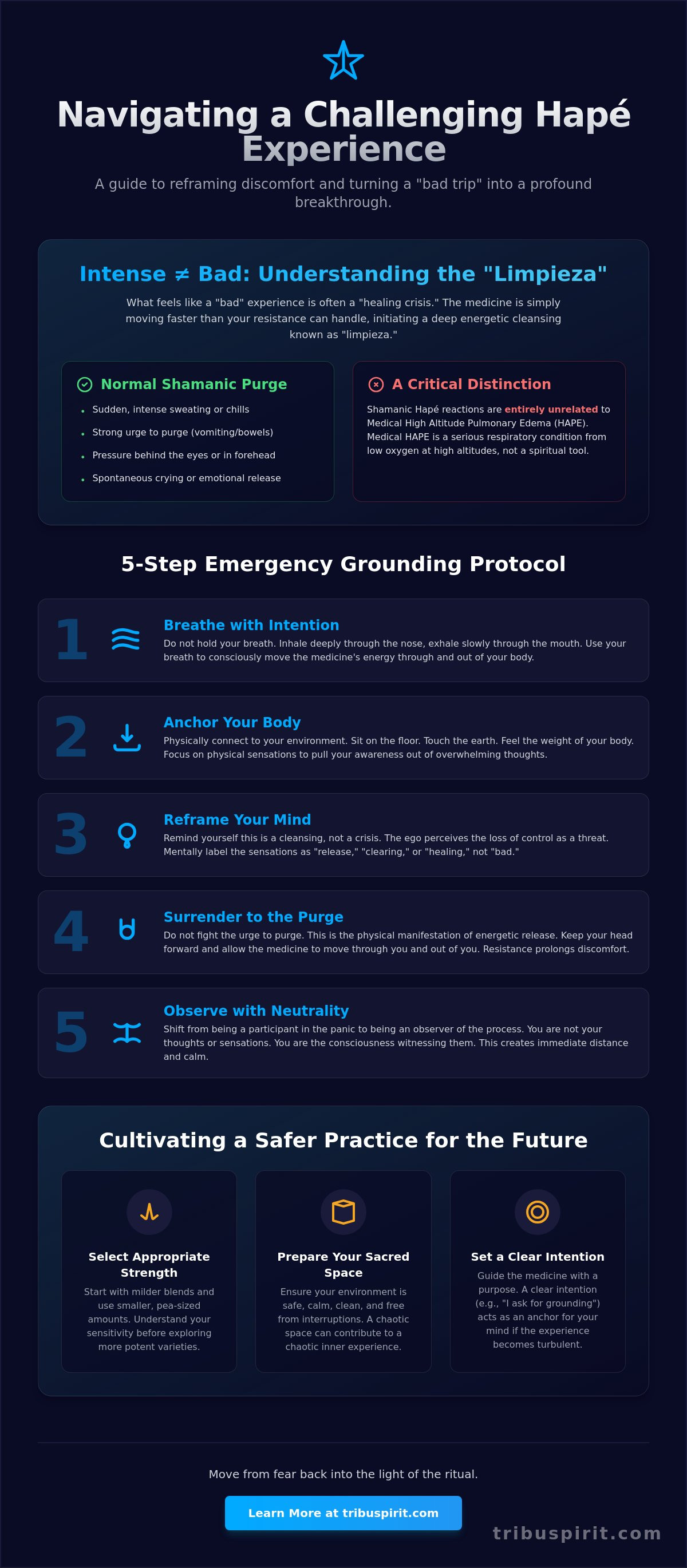
If you've searched for answers online, you might have encountered terrifying reports of High Altitude Pulmonary Edema (HAPE). This is a medical condition caused by low oxygen levels at high elevations; it's entirely unrelated to the sacred snuff of the Amazon. To gain clarity, you must first understand what is hape in its traditional shamanic sense. While medical HAPE involves respiratory distress from altitude, shamanic Hapé involves a deliberate interaction with plant spirits.
Typical shamanic Hapé responses include:
- Sudden, intense sweating or chills.
- A strong urge to purge through vomiting or bowel movements.
- Pressure behind the eyes or in the forehead.
- Spontaneous crying or emotional release.
These are signs of energy moving, not a lack of oxygen in your lungs. They're the body's way of shedding what no longer serves you.
Why the Mind Labels Intensity as "Bad"
The human ego thrives on control and predictability. When the potent Nicotiana rustica enters your system, it forces an immediate, uncompromising grounding that the ego often perceives as a threat. This resistance is what creates the "bad" label. Without a clear intention to guide the medicine, the mind can spiral into "dark" thoughts or anxiety. A shamanic difficult trip is a soul-deep confrontation with the shadow self that demands total presence. You aren't losing your mind; you're simply meeting the parts of yourself that have been hidden in the dark. Silence the noise. Breathe into the center.
The Physical and Spiritual Purge: Why Hapé Causes Strong Reactions
To understand what to do if you have a bad hapé experience, you must first look past the physical discomfort. It isn't merely a biological reaction. It's a dialogue between the spirit of the tobacco and your own energetic field. In the Amazon, this is called "limpieza." It's a deep cleaning. The medicine finds the blockages you've tucked away and brings them to the surface to be released. When the body purges, the soul is often following suit.
The primary force behind this intensity is Nicotiana rustica. It's a potent species of tobacco, far removed from commercial varieties. It carries high concentrations of nicotine and alkaline ash that demand respect. According to Colorado State University's Guide to Poisonous Plants, the alkaloids in Nicotiana can cause rapid heart rate and muscle tremors when the system is overwhelmed. This intensity is exactly what allows the medicine to shatter "panema," or stagnant energy. When you feel nausea, it's often the medicine identifying a specific blockage in your solar plexus. It isn't a mistake. It's a surgical strike on your shadows.
Physical Symptoms: From Nausea to the "Hapé Hangover"
The physiological response is immediate. The alkaline ash raises the pH in your nasal passages, allowing nicotine to flood the bloodstream. This causes the "heavy head" or dizziness that can feel like the world is spinning. If the powder drips down your throat, it irritates the stomach lining and triggers the urge to vomit. Don't fight it. This "Hapé hangover" is the body resetting its baseline. Keep your head forward. Let the medicine move through you rather than getting stuck in your throat.
Energetic Limpieza: Releasing Panema
Panema is a traditional Amazonian concept describing a cloud of bad luck, lethargy, or heavy energy that clings to a person. Hapé acts as a spiritual wind, blowing this cloud away. If you feel overwhelmed during this process, tsunu hape is specifically revered for its ability to anchor the user during these stormy moments. It provides a steadying hand when the world feels too loud. Sitting with the discomfort is the work. Instead of resisting the nausea, ask it what it's carrying. You might find that using a hand-carved shamanic rattle helps you move this heavy energy through your space and out of your field.
Difficult vs. Dangerous: How to Evaluate Your Shamanic Experience
Distinguishing between a soul-deep cleansing and a physical emergency is the most vital skill for any practitioner. When the fire of the medicine meets the resistance of the body, the resulting heat can feel like a crisis. Knowing what to do if you have a bad hapé experience requires you to remain the silent observer of your own sensations. A difficult experience is often a necessary passage. A dangerous one is a call for immediate pause. You must learn to listen to the difference between the ego’s scream and the body’s genuine distress.
Normal shamanic symptoms often include a profound "sinus fire," intense sweating, and an overwhelming urge to purge. These are not signs of failure. They are the hallmarks of a deep ritual. However, a clinical review of nicotinic plant poisoning reminds us that high concentrations of tobacco alkaloids follow a biphasic pattern. The initial stimulation of a racing heart is standard, but if this shifts into prolonged fainting, severe respiratory distress, or an inability to communicate for over 60 minutes, the threshold of safety has been crossed. Always approach high-potency blends with a trusted sitter who can hold the space while you journey into the depths.
Normal Sensations During a Deep Ritual
The "sinus fire" is perhaps the most shocking element for beginners. This sharp, stinging sensation can trigger a reflexive panic response, making you feel as though you cannot breathe. It's a sensory illusion. Your airways remain clear. You might also experience a temporary loss of motor control, feeling the need to lie down immediately as the medicine grounds your energy. These effects are transient. Most practitioners find that the peak intensity subsides within 30 to 60 minutes, leaving behind a state of crystalline clarity and presence.
When to Seek Help or Change Your Approach
Safety begins long before the medicine is blown. Understanding the proper use of shamanic tools is essential; using a kuripe with too much force or improper alignment can cause unnecessary physical trauma. Certain contraindications are absolute. If you have a history of heart conditions, are pregnant, or are taking specific medications, Hapé may not be your path. Be cautious when layering medicines. Combining Hapé with Sananga can amplify the sensory load, potentially pushing a manageable ritual into an overwhelming territory. Respect your limits. The medicine is a teacher, not a test of endurance.
Immediate Steps to Take During an Overwhelming Hapé Session
When the medicine moves with unexpected force, your primary task is to return to the center. Knowing exactly what to do if you have a bad hapé experience turns a moment of panic into a ritual of resilience. You must stop fighting the sensation. Resistance only creates more friction in the energy body. Instead, surrender to the physical presence of the earth and the steady rhythm of your own life force. The medicine is not your enemy; it is a mirror reflecting a temporary storm.
The breath is your most sacred tool for movement. If the Hapé feels "stuck" or causes a mental loop, use your exhale to blow the energy down toward your feet. Open a window to invite fresh air into the space. Remove any restrictive jewelry or tight clothing that may be making you feel trapped. If you have a sitter, ask them to gently blow Mapacho smoke around your crown or apply a few drops of Agua de Florida to your palms. These scents act as anchors, pulling your spirit back into the physical container of the body.
The 5-Step Grounding Protocol
Follow this sequence to stabilize your nervous system and reclaim your presence:
- Step 1: The Box Breath. Inhale for 4 seconds, hold for 4, exhale for 4, and hold for 4. This specific ratio signals the brain that you are safe.
- Step 2: Earth Connection. Sit directly on the floor. If possible, touch the bare soil or a stone. Feel the weight of the planet supporting you.
- Step 3: Mindful Hydration. Take small, deliberate sips of room-temperature water or ginger tea. This settles the stomach and rinses the "drip" from your throat.
- Step 4: Rhythmic Sound. Use a hand-carved rattle to create a steady, repetitive beat. The sound breaks the mental loop and provides a frequency for your energy to follow.
- Step 5: Sacred Smoke. Use the grounding aroma of Mapacho to clear the heavy air and seal your energetic field.
Post-Ceremony Integration: The First 24 Hours
The work doesn't end when the physical effects fade. The first 24 hours after a difficult purge are a sensitive window for integration. Avoid digital noise, social media, and loud environments. Your system has just undergone a deep "limpieza," and it needs silence to recalibrate. Journaling the experience helps translate the "bad" feelings into actionable wisdom. What was the medicine trying to show you? Often, the most difficult sessions provide the most significant releases. Finally, remember to clean your shamanic tools with sage or a soft cloth to reset the energy of your altar and your practice.
Cultivating a Safer Practice with Tribu Spirit Wisdom
Wisdom is the fruit of experience, and even a difficult session is a teacher in disguise. While we've discussed what to do if you have a bad hapé experience in the heat of the moment, the ultimate goal is to build a foundation that prevents future overwhelm. Safety isn't just about the physical dosage. It's about the sanctity of the container you create. When you approach the medicine with humility and preparation, the "purge" becomes a controlled release rather than a chaotic eruption. The ritual is your anchor.
Central to this preparation is the art of sacred ritual. A ritual is a boundary. It tells the medicine where to work and tells your mind when to surrender. Choosing ethically sourced, tribal-made Hapé ensures that the energetic lineage of the plant remains intact. This provides a stable frequency that supports your spirit. When you're finished, always close the ceremony by giving thanks to the forest and the ancestors. Gratitude is the final seal that integrates the lessons, even the hard ones. Honor the medicine, and it will honor you.
Selecting the Right Medicine for Your Sensitivity
Not all blends are created for every moment. For those who are sensitive or recovering from a challenging session, Tsunu Hapé offers a gentle, grounding embrace that anchors the soul. In contrast, visionary blends like Parica may be too expansive for a beginner or someone already feeling ungrounded. Start with a micro-dosing approach by using an amount no larger than half a pea. This allows you to build a relationship with the spirit of the plant slowly and respectfully. Using a personal bamboo kuripe gives you total control over the force of the blow, ensuring the medicine enters with grace rather than aggression.
The Tribu Spirit Commitment to Safe Exploration
We believe that no one should walk this path alone. Our Tribu Spirit Academy offers practitioner training for those who wish to deepen their understanding of these sacred technologies. Additionally, our Private Ministry provides a supportive space for members to process difficult integrations and find clarity among kindred spirits. You deserve a ritual that nourishes your soul and respects your limits. Explore our curated, gentle Hapé blends for a balanced ritual.
Embrace the Healing Power of the Sacred Purge
A difficult ritual isn't a sign to stop. It's an invitation to go deeper into your own healing. You've learned that intense physical sensations are often the medicine identifying and releasing stagnant energy that no longer serves your highest good. By mastering the breath and grounding your spirit into the earth, you reclaim the power over your own journey. Knowing what to do if you have a bad hapé experience ensures that you never feel lost when the medicine speaks with a loud voice. It's about moving from a state of resistance to one of total surrender.
Your path deserves the support of a conscious community and the highest quality tools. At Tribu Spirit, our medicines are ethically sourced directly from Amazonian tribes to ensure their energetic purity and potency. We provide Private Ministry support to help practitioners navigate their most intense integrations with grace and clarity. You can return to the ritual with a sense of peace and a heart open to transformation. Begin your journey with our ethically sourced, grounding Hapé collection and discover the strength found in sacred silence. The forest is waiting to guide you home.
Frequently Asked Questions
How long does a bad Hapé experience usually last?
The peak intensity of a challenging session typically subsides within 30 to 60 minutes. While the most acute physical sensations pass quickly, you may feel a lingering sense of sensitivity or fatigue for 2 to 4 hours following the ritual. It's essential to allow your nervous system this window to recalibrate. If you're wondering what to do if you have a bad hapé experience that feels prolonged, focus on quiet contemplation and hydration to ground your energy.
Is it normal to throw up after using Hapé?
Vomiting is a recognized and often intentional part of the Amazonian ritual known as a purge. This physical release helps clear "panema" or stagnant energy from the solar plexus and digestive system. It isn't a sign of illness but rather a deep energetic cleansing. Most practitioners find that a wave of crystalline clarity and peace follows immediately after the physical purge is complete.
Can I have an allergic reaction to Rapé?
While rare, it's possible to have a sensitivity to specific botanical ingredients or ashes found in various tribal blends. Because Hapé contains diverse plant medicines, you should test a tiny amount on your skin or perform a single micro-dose blow before committing to a full ritual. If you experience hives, swelling, or genuine respiratory distress, stop use immediately. These symptoms are distinct from the standard shamanic cleansing process.
What should I do if I feel dizzy or faint after the blow?
If you feel the world spinning or a loss of motor control, immediately sit on the floor and lower your head toward your knees. This position stabilizes your blood pressure and keeps you safely connected to the earth. Focus on deep, rhythmic breathing to move the medicine through your system. This dizziness usually peaks within 5 to 10 minutes after the application before fading into a deeply grounded state.
Why do I feel depressed or anxious the day after a Hapé session?
Feeling emotional or "low" the day after a session is often a sign of ongoing energetic integration. The medicine frequently brings suppressed shadows or heavy emotions to the surface, requiring time for the mind to process what was released during the purge. This emotional recalibration typically clears within 24 to 48 hours. Engaging in gentle movement, like walking in nature, can help move this residual energy through your field.
How much Hapé is too much for a single session?
A single dose the size of half a pea for each nostril is the standard recommendation for most practitioners. Exceeding two full applications in a single sitting can overwhelm the nervous system and lead to a distressing experience. Respecting the potency of the Nicotiana rustica is key to maintaining a safe and balanced ritual. Always start with the smallest possible amount to gauge your current sensitivity.
Should I use Hapé alone if I am prone to difficult experiences?
You shouldn't use Hapé alone if you've previously struggled with intense physical reactions or spiritual anxiety. Having a trusted sitter provides a grounded presence that can help you navigate what to do if you have a bad hapé experience by offering a glass of water or simply holding a safe space. A sitter ensures you remain physically safe if you experience a temporary loss of motor control or deep visionary states.
How can I stop the burning sensation in my nose and throat?
To minimize the burning, avoid sniffing the powder back into your throat and instead breathe gently through your mouth. Keep your head tilted slightly forward to allow the medicine to settle in the nasal cavity rather than dripping down the back of your throat. Once the ritual has concluded and the medicine has done its work, you can use a small amount of clear water to gently rinse your nostrils and soothe the tissues.