

What if the bridge between your breath and your spirit isn't just a tool, but a living extension of your own intention? Choosing a kuripe is often the first step toward a deeper, more personal connection with the sacred medicine of the forest. You likely understand that a ritual is only as profound as the presence you bring to it, yet a poorly fitted applicator can quickly turn a moment of transcendence into one of frustration. It's a common struggle to feel overwhelmed by intricate carvings while wondering if the pipe will actually function as intended. Many practitioners find themselves with beautiful objects that fail to deliver the medicine effectively, leading to a loss of focus during their most private moments of prayer.
We believe your tools should mirror the sanctity of your practice. You'll learn how to select a piece that aligns with your unique anatomy and spiritual goals, ensuring every breath of medicine is received with grace. We'll explore the distinct energetic signatures of bamboo and tropical hardwoods while looking at how your choice supports the 12 indigenous tribes who craft these sacred instruments by hand. This guide provides the clarity you need to find a companion that resonates with your soul and elevates your daily ritual experience.
Key Takeaways
- Understand the sacred anatomy of the kuripe and how its unique V-shape symbolizes the divine union between your breath and the spirit.
- Discover how the distinct energetics of bamboo, hardwood, and bone influence the vibration and grounding depth of your ceremony.
- Learn to distinguish between single and double nostril applicators to find the perfect balance of precision and intensity for your personal flow.
- Master the art of selecting a tool that fits your physical anatomy by measuring ergonomics and internal bore diameter for optimal air pressure.
- Explore the importance of choosing ethically crafted, shamanic tools that honor indigenous artisans and carry the pure intention of prayer.
What is a Kuripe? The Sacred Anatomy of Self-Application
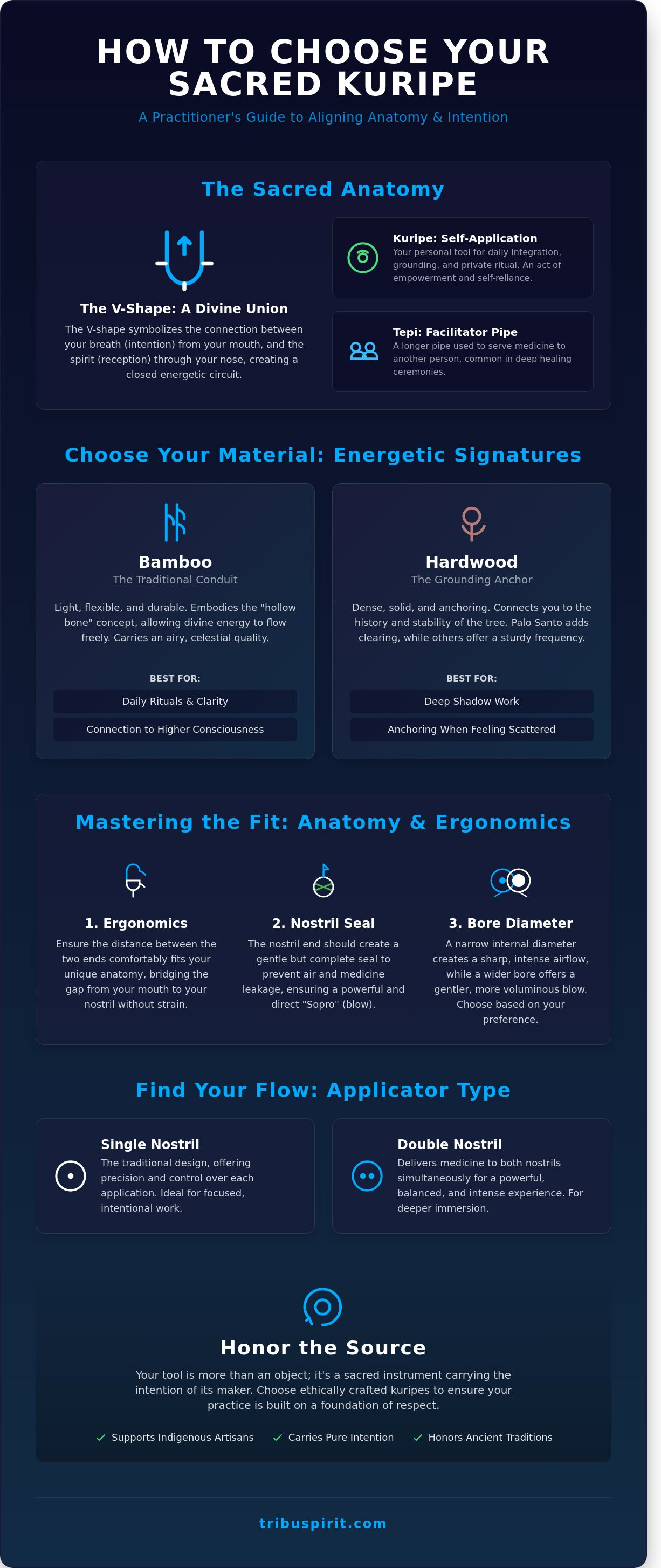
A kuripe is a small, V-shaped pipe used for the self-administration of Hapé, the sacred Amazonian snuff. While it may appear as a simple tool, it serves as a profound bridge between the physical body and the spirit world. Traditional artisans in the Amazonian basin, particularly within the Huni Kuin and Yawanawá tribes, have crafted these applicators for generations using sustainable materials like bamboo, bone, or local hardwoods. Using a kuripe is an act of empowerment. It allows you to enter a ritual space independently, claiming your own healing path without the need for an external facilitator.
The geometry of the kuripe is intentional and deeply symbolic. The V-shape represents the union between the individual and the divine. When you hold the pipe to your lips and nose, you're closing a circuit of energy. You're the practitioner and the patient, the creator and the witness. This self-reliance is a key aspect of the modern spiritual journey, offering a way to find center in a chaotic world. It's a gesture of profound intimacy with the medicine and your own inner landscape.
The V-Shape: Connecting Heart and Spirit
The physical structure of the kuripe facilitates a unique flow of energy. Air travels from your mouth, which represents your intention and creative power, directly to your nose, the gateway for reception and clarity. This movement mirrors how we manifest our desires in the world. The most vital part of this process is the "Sopro," or the blow. This isn't merely a mechanical action; it's a transmission of your spirit. Whether you choose a soft, long blow for meditation or a short, intense blow for clearing blockages, the kuripe ensures your breath is directed with precision. It transforms your internal state through the power of focused air.
Kuripe vs. Tepi: Choosing Your Ritual Path
Understanding the distinction between a kuripe and a tepi is fundamental for any practitioner. A tepi is a long facilitator pipe, meant for one person to blow the medicine into the nostrils of another. While tepi ceremonies are powerful for deep healing, the kuripe is your tool for daily integration. It's your companion for morning grounding or evening reflection. Having your own kuripe means you don't have to wait for a ceremony to find balance. It's helpful to understand the medicine's roots by reading What is Hapé? A Comprehensive Guide before choosing your first applicator. Selecting a kuripe is a personal choice that marks the beginning of a dedicated, self-led practice.
Comparing Materials: Bamboo, Hardwood, and Bone Energetics
The material of your kuripe acts as a subtle filter for the medicine, influencing the flavor and vibration of every breath. It's the physical bridge between the botanical spirit of hapé and your own energetic field. Choosing a material isn't merely an aesthetic decision; it's an alignment of intention. While a dense hardwood might pull your awareness toward the earth, a light bamboo reed encourages the spirit to rise. Your applicator is a sacred tool that carries the frequency of its origin, whether that be the deep rainforest floor or the soaring heights of the canopy.
Bamboo Kuripes: The Traditional Conduit
Bamboo remains the most common material for practitioners because it embodies the concept of the hollow vessel. In many Amazonian traditions, being a "hollow bone" is the ultimate state for a healer, allowing divine energy to flow without the interference of the ego. This material is light, flexible, and carries an airy, celestial quality. It's perfect for daily rituals where you seek clarity or a swift connection to higher states of consciousness. Beyond its spiritual weight, bamboo is incredibly durable. Its natural fibers resist cracking under humidity changes, and the smooth interior makes it easy to clean after intensive use, ensuring your kuripe remains a pure channel for years.
Hand-Carved Wood: Grounding in the Forest
Hardwoods provide a dense, grounding energy ideal for deep shadow work or moments when you feel scattered. When you hold a wooden applicator, you're holding the history of the tree. Palo Santo wood adds an extra layer of energetic clearing, infusing the medicine with its signature citrus-pine scent. Mahogany and Walnut offer a sturdier, more masculine frequency that anchors the user. Many seekers choose hand-carved totems like the Jaguar for protection or the Serpent for transformation. These carvings aren't just decorations; they are active spiritual allies. A heavy wooden piece helps slow the heart rate, making it a preferred choice for 70% of practitioners during grounding evening ceremonies.
Bone and Stone: Ancient Earth Connections
Bone and horn represent animal spirits and primal protection. Using ethically sourced bone connects you to ancestral wisdom and the cycle of life and death. It's a material of high conductivity, often feeling "alive" in the hand. For those looking to amplify specific intentions, crystal-inlaid tools are transformative. An Amethyst inlay can sharpen the focus on the Third Eye, while Tiger's Eye promotes courage. Choosing your material is a direct reflection of your current spiritual diet. If you feel the need to anchor your practice, you might explore handcrafted wooden tools that resonate with the forest's heartbeat. Every material serves a different chapter of your journey.
Energy follows form. The vessel matters. Whether you reach for the lightness of bamboo or the ancient weight of bone, let your intuition guide the breath.
Single vs. Double Nostril Kuripes: Finding Your Flow
The path of the breath is a sacred map. Choosing a kuripe is about more than just aesthetics; it's about how you wish to engage with your own nervous system. While a single pipe offers a measured dialogue with the self, a double pipe invites an immediate, total immersion. This choice defines the rhythm of your ritual and the depth of your connection to the medicine.
The Single Kuripe: Mastery of the Sopro
The single kuripe remains the foundational tool for those walking the path of Hapé. It requires two distinct breaths, known as the Sopro. This pause between sides isn't a delay. It's an opportunity for deep intentionality. Tradition teaches us that the left nostril relates to the feminine and the past, while the right connects to the masculine and the future. By applying Hapé to one side at a time, you can tailor your focus to these specific energetic centers.
For many practitioners, starting with a single pipe allows for greater control over the intensity of the experience. It's particularly effective when working with Tsunu Hapé for grounding. The deliberate nature of the single blow ensures the medicine reaches the sinus cavity with precision, making it the ideal choice for those still refining their breath work. It's a practice of patience and precision.
The Double Kuripe: The Path of Surrender
The double kuripe is designed for a simultaneous delivery. This "Double Shot" experience bypasses the mind’s natural tendency to resist the second application. When you use a single pipe, the ego often anticipates the second blow, creating a subtle internal tension. The double pipe eliminates this gap. It's a total reset. The mind has no time to build a wall.
Physically, this creates a symmetrical impact on the nervous system. The sensation is often described as a sudden, clear stillness that drops the practitioner directly into their heart space. To avoid overwhelming the sinuses, follow these best practices:
- Start with 50% of your usual total dose to test your sensitivity.
- Ensure the pipe is held level to maintain equal pressure in both chambers.
- Focus on a sharp, short exhale rather than a long, sustained blow.
Your choice depends on your current rhythm. If you're exploring a high-intensity blend for the first time, the single pipe offers a safety net of gradual entry. If you've established a consistent practice and seek to deepen your meditative state, the double pipe provides an uncompromising doorway to the now. Listen to your breath. It knows the way.
How to Choose a Kuripe That Aligns with Your Practice
Selecting your kuripe is an intimate rite of passage. It isn't just a tool; it's a bridge between your intention and the medicine. You're seeking a physical extension of your own breath that resonates with your spirit. Choosing a tool that aligns with your practice requires a balance of anatomical precision and intuitive pull. It's about finding that perfect harmony where the wood meets the skin and the breath meets the soul.
The Importance of Fit and Ergonomics
The physical geometry of the pipe determines the efficacy of your ritual. You should measure the distance from the center of your lips to your nostril entrance to find your ideal match. Most standard faces require a V-angle of roughly 55 degrees for a comfortable reach. If the angle is too wide, you'll struggle to maintain a seal, leading to wasted medicine and a fractured focus. A "tight" V-shape is often preferred by those with narrower facial structures to ensure the air pressure remains concentrated and direct.
Check the joints for smoothness and integrity. Rough edges or visible glue often indicate a lack of craftsmanship that can disrupt your sensory experience. A high-quality tool should feel seamless against your skin, allowing you to focus entirely on the inner journey rather than physical discomfort. Air leaks are the enemy of a focused ceremony; a perfect seal ensures the Hapé reaches the intended depth without hesitation.
Totemic Alignment: Jaguar, Eagle, and Serpent
Spiritual allies offer profound support during your application. A serpent carving represents the shedding of old skins and the 24-hour cycles of constant renewal. The jaguar offers protection and grounded strength during deep shadow work, while the eagle brings the gift of perspective from the higher realms. These aren't merely decorations; they're energetic anchors that help you navigate the visionary space.
To fully prepare your sacred space, you might consider using a Shamanic Rattle to clear stagnant energy before you begin. The combination of sound and breath creates a powerful container for transformation. When the animal spirit on your applicator matches the intention in your heart, the ritual gains a new layer of potency.
The internal bore diameter of your kuripe dictates the velocity of the delivery. A 4mm bore creates a sharp, piercing experience, while a 6mm bore allows for a softer, more voluminous cloud. Choose based on your personal sensitivity and the type of Hapé you use most frequently. Since this tool is intended to last 20 years or more, prioritize durability and material quality. High-quality bamboo or sustainably sourced hardwoods like Palo Santo resist cracking from moisture and the natural oils of your skin.
Ready to find the tool that speaks to your soul? We invite you to explore our collection of sacred tools and discover the applicator that resonates with your unique path.
Honoring the Source: Ethically Crafted Shamanic Tools
The journey of a sacred tool begins long before it reaches your hands. There's a profound energetic difference between a mass-produced object and a kuripe carved in a state of deep prayer. When an artisan works with intention, every stroke of the blade carries a blessing. This isn't just craftsmanship; it's a spiritual lineage. Objects created in assembly lines lack the soul and vibrational frequency of those birthed in the heart of the forest. By choosing a tool made with presence, you align your own practice with the ancient rhythms of the makers.
Tribu Spirit operates as a bridge between the ancient world and the modern seeker. We maintain direct, fair-trade partnerships with Huni Kuin, Yawanawá, and Katukina artisans to ensure that the wisdom of the forest remains protected. Our Private Ministry serves a vital role in this ecosystem. It acts as a guardian for these sacred traditions, ensuring that the medicine and its tools aren't commodified, but shared with the reverence they deserve. This structure allows us to support the preservation of indigenous rites while providing you with tools of the highest spiritual integrity.
Supporting Indigenous Sovereignty
Choosing an ethically sourced tool supports the very hands that protect the lungs of our planet. Every purchase contributes to the reforestation of the Amazon, helping to restore biodiversity in regions where over 17% of the forest has already been lost. The power of your tool is inextricably linked to the maker's intention. When an artisan creates in a state of mushkurum (sacred work), that energy is sealed into the wood or bone. A sacred tool is an investment in the culture that birthed the medicine. It's a commitment to the survival of indigenous wisdom and the physical protection of their ancestral lands.
Integrating Your Kuripe into a Sacred Ritual
Once you've chosen your applicator, the next step is preparation. Creating a Sacred Ritual space allows you to approach the medicine with the necessary presence. Your kuripe is an extension of your own breath and spirit; treat it with the same respect you'd give a living teacher. Maintaining its purity is both a physical and energetic task.
- Physical Care: Clean the interior with a thin brush or natural fiber after use to prevent the buildup of botanical oils.
- Energetic Cleansing: Use Mapacho smoke or the sweet scent of Palo Santo to clear lingering energies before and after your ceremony.
- Storage: Keep your tool in a natural fabric pouch, ideally made of cotton or hemp, to let the material breathe while protecting it from dampness.
Your path with Hapé is a deeply personal evolution. Whether you're drawn to the grounding bamboo of a simple applicator or the intricate beadwork of a ceremonial piece, let your intuition lead the way. Explore the Tribu Spirit collection for your perfect match and begin your journey with a tool that carries the heartbeat of the forest.
Step Into Your Personal Ritual
Your journey with Hapé is a deep dialogue between your spirit and the ancient wisdom of the forest. Choosing the right kuripe isn't just about selecting a tool; it's about finding a sacred ally that resonates with your unique energy. You now understand how the density of hardwood offers a grounded force while bamboo provides a light, airy vibration. Every applicator in our collection is hand-carved with sacred intention by artisans across the Amazon basin. These craftsmen have preserved their traditions for over 500 years. By welcoming these tools into your space, you support indigenous reforestation initiatives that protect 100% of the native biodiversity in these tribal lands. This ethical connection ensures that your practice remains rooted in respect and reciprocity. Trust your intuition. The right instrument is waiting to bridge the gap between your breath and the divine.
Find Your Sacred Kuripe in Our Curated Collection
May your path be clear and your heart remain open to the medicine.
Frequently Asked Questions
How do I know which size kuripe I need?
You determine the correct size by measuring the distance between the center of your lips and the entrance of your nostril. A standard kuripe usually spans 5 to 8 centimeters in length to ensure a comfortable and ergonomic fit for your facial structure. If the angle is too wide or the pipe is too short, you won't achieve the airtight seal necessary for a focused transmission. Hold your hand to your face to visualize the connection before choosing your sacred tool.
Can I share my kuripe with other people?
You shouldn't share your kuripe because it's a personal power object that carries your unique energetic signature and breath. From a hygiene perspective, 100% of practitioners recommend individual use to prevent the spread of bacteria or respiratory pathogens between participants. Your breath is your life force. Keeping this tool for yourself honors your personal journey and maintains the purity of your ritual space while ensuring the physical longevity of the applicator.
What is the best way to clean a bamboo kuripe?
You can clean your bamboo applicator by using a thin pipe cleaner dipped in 70% isopropyl alcohol to clear away herbal residue. Avoid soaking the wood in water as this causes 90% of bamboo tools to crack or develop mold over time due to moisture absorption. Simply run the dry pipe cleaner through the tube after every 3 uses to maintain a clear channel. This simple practice ensures your tool remains a pure vessel for the sacred medicine.
Is a double-nostril kuripe safe for beginners?
A double-nostril kuripe is safe but provides a significantly more intense experience that may overwhelm 80% of first-time users during their initial ceremonies. Beginners usually find it easier to control the dosage and breath by focusing on one nostril at a time with a single pipe. If you choose this path, start with a 50% smaller dose of Hapé than usual. This allows your nervous system to acclimate to the simultaneous stimulation of both brain hemispheres.
How long does a handmade wooden kuripe last?
A well-crafted wooden kuripe can last for 10 to 15 years if you treat it with proper care and intention. Hardwoods like Mahogany or Palo Santo are particularly durable and resistant to the natural wear of daily rituals and environmental changes. Apply a drop of organic linseed oil every 6 months to keep the wood supple and prevent drying. Your tool will age beautifully, absorbing the energy of your prayers and developing a unique patina over the years.
Why is my kuripe getting clogged and how do I fix it?
Your kuripe clogs when moisture from your breath mixes with the fine powder, creating a physical blockage in 75% of cases involving humid environments. You can fix this by gently inserting a thin wire or a 1-millimeter needle through the passage to dislodge the buildup without damaging the interior. Always store your applicator in a dry, breathable cotton pouch. This prevents the powder from clumping and ensures a smooth, unobstructed flow during your next ceremony.
Does the length of the kuripe affect the strength of the blow?
The length of the pipe directly impacts the velocity of the medicine, with shorter tubes delivering a more immediate and sharp sensation to the senses. A kuripe under 6 centimeters requires less lung pressure to move the powder, resulting in a more concentrated and powerful impact. Longer pipes allow the air to stabilize, offering a gentler transition for the spirit. Choose the length that resonates with the specific intensity of the inner work you wish to perform.
Can I use a kuripe for other types of sacred snuff?
You can use your applicator for different botanical snuffs, but 95% of traditionalists suggest using a dedicated tool for each specific medicine you work with. Mixing the residues of different plants can alter the energetic profile and physical effect of your ritual in unpredictable ways. If you must switch, perform a deep cleaning with 90% ethanol to ensure no lingering particles remain. Respecting the purity of each plant spirit deepens your connection to the ancient practice.