
What if a single vine held the encoded wisdom of an entire rainforest, waiting for the quietest moment to speak directly to your soul? The ayahuasca plant isn't merely a botanical specimen; it's a sacred doorway to a profound internal landscape that indigenous Amazonian cultures have navigated with reverence for over 1,000 years. You've likely felt the pull of this ancient medicine, yet the conflicting noise between clinical research and mystical lore can often feel overwhelming. It's natural to feel hesitant when you're faced with stories of intense journeys or the complicated ethics of modern tourism. We believe that seeking healing shouldn't feel like a leap into the dark, but rather a homecoming to your truest self.
In this definitive guide, we'll bridge the gap between scientific curiosity and ancestral wisdom to provide the clarity you deserve. You'll discover the precise chemical synergy that makes the brew possible and trace its history back to the first documented botanical encounters in 1851. We'll explore how to approach this sacred ritual with the deep respect it demands, ensuring you feel grounded in both knowledge and spirit. By the end, you'll feel prepared to honor the vine and your own inner journey with presence and peace. The path to connection starts with understanding.
Key Takeaways
- Unveil the dual nature of the sacred vine and why ancient traditions revere it as the "Vine of the Soul."
- Demystify the botanical alchemy that allows the ayahuasca plant to unlock profound visionary states through unique molecular synergy.
- Explore the vital role of the Shaman and how sacred songs, known as Icaros, serve as vibrational tools for spiritual healing and protection.
- Learn how to honor the spirit of the medicine through the Dieta and the art of setting sacred intentions for a safe inner journey.
- Understand the importance of ethical sovereignty and how to support the sustainable preservation of indigenous wisdom and wild landscapes.
What is the Ayahuasca Plant? Origins and Sacred Names
The term ayahuasca plant refers to a sacred paradox that has fascinated seekers and scholars for centuries. It's simultaneously a single botanical species and a complex, synergistic brew that serves as a gateway to the subconscious. Rooted in the Quechua language, the name is a combination of aya, meaning spirit or ancestor, and waska, which translates to vine or rope. Together, they form the "Vine of the Soul" or the "Vine of the Dead." This linguistic heritage reflects the belief that the medicine allows the living to communicate with the spirit world and gain insights into their own mortality and purpose.
Geographically, this botanical teacher originates from the Upper Amazon basin. Its roots are buried deep in the soil of Peru, Brazil, Colombia, and Ecuador. Indigenous cultures have utilized this medicine for at least 1,000 years, as evidenced by a 2019 archaeological find in Bolivia where a ritual bundle containing traces of the brew's components was discovered. In these traditions, the plant isn't merely a biological specimen; it's a "Master Teacher." This status implies that the plant possesses a distinct consciousness and an ancient intelligence that guides humans through a process of purification and spiritual awakening. This Comprehensive Guide to Ayahuasca illustrates how the brew bridges the gap between the material and the ethereal.
The Vine of the Soul: Banisteriopsis caapi
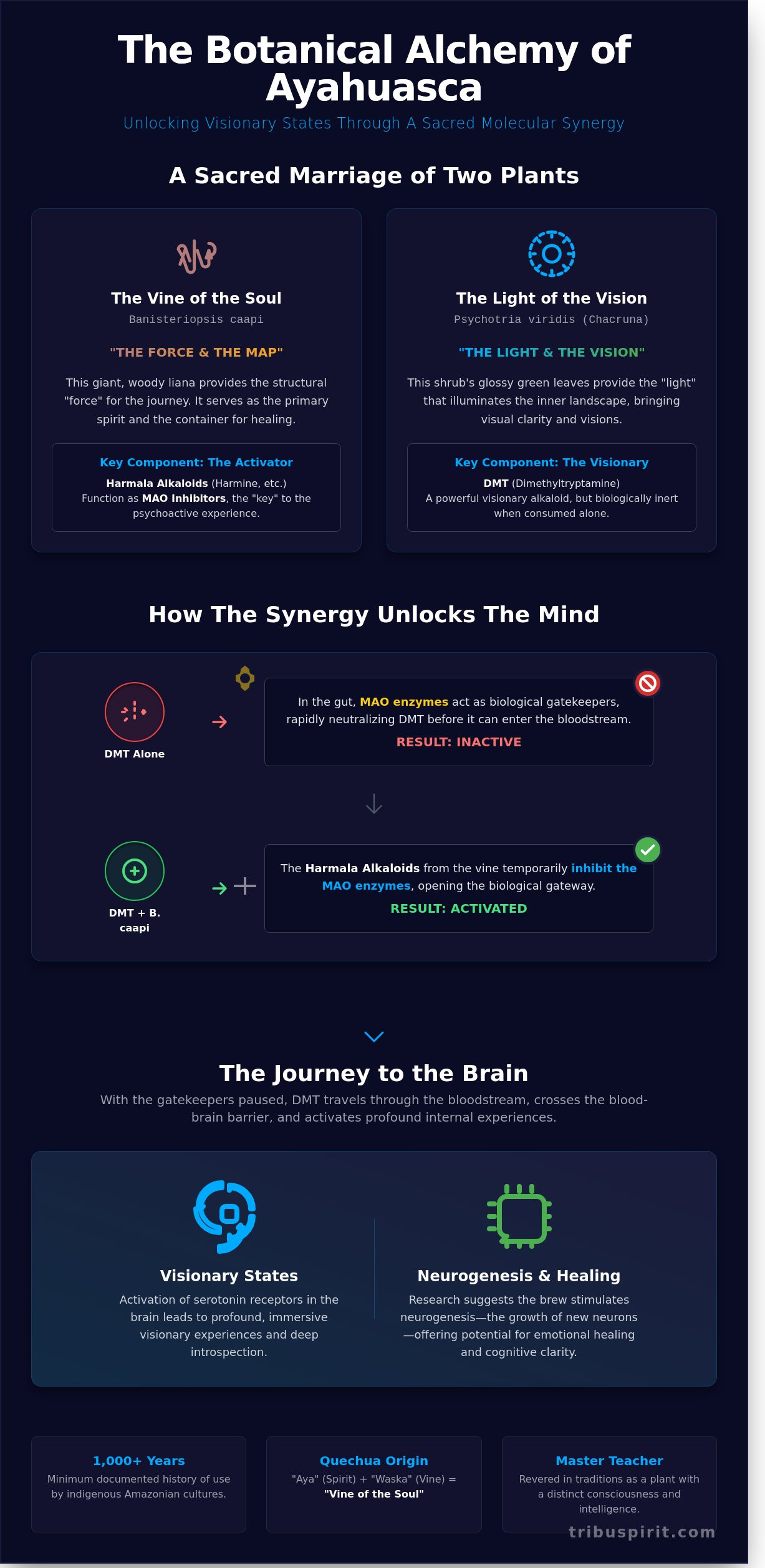
The Banisteriopsis caapi is a giant, woody liana that spirals through the rainforest canopy like a living staircase. Its physical presence is striking, featuring gnarled, twisted bark that seems to mirror the complexity of the human nervous system. Within the ritual space, the vine represents the "force" and the "map" of the journey. It contains harmala alkaloids, which act as MAO inhibitors, allowing the visionary components to become active in the human body. The vine serves as the primary spirit that provides the structure of the experience. Without this grounding force, the journey lacks the necessary container for healing.
The Light of the Vision: Psychotria viridis
While the vine provides the path, the Psychotria viridis shrub, commonly known as Chacruna, provides the light. You can identify this plant by its long, glossy green leaves that grow in opposite pairs along the stem. In the traditional cosmology of the Amazon, Chacruna is the element that brings visual clarity and "pinturas" (visions) to the experience. It's the spark that illuminates the inner landscape. While Chacruna is the most common companion, some lineages use Diplopterys cabrerana, also known as Chaliponga, as a powerful alternative. This substitution often results in a more intense, earthy visionary state. The union of these two plants represents a sacred marriage of strength and light, creating a ritual tool that remains a cornerstone of tribal spirituality.
The Botanical Alchemy: How Ayahuasca Works
The Amazon rainforest holds a secret that defies simple coincidence. For centuries, indigenous tribes have combined two distinct botanical species to create a brew that transcends the physical world. This isn't just a mixture of plants; it's a precise chemical marriage that allows the human mind to access states of consciousness usually hidden behind biological barriers. The result is a profound internal journey that begins in the gut and ends in the deepest reaches of the soul.
The Science of Synergy
The human body is designed to protect itself from visionary alkaloids found in nature. Specifically, the monoamine oxidase (MAO) enzymes in our digestive tract act as a biological gatekeeper, neutralizing DMT before it can reach the bloodstream. This is why the DMT-rich leaves of the Psychotria viridis shrub are inert when consumed alone. The ayahuasca plant, the Banisteriopsis caapi vine, provides the key to this locked door. It contains harmine, harmaline, and tetrahydroharmine. These specific alkaloids function as MAO inhibitors; they temporarily pause the digestive enzymes, allowing the visionary components to travel through the gut and into the brain.
Researchers exploring the pharmacological and therapeutic aspects of the brew have found that this synergy does more than just trigger visions. It may stimulate neurogenesis, which is the growth of new neurons, particularly through the activation of the Sigma-1 receptor. This process offers a profound potential for emotional healing and cognitive clarity. The vine doesn't just bypass the body's defenses. It works to repair the very architecture of the mind.
Traditional Preparation Methods
Preparation is a sacred ritual that spans several days of focused devotion. It begins with the careful cleaning and pounding of the woody ayahuasca plant. This physical labor is accompanied by prayers and specific intentions, as the brewer believes the vine's spirit must be awakened before it can heal. The vine and leaves are layered in large pots and boiled for long periods, often up to 15 hours per batch, until the liquid reduces into a thick, potent syrup. Every bubble in the pot is seen as an energetic shift.
To the indigenous people of the Amazon, the chemistry is only half of the story. They view the spirit of the vine as an intelligent teacher that guides the experience. This belief transforms the brewing process from a simple extraction into a high-vibrational ceremony. When you bring this level of intention into your own daily life, even the simplest act becomes a sacred ritual of connection that grounds your spirit. The brew is a bridge between the physical and the metaphysical, requiring both chemical precision and spiritual alibi to be truly effective.
Ayahuasca in Shamanic Tradition: Beyond the Vision
The shaman, often referred to as an Ayahuasquero or Curandero, serves as a master navigator within the deep waters of the subconscious. In indigenous Amazonian cultures, these practitioners undergo years of rigorous isolation and dieting with various master plants to earn the right to lead. They don't simply observe the ceremony; they actively shape the energetic architecture of the room. By working with the ayahuasca plant, the shaman acts as a bridge between the physical and spiritual dimensions, ensuring the safety of every soul present in the circle.
A central tool in this navigation is the "Icaro." These are sacred songs received by the shaman during their initiations. Icaros aren't merely melodies; they are vibrational tools used to direct the energy of the medicine, call in healing spirits, or protect the space from heavy influences. For the Shipibo-Konibo people, these songs are intrinsically linked to their intricate geometric patterns, known as kené, which represent the visual music of the universe. Other lineages, such as the Huni Kuin (Kaxinawá) and the Yawanawá, focus heavily on the joy of the forest, using communal singing to elevate the group's frequency.
Physical release, or "La Purga," is a fundamental pillar of the experience. While Western perspectives might view vomiting or sweating as a negative side effect, indigenous traditions see it as a profound spiritual cleansing. This comprehensive scientific review of ayahuasca examines how these traditional purgative effects correlate with psychological relief and the "letting go" of emotional trauma. It's the physical manifestation of shedding old skins, clearing the body so the spirit can receive higher insights.
The Purpose of the Ceremony
A traditional ceremony aims for deep-seated transformation rather than temporary visual stimulation. Participants seek to resolve chronic emotional blockages, heal ancestral trauma, or find clarity regarding their life's purpose. There's a stark difference between a recreational "trip" and a plant medicine ceremony. A ceremony is a structured ritual held with specific intentions, where the ayahuasca plant is respected as a living intelligence. It's an invitation to face one's shadow with courage and grace.
Common Misconceptions and Gaps
One common myth is that Ayahuasca is a drug used for escapism. In reality, the medicine often forces a confrontation with the very things we try to escape. Challenging experiences, frequently mislabeled as "bad trips," are viewed by experienced facilitators as essential lessons or "tough love" from the vine. These moments often provide the most significant breakthroughs. Understanding the importance of lineage is vital; a facilitator's training determines their ability to hold a safe container. Without the proper lineage-based training, the deep energetic work required to process these states is often missing.
- Shipibo-Konibo: Masters of the Icaros and geometric healing.
- Huni Kuin: Known for their deep connection to the "Huni" (the vine) and colorful forest spirituality.
- Yawanawá: Famous for their powerful songs and the opening of their tradition to the world since the late 20th century.
Preparing for the Spirit: The Dieta and Set/Setting
Approaching the ayahuasca plant is a journey that begins long before the first cup is poured. It's an invitation to step out of the noise of modern life and into a state of deep receptivity. The vine asks for a clear vessel, and the traditional "Dieta" serves as the foundational architecture for this transformation. By consciously choosing what we consume, we signal our respect to the plant spirit and prepare our nervous system for the high-vibrational work ahead. It's about alignment. It's about becoming a hollow bamboo through which the medicine can flow.
The Physical and Energetic Dieta
The Dieta is a bridge between worlds. Physically, it involves removing substances that could create chemical or energetic friction with the medicine. You'll need to avoid tyramine-rich foods like aged cheeses, fermented products, and processed meats for at least 72 hours before your ceremony. These can interact with the MAO inhibitors in the ayahuasca plant, potentially leading to dangerous blood pressure spikes. Caffeine, alcohol, and refined sugars should also be released to settle the mind and body.
Safety remains the highest priority. Clinical data shows that SSRI antidepressants and certain heart medications are strictly contraindicated. Combining these with the vine can lead to serotonin syndrome, a life-threatening condition. Beyond the physical, the Dieta is an energetic commitment. Abstaining from sexual activity for several days helps preserve your vital life force, focusing your power inward. This discipline isn't about punishment; it's about creating a sacred space within yourself.
To further prime the spirit, many practitioners work with preparatory medicines like Hapé and Sananga. Hapé, a sacred tobacco snuff, helps clear mental fog and grounds the energy in the present moment. Sananga eye drops are often used to sharpen inner vision and cleanse the "panema" or spiritual heaviness. These tools act as a threshold, ensuring you enter the ceremony with a heart that's ready to listen and a spirit that's already in motion.
Integration: The Work After the Ceremony
The true ceremony begins when the effects of the ayahuasca plant fade and you return to your daily life. Integration is the art of weaving cosmic insights into your grounded reality. Without this phase, the journey remains a fleeting dream. Practical grounding is essential. Spend the first 48 hours in nature, away from digital screens and loud environments. Let the insights breathe.
Journaling, breathwork, and community support are vital pillars during this time. You don't have to carry the weight of your revelations alone. Engaging in sacred ritual at home helps stabilize your new frequency and keeps the connection to the vine alive. It's the small, daily choices that turn a single experience into a lifelong path of healing.
Ethical Sovereignty: Protecting the Ayahuasca Spirit
The call of the ayahuasca plant is a sacred invitation that carries a weight of responsibility. It transcends personal healing. As global interest in Amazonian traditions surged by over 300% in the last decade, the pressure on wild ecosystems became undeniable. Over-harvesting of the wild Banisteriopsis caapi vine in regions like Iquitos has forced local harvesters to trek days deeper into the primary rainforest. This isn't just an ecological crisis; it's a spiritual one. When we extract without intention, the medicine's vibrational clarity diminishes. True healing cannot grow from a foundation of exploitation.
Supporting indigenous-led ministries is the only way to ensure the preservation of this ancient wisdom. These communities have been the guardians of the ayahuasca plant for millennia. By prioritizing ethical sourcing and fair trade, we protect the spiritual integrity of the medicine. It's about ensuring that the lineage remains unbroken and that the forest continues to breathe. Respect the source. Honor the vine.
Sacred Reciprocity
We must move from a mindset of extraction to one of relationship. This is the essence of Ayni, or sacred reciprocity. It's a conscious cycle of giving and receiving that sustains the Amazon. For example, when you choose to work with supporting medicines like Hapé Tsunu, you're directly funding reforestation projects. These initiatives ensure that for every vine harvested, new life is planted. Indigenous sovereignty is the heartbeat of this movement. It empowers tribes to protect their ancestral lands from industrial logging while sharing their gifts with the world on their own terms.
The Tribu Spirit Path
Our mission is to bridge ancient wisdom with modern holistic healing through a lens of absolute reverence. We don't just offer tools; we offer a gateway to a deeper way of being. Beyond the vine, we explore the vast pharmacy of Amazonian plants that support the seeker's journey. You might find clarity through the sharp, clearing sting of Sananga, experience the profound physical reset of a Kambo ceremony, or embrace the Caribbean herbal wisdom shared by Rastaman Stew. Each ritual is a step toward the soul.
- Integrity: We source only from ethical, sustainable partners.
- Education: Knowledge is the foundation of safe practice.
- Community: We walk this path together as a global tribe.
If you're ready to move beyond the surface and embrace the true depth of these traditions, we invite you to join the Tribu Spirit Academy. Here, we offer the spiritual education needed to integrate these lessons into your daily life. Walk with us. The jungle is calling.
Stepping Into the Sacred Rhythm of the Amazon
The journey with the ayahuasca plant isn't just a chemical interaction; it's a deep communion with a 1,000-year-old lineage of spiritual wisdom. You've learned how the botanical alchemy of the vine opens doors of perception and why the traditional dieta remains a vital foundation for any seeker. True transformation requires more than curiosity. It demands a commitment to ethical sovereignty and the protection of the indigenous tribes who've guarded these secrets for centuries. By honoring these ancient protocols, you ensure your path remains grounded in respect and authenticity. Every ritual tool you choose should carry this same vibration of integrity. We invite you to continue your inner exploration with tools that honor the earth and her keepers. Explore our ethically sourced Hapé and Shamanic Tools to support your practice. Our collection is sourced directly from Amazonian communities, supporting reforestation projects and indigenous sovereignty through every purchase. Each item is guided by traditional shamanic wisdom to bring the power of the ritual into your daily life. Trust your intuition as you walk this path. The spirit of the forest is always calling you home.
Frequently Asked Questions
Is the ayahuasca plant legal in the United States?
The ayahuasca plant exists in a complex legal grey area where its primary active component, DMT, is a Schedule I controlled substance under the 1970 Controlled Substances Act. However, the 2006 Supreme Court ruling in Gonzales v. O Centro Espírita Beneficente União do Vegetal granted specific religious exemptions for ceremonial use. Currently, only two specific religious organizations hold federal court-recognized rights to use the brew legally in their rituals.
Can you use the ayahuasca plant alone without a shaman?
You shouldn't use this medicine alone because a trained shaman provides the essential energetic container and physical safety required for such a deep soul journey. Traditional Amazonian wisdom dictates that the shaman's songs, or ikaros, guide the vision and protect the participant's spirit. Data from the ICEERS foundation indicates that most adverse psychological events occur when the ritual is performed without experienced supervision. True healing requires a supported, sacred space.
What is the difference between ayahuasca and yagé?
The difference between these two terms is primarily geographical and linguistic, referring to the same sacred vine across different Amazonian cultures. Ayahuasca is the Quechua name most common in Peru and Brazil, while yagé is the term used by the Tukano and Siona peoples of Colombia. While the base vine is identical, Colombian yagé practitioners often incorporate the Diplopterys cabrerana leaf instead of the more common Psychotria viridis leaf. Over 40 indigenous groups maintain these distinct regional traditions.
How long do the effects of the ayahuasca plant last?
The active effects of the ayahuasca plant typically last between 4 and 8 hours depending on your individual metabolism and the brew's potency. Most participants feel the initial onset within 30 to 60 minutes, with the experience reaching its peak intensity around the 2 hour mark. It's a rhythmic, meditative process that slowly returns you to your physical senses. This duration provides ample time for deep introspection and spiritual connection.
Are there any long-term side effects of drinking ayahuasca?
Research suggests that long-term side effects are generally positive, often manifesting as sustained improvements in emotional well-being and mindfulness. A 2022 study published in Scientific Reports analyzed 10,000 participants and found no evidence of cognitive impairment or negative personality changes in frequent users. However, the experience can be taxing for those with pre-existing heart conditions or a history of psychosis. Respecting your body's limits is a vital part of the ritual.
What is the "ayahuasca diet" and why is it necessary?
The ayahuasca diet is a period of physical and spiritual purification that involves avoiding specific foods like aged cheeses, cured meats, and fermented products for at least 3 days before a ceremony. These foods contain tyramine, which can react poorly with the MAO inhibitors in the vine and cause dangerous spikes in blood pressure. This practice isn't just about safety; it's a way to quiet the body and prepare your internal temple for the spirit's arrival. It's a commitment to the journey.
How is the ayahuasca vine different from other psychedelic plants?
The ayahuasca plant is unique because it's a synergistic botanical marriage of two distinct species rather than a single source of spirit. Unlike psilocybin mushrooms which are active on their own, this brew requires the Banisteriopsis caapi vine to temporarily deactivate your stomach enzymes so the body can process the DMT in the leaves. This chemical partnership is a miracle of ancient forest knowledge. It's also the only sacred medicine that traditionally emphasizes a physical purge as a form of spiritual cleansing.
Can I grow the ayahuasca plant at home?
You can grow the vine at home if you can successfully replicate a tropical rainforest environment with high humidity and consistent warmth. The plant requires a minimum temperature of 65 degrees Fahrenheit and humidity levels above 70 percent to thrive and produce its sacred alkaloids. Most domestic growers in North America use specialized greenhouses or indoor grow tents to maintain these specific Amazonian conditions. It's a patient labor of love that connects you to the earth's slow, natural cycles.