
Mapacho is not a consumable commodity but a living ancestor that breathes with the ancient wisdom of the Amazonian forest. While the modern world often views tobacco through the lens of habit, this sacred Grandfather teacher demands a presence that is both humble and intentional. You've likely felt a deep pull toward this medicine, yet the fear of using it incorrectly or the confusion between commercial products and Nicotiana rustica can make you hesitate. It's a delicate path. You want to honor the tradition without overstepping. We respect that intention.
This guide serves as your bridge to a more intentional practice. We'll help you move past the uncertainty of sourcing and the technicalities of ritual so you can focus on the inner growth that comes from true connection. You'll learn specific techniques like the Soplada, understand the spiritual lineage of the medicine, and find out how to identify high-quality, mold-free rolls. By the end, you'll have the tools to connect with this sacred teacher in a way that is safe, respectful, and deeply transformative.
Key Takeaways
- Understand the sacred lineage of the Grandfather teacher by distinguishing the wild, potent Nicotiana rustica from industrial tobacco.
- Learn to identify premium mapacho by recognizing the unique "frogeye" markings that signify high quality and traditional curing methods.
- Master the art of creating a sacred container and using prayer-filled intentions to open and protect your ritual space.
- Discover the energetic synergy of combining this ancient medicine with Hapé or Sananga to create a more profound ceremonial experience.
- Ensure your practice remains grounded in reciprocity by choosing sources that empower indigenous tribes and protect the Amazonian rainforest.
Understanding Mapacho: The Sacred Grandfather of the Amazon
The jungle doesn't whisper; it speaks in rhythms of growth and decay. At the heart of this ancient dialogue stands a plant of immense power, a sentinel known to the indigenous peoples of the Amazon as the "Grandfather." While the modern world has largely forgotten the sacred nature of tobacco, those who walk the path of plant medicine recognize Nicotiana rustica as a master teacher. This isn't the industrial leaf found in commercial products. It's a wild, potent relative that carries a chemical and spiritual signature unlike anything else on Earth. It demands a different kind of attention. It requires a presence that is both humble and fully awake.
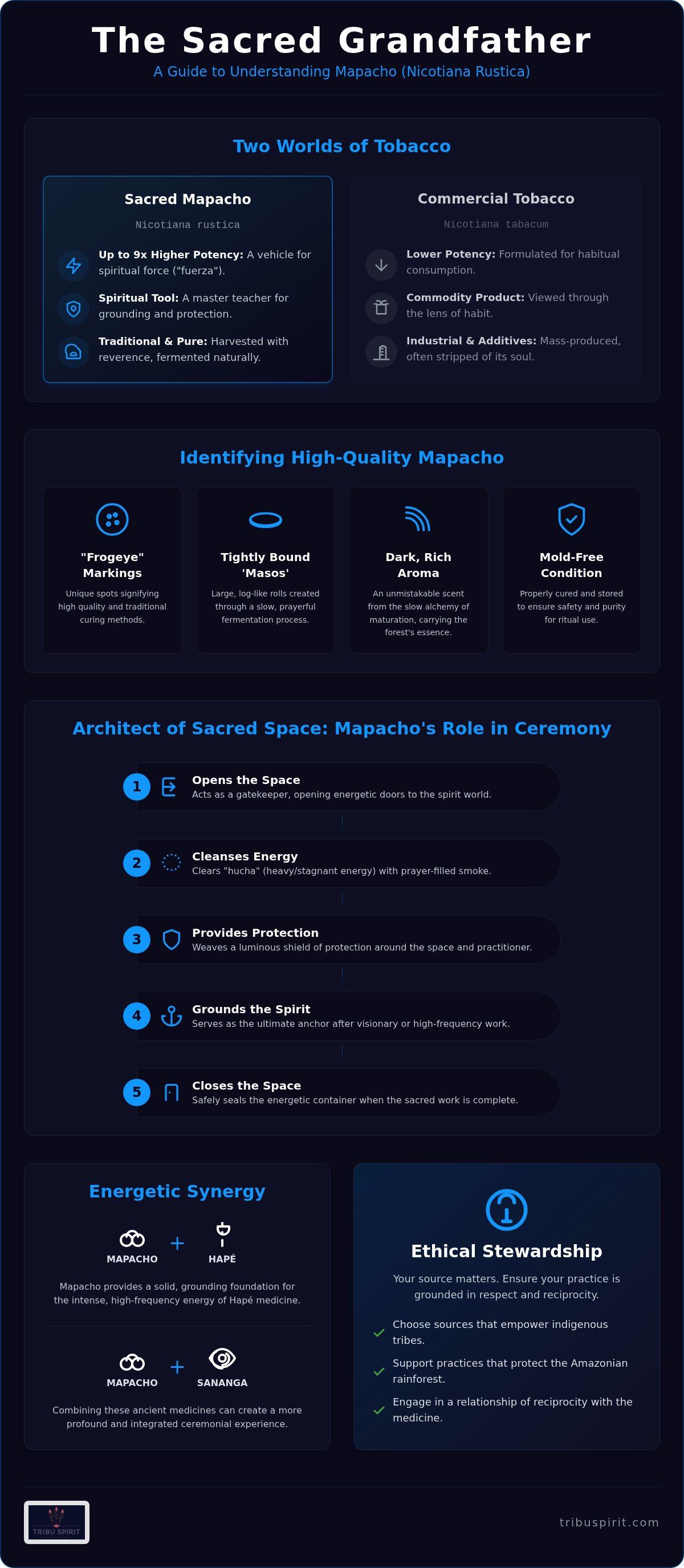
In the curanderismo tradition, mapacho is considered the foundation of all medicine work. It's the bridge between the human and the spirit worlds. While industrial tobacco is often stripped of its soul through additives and mass production, the sacred leaf remains pure. It's a living ancestor. Its high nicotine content isn't meant for casual consumption. Instead, it serves as a vehicle for "fuerza" or spiritual force. This potency allows the practitioner to ground themselves deeply while navigating the expanded states of consciousness often found in ceremony. It's the anchor that keeps the spirit from drifting too far from the body.
The Botanical Power of Nicotiana Rustica
Scientifically, the mapacho plant is distinguished by its staggering nicotine concentration, which can be up to nine times higher than the Nicotiana tabacum used in common cigarettes. This chemical intensity translates directly into the plant's spiritual authority. The leaves are harvested with reverence, dried, and then tightly bound into large, log-like rolls called masos. This traditional fermentation process creates a dark, rich aroma that is unmistakable. It's a slow alchemy. Every leaf carries the essence of the soil and the prayers of the grower, maturing over months until the spirit of the plant is fully concentrated and ready for ritual use.
Mapacho as a Spiritual Protector
In shamanic cosmology, we call this plant "Abuelo" or Grandfather. This title reflects a spirit that is ancient, wise, and fiercely protective. When worked with through prayer, the smoke acts as a clearing agent for "hucha," the heavy or stagnant energies that accumulate in our energetic bodies. It creates a luminous shield around the practitioner. This protection isn't passive. It requires a humble heart and a clear, focused intention. Without respect, the medicine remains silent. When you approach the Grandfather with alacrity and clarity, he opens doors to deeper states of being. He cleanses the space and prepares the way for other medicines to work their magic safely.
The Role of Mapacho in Shamanic Practice and Ceremony
Mapacho isn't just a plant; it's an architect of sacred space. In the traditional ceremonies of the Amazon, the medicine acts as the gatekeeper. It opens the energetic doors to the spirit world and seals them shut when the work is done. The smoke isn't merely a byproduct of burning leaves. It's a living prayer. It carries the practitioner's intentions from the physical body into the ethereal planes. According to the USDA plant profile for Nicotiana rustica, this species is distinct in its chemical makeup, which contributes to the intense presence required during these rituals. When you blow the smoke over yourself or a participant, you're not just clearing the air. You're weaving a protective web that keeps the ceremony contained and safe.
Cleansing and Grounding with Sacred Smoke
The act of working with the Grandfather is fundamentally different from the modern habit of smoking. In ceremony, we don't just consume; we pray. This distinction is vital for anyone seeking a deep connection. The thick, aromatic smoke clears the aura, brushing away the energetic debris we collect in our daily lives. It's a spiritual bath that refreshes the senses and clarifies the mind. For those who have explored what is hape, you know the intensity of the experience can sometimes leave you feeling unmoored or lightheaded. Mapacho serves as the ultimate anchor. It pulls the spirit back into the physical container, providing a solid foundation after visionary or high-frequency work. It brings you home to your body.
Synergy with Other Shamanic Tools
Mapacho rarely works in isolation. It's the conductor of a larger symphony of tools. Shamanic practitioners often use it alongside a shamanic rattle to break up stagnant energy. The smoke identifies the blockages; the rattle moves them. In Ayahuasca ceremonies, the medicine is indispensable. It protects the space from heavy influences and helps the curandero navigate the visionary state. It also serves a practical purpose. Blowing smoke into the nasal passages before a Hapé session can help open the channels, making the experience more fluid and receptive. If you feel called to deepen this relationship, exploring our ethically sourced Mapacho offerings can be your next step toward a grounded, intentional practice. It's about building a relationship with the spirit of the plant, one prayer at a time.
Identifying Quality: Masos, Coins, and the 'Frogeye' Mystery
Holding a piece of sacred medicine is an invitation to listen with your hands and your nose. When you first encounter mapacho in its traditional form, you're likely seeing a "Maso." These are dense, heavy logs of tobacco leaves that have been tightly bound and fermented. This form is the gold standard for ceremonial work because it protects the inner leaves from the air, preserving the plant's moisture and spiritual "fuerza" for years. You may also find "Coins," which are simply cross-sections sliced from these larger logs. They're a beautiful, convenient choice for personal altars or smaller rituals, offering a glimpse into the intricate layers of the leaf's history.
One of the most misunderstood aspects of this medicine is the presence of "frogeye" spots. These small, circular white or yellow markings on the leaf often cause alarm for beginners. Don't be misled. These spots aren't a sign of mold or decay. They're a hallmark of high-quality curing in Nicotiana rustica. These markings indicate that the leaf reached a specific level of maturity before harvest and was cured under the right conditions. If you see these "eyes" looking back at you, you're holding a potent, well-prepared spirit. A true, high-vibration leaf should have a dark, oily sheen and an aroma that reminds you of rain-soaked soil, old leather, and deep forest wood.
Varieties of Sacred Tobacco: From Peru to Brazil
The geography of the Amazon is written into the flavor of the leaf. Peruvian mapacho masos are legendary for their robust, grounding energy and are the primary tool for many curanderos. However, the Brazilian traditions offer their own unique medicine spirits. Varieties like Arapiraca are prized for their dark, almost chocolatey richness and high oil content. Moi is often described as having a sweeter, more floral profile that feels lighter on the senses. Sabia provides a grounded, earthy middle path. Each tribe has a unique "fingerprint" in how they cure and roll their tobacco, making the choice of variety a deeply personal part of your spiritual journey.
Storage and Care for Your Medicine
Treat your medicine like a living entity that needs to breathe. The ideal environment is cool, dark, and slightly humid. If your tobacco becomes too dry and brittle, the smoke can become harsh and the spirit feels "quiet." You can gently rehydrate it by placing a slightly damp cloth or a piece of citrus peel inside your storage container, making sure it doesn't touch the tobacco directly. It's vital to recognize the difference between natural salt crystallization, which appears as a fine, white, crystalline dust, and actual mold. Mold is fuzzy, often blue or green, and carries an unpleasant, musty scent of rot. Genuine medicine should always smell alive and inviting.
How to Work with Mapacho: A Ritual Guide for Beginners
Working with mapacho is an exercise in deep listening. It's not about consumption; it's about starting a sacred dialogue with a living ancestor. Before you strike a match, you must prepare the temple of your environment. Clear a space on your altar. Light a candle. Ensure you won't be disturbed. This creates a "sacred container," a protected energetic field where the medicine can speak without the interference of daily noise. The most vital rule of this practice is one of safety and respect: this tobacco is never inhaled into the lungs. The Grandfather spirit is far too potent for the chest. Instead, we hold the smoke in the mouth, allowing the spirit to communicate through the mucous membranes. This keeps the experience grounded and respectful while preventing the physical strain associated with improper use.
Step-by-Step: Your First Mapacho Ritual
Begin by centering your breath. Close your eyes and call in the four directions, the earth below, and the sky above. This anchors you in the present moment. When you feel a sense of stillness, light the mapacho. Focus on the fire. See it as a transformative element that releases the spirit of the plant from its physical form. Draw the smoke into your mouth with a gentle, steady pull. Don't rush. Feel the warmth and the weight of the presence. While the smoke is in your mouth, speak your intention or prayer silently into it. You're literally charging the smoke with your heart's desire. Finally, release the smoke with a soft, focused breath, sending your prayers out into the universe to be heard.
The Art of Soplada (The Blow)
The soplada is the shamanic art of blowing smoke to direct healing energy. It's a precise gesture of will. To clear mental fog or invite divine guidance, you can perform a soplada on the crown of the head. This "washes" the crown chakra with the protective essence of the Grandfather. To ground yourself after a long day or a deep meditation, blow the smoke over your palms and the soles of your feet. This creates an energetic seal that keeps your vibration high and your boundaries firm. You can also use this technique to cleanse your shamanic tools. If your rattle or kuripe feels heavy or "full," a focused blow of smoke will clear the stagnant energy and restore its vital resonance. If you're ready to begin your own journey with this master teacher, you can find ethically sourced Mapacho here to support your burgeoning practice.
Ethical Stewardship: Why Your Source Matters in 2026
The energetic integrity of your medicine begins long before it reaches your altar. In 2026, the global demand for sacred plants has created a complex market where "cheap" mapacho often hides a shadow of exploitation and ecological damage. When forests are cleared for monoculture or indigenous growers are underpaid, the plant's spirit carries that heaviness into your ritual. Choosing ethically sourced medicine isn't just a moral choice. It's a functional one. High-vibration medicine requires a lineage of respect, from the first seed planted to the final wrap of the maso. We believe that the intention behind the harvest is just as important as the intention behind the prayer.
Reciprocity (Ayni) in the Shamanic World
In the Andean traditions, there's a vital concept known as Ayni, or sacred reciprocity. It's the understanding that every interaction is an exchange of energy. When you work with the Grandfather spirit, you're receiving wisdom and protection. To keep the balance, the transaction must be fair. At Tribu Spirit, we view fair trade as a fundamental part of the medicine's efficacy. By ensuring indigenous tribes receive just compensation, we support their sovereignty and cultural survival. Your practice directly contributes to reforestation initiatives in the Amazon, closing the circle of life. The price you pay is an investment in the forest's future. It's a way of giving back to the source that sustains us.
Integrating the Grandfather Spirit into Daily Life
Transitioning from a seeker to a practitioner means moving beyond simply "using" a product. You're walking with a teacher. This relationship doesn't always require a formal ceremony with smoke. You can maintain your connection by simply sitting in silence with your medicine, acknowledging its presence on your altar. It's about a consistent, humble awareness. The path of the modern Mapachero is one of mindfulness. It's a commitment to living with the same clarity and protection the Grandfather provides in ritual. Every time you approach the plant with respect, you strengthen your own boundaries. As you close this guide, remember that the spirit of mapacho is now a part of your journey. Treat it with the reverence it deserves, and it will continue to light your way through the shadows of the modern world.
Embrace the Wisdom of the Grandfather
You've journeyed through the deep spiritual lineage of this master plant teacher, from the botanical power of Nicotiana rustica to the protective art of the soplada. Working with mapacho isn't just about the mechanics of ritual; it's about entering a conscious relationship with a living ancestor that grounds your spirit and clears your energetic path. By recognizing the vital difference between industrial tobacco and sacred medicine, you honor both the ancient traditions and your own inner development. True connection requires both the right technique and a heart centered in respect. It's a walk of constant learning and presence.
Your path toward sacred reciprocity begins with the intentions you set and the sources you trust. We invite you to explore our ethically sourced Mapacho and support Amazonian reforestation. Our offerings are curated directly from indigenous tribes for high-vibrational ceremonial use, ensuring that every prayer you blow into the smoke is backed by the integrity of the forest itself. Every purchase you make helps protect the sovereignty of the Amazon and its people through reforestation initiatives. Step forward with a humble heart and clear eyes. The Grandfather is ready to walk beside you.
Frequently Asked Questions
Is Mapacho the same as the tobacco found in cigarettes?
No, they are entirely different species with distinct energetic signatures. While commercial cigarettes use Nicotiana tabacum, mapacho is Nicotiana rustica, a wild and potent relative that contains up to nine times more nicotine. It's grown without the chemical additives or burn accelerators found in industrial products, preserving its status as a pure, sacred medicine.
Do you inhale Mapacho smoke into your lungs?
You should never inhale this smoke into your lungs. In traditional Amazonian practice, the smoke is drawn into the mouth, held briefly to allow the spirit to interact with the mucous membranes, and then released. This method honors the physical body while still allowing the plant's grounding force to enter your energetic field safely and effectively.
What are the spiritual benefits of using Mapacho in ceremony?
This medicine acts as a powerful protector and a bridge to ancestral wisdom. It cleanses the aura of stagnant energies, provides deep grounding during visionary work, and helps the practitioner focus their prayers with clarity. Many call it the Grandfather because it offers a stable, wise presence that guards the sacred space against heavy influences.
Why does my Mapacho have white spots on it? Is it mold?
These white or yellow circles are typically "frogeye" spots, which are a sign of high quality and leaf maturity. They're a natural result of the traditional curing process and don't indicate decay. Real mold appears fuzzy, often has a blue or green tint, and carries a distinct, musty smell of rot that differs from the plant's earthy aroma.
Can I use Mapacho if I am already a smoker of commercial cigarettes?
Yes, though the experience requires a total shift in intention. Many people find that moving from the habitual use of cigarettes to the ritual use of mapacho helps them heal their relationship with the tobacco spirit. It transforms a mindless habit into a mindful, sacred dialogue that emphasizes presence over craving.
How do I store a Mapacho Maso so it doesn't dry out?
Store your medicine in a cool, dark place using an airtight container to preserve its natural oils. If the leaves become brittle, you can place a slightly damp cloth or a piece of citrus peel inside the container for a few hours. Just ensure the moisture source doesn't directly touch the tobacco to prevent the growth of actual mold.
What is a Soplada and how do I perform it safely?
A Soplada is the ritual act of blowing smoke to clear energy or offer protection. To perform it, focus on a specific intention, draw the smoke into your mouth, and blow it gently over the crown of the head, the palms, or the soles of the feet. It's a sacred gesture of will that directs the plant's clearing essence where it's needed most.
Is Mapacho addictive if used only in a ceremonial context?
While nicotine is a physically addictive substance, the context of ceremonial use is built on prayer rather than habit. When worked with inside a sacred container, the relationship is defined by respect and specific purpose. Most practitioners find that the intensity and sacredness of the ritual naturally prevent the medicine from being used in a casual or addictive way.