

What if the plant you've been taught to fear is actually one of the most potent guardians of the spiritual realm? While mass-produced tobacco carries a heavy, distorted energy, the wild *Nicotiana rustica* contains up to 20 times more nicotine and a purity that has anchored Amazonian ceremonies for over 3,000 years. You likely feel a deep call to work with this medicine, yet you're held back by the fear of doing it wrong or the confusion surrounding its preparation. It's natural to approach such a powerful master plant with a sense of trembling respect.
In this guide, you'll discover how to work with mapacho as a sacred ally for energetic protection and soul-level cleansing. We'll bridge the gap between ancient tradition and your modern altar, providing the physical steps for preparation and the spiritual "why" behind every billow of smoke. You'll learn to establish a safe ritual space that honors the plant's lineage while supporting your own inner journey. Let's move beyond the noise and return to the quiet, grounding power of the earth's original protector.
Key Takeaways
- Understand the profound energetic and physical differences between commercial varieties and the potent, sacred Nicotiana rustica of the Amazon.
- Learn how to work with the spirit of Grandfather Tobacco as a master teacher for grounding your presence and clearing heavy energy from your field.
- Master the traditional methods of preparing and slicing a mapacho Maso using dedicated ritual tools to preserve its sacred essence.
- Discover how to create a ceremonial space that invokes the four directions and harmonizes the plant's ancient protective qualities.
- Explore the powerful synergy between sacred tobacco and other shamanic tools to deepen your spiritual cleansing and protection rituals.
What is Mapacho? Understanding Nicotiana Rustica
Mapacho isn't just a plant; it's a living lineage. Known to the indigenous peoples of the Amazon as the Grandfather spirit, this sacred wild tobacco serves as the foundational pillar of shamanic work across South America. Unlike the mass-produced leaves found in global markets, Nicotiana rustica represents a bridge between the physical and spiritual realms. It's a master plant that demands respect, clarity, and a specific state of mind from anyone who approaches it. Within the context of traditional ceremonies, it's never used for recreation or idle distraction. Instead, practitioners approach it with a clear intention to cleanse, ground, and protect the energetic body during deep inner work.
Mapacho vs. Commercial Tobacco
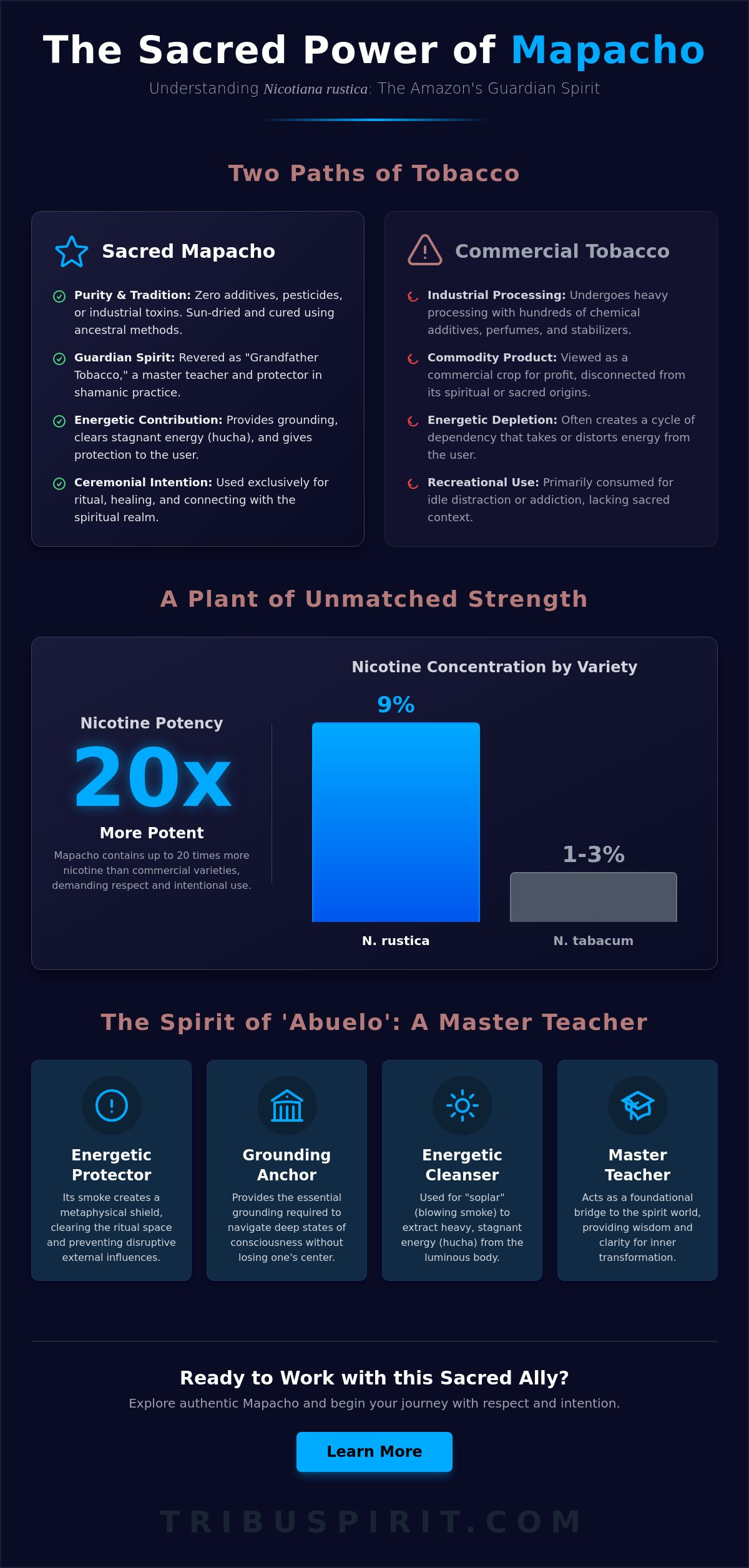
The difference begins in the soil and ends in the soul. Commercial tobacco undergoes heavy industrial processing, often including hundreds of chemical additives to enhance flavor and burning speed. Mapacho remains untouched by perfumes, synthetic stabilizers, or industrial toxins. It's pure, sun-dried, and usually cured in dense rolls known as masos. This purity reflects the intention of the grower, who views the plant as a sacred entity rather than a commodity. While commercial tobacco often creates a cycle of depletion that takes energy from the user, mapacho acts as a guardian that gives protection and clears stagnant vibrations from the ritual space.
The Botanical Power of Rustica
This plant's strength is legendary among those who walk the spiritual path. The humid, nutrient-rich environment of the Amazon rainforest allows the spirit of the plant to develop a profound intensity that differs from any other tobacco variety. Because of its high alkaloid concentration, even a small amount provides a powerful grounding effect during a ceremony. Nicotiana rustica possesses a nicotine concentration that can reach 9 percent, making it significantly more potent than the 1 to 3 percent typically found in common Nicotiana tabacum. This botanical power requires the user to slow down. It invites a meditative presence that transforms a simple act into a deep, internal journey toward the center of one's being.
- Sacred Origin: Harvested primarily in the Peruvian and Brazilian Amazon.
- Chemical Purity: Zero additives, pesticides, or industrial perfumes.
- Ritual Role: Used for "soplar" (blowing smoke) to clear the aura and set intentions.
- Ancestral Connection: Regarded as a teacher plant that provides wisdom and protection.
When you hold mapacho, you hold thousands of years of prayer and tradition. It's a tool for those ready to listen to the whispers of the jungle and the ancient rhythms of the earth. By choosing this sacred leaf, you step away from the noise of modern consumption and into a space of intentional, soulful connection.
The Spirit of Grandfather Tobacco: Protection and Teaching
In the cosmology of the Amazon, mapacho isn't merely a botanical specimen; it's the "Abuelo" or Grandfather. This ancient spirit serves as the primary Master Teacher, acting as a foundational bridge between the human realm and the ethereal world of plant spirits. While other medicines may take us on vast journeys, mapacho remains the anchor. It provides the essential grounding required to navigate deep states of consciousness without losing one's center. Its energetic function focuses on the extraction of hucha, a Quechua term for heavy or stagnant energy that accumulates in our luminous field through daily stress and emotional trauma.
Working with this spirit often involves the concept of "Dieting," a rigorous process of isolation and communion where a practitioner builds a lifelong spiritual alliance with the plant. This relationship isn't transactional. It's a deep, symbiotic bond. Expert analysis in Therapeutic Uses of Tobacco in Peruvian Amazonian Medicine highlights how traditional healers utilize specific preparations of Nicotiana rustica to facilitate both physical purging and spiritual clarity. By clearing the energetic pathways, the smoke allows the practitioner to "see" with greater precision, making it an indispensable tool for anyone walking the path of inner transformation.
Mapacho as a Protector
The smoke of mapacho functions as a metaphysical shield. During a sacred ritual, the practitioner blows smoke to create a "sacred perimeter," a boundary that prevents external influences from disrupting the ceremony. This practice clears mental fog and facilitates a rare alignment of the three primary centers: the head (intellect), the heart (emotion), and the belly (intuition). When these centers align, the practitioner moves from a state of fragmentation to one of presence. The smoke carries the weight of our intentions into the invisible realms, ensuring our prayers are heard and our space remains a sanctuary.
The Ethics of the Mapachero
Walking the path of the Mapachero requires a commitment to Ayni, or sacred reciprocity. You don't simply take from the plant; you enter into a dialogue of mutual respect. This dialogue is expressed through Icaros, the medicine songs or prayers whistled or sung into the smoke to direct its healing power. Ethics also extend to the physical source of the tobacco. Sourcing from indigenous-led initiatives isn't just a choice; it's a spiritual requirement. When you honor the lineage and the hands that harvested the leaf, you honor the spirit of the plant itself. Choosing ethically sourced ritual tools ensures that your practice remains untainted by industrial exploitation, keeping the energetic frequency of your work pure and potent.
Varieties and Forms: Masos, Coins, and Powders
Mapacho reaches our hands in various physical manifestations, each preserving the spirit of the Amazon through ancient curing techniques. The most iconic form is the Peruvian "Maso." These are large, dense logs created by stacking fermented tobacco leaves and wrapping them tightly in palm husks. A single Maso often weighs approximately one kilogram and represents months of careful fermentation in the humid jungle heat. This process produces an earthy, pungent aroma that is synonymous with the deep, protective energy of the forest. The Maso is the heart of the ceremonial space; it's a living archive of tradition.
In Brazil, the craft takes a different shape known as "Rope" tobacco. Farmers twist the leaves into long, thick cords, applying immense pressure to concentrate the oils. Brazilian varieties like Moi offer a surprising sweetness and a lighter, more ethereal vibration. In contrast, Arapiraca is renowned for its dark, heavy, and grounding presence. These ropes are often sliced into Mapacho "Coins," which are pre-cut rounds designed for ease. They fit perfectly into a ceremonial pipe or can be crumbled onto charcoal for smudging. The plant breathes as you do. Respect the moisture; respect the spirit.
The potency of these forms is rooted in the unique chemistry of Nicotiana rustica. This species is far removed from commercial varieties. Research from the Penn Museum on Tobacco and Shamanism highlights that this sacred plant can contain up to nine times the nicotine of standard tobacco, which explains its role as a powerful visionary tool rather than a casual habit. When these leaves are dried and pulverized into a silken dust, they become the foundation for other medicines. To understand the depth of this alchemy, one must explore what is hape, as mapacho powder serves as the essential carrier for these sacred shamanic snuffs.
Peruvian vs. Brazilian Mapacho
Choosing your mapacho depends on the intention of your ritual. Peruvian varieties are often described as jungle-dense and rugged. They are the primary choice for intense cleansing and are frequently used to "soplar" (blow smoke) during Ayahuasca ceremonies to clear heavy energies. Brazilian varieties offer a different spectrum. Use Moi when you seek clarity and a gentle lift in spirit. Turn to Sabia or Arapiraca when you need to anchor yourself deeply into the earth. Your intuition is the best guide for this selection.
Storing Your Sacred Tobacco
Proper storage is a ritual of preservation. Because mapacho is a "live" fermented product, it requires a balance of humidity. If it dries out, it loses its soul and becomes harsh. If it stays too wet, it invites decay. You might notice small, circular brown spots on the leaves; this is known as "Frogeye." It's a natural result of the curing process and is completely harmless. However, white, fuzzy growth is dangerous mold and should be discarded immediately. Store your Masos or Coins in airtight glass jars or traditional cedar boxes to maintain their sacred essence for years.
How to Use Mapacho in Ritual: A Practical Guide
Engaging with mapacho is an act of deep, intentional listening. It begins with the preparation of the maso, the dense log of tobacco that holds the essence of the jungle. Use a dedicated ritual knife to shave thin ribbons from the roll, feeling the texture of the leaves as they yield to the blade. This tactile process grounds your energy and aligns your focus with the task ahead. Before the first spark, call upon the four directions and the spirit of Tobacco to witness your ceremony. You aren't just lighting a plant; you're opening a portal for communication with the divine.
The smoke acts as a celestial broom, sweeping through the energetic layers of your environment. Use it to cleanse your shamanic tools and crystals, stripping away energetic residue from previous sessions. This clearing ensures your ritual space remains a sanctuary for growth and healing. When the work is finished, offer a prayer of gratitude to the plant for its protection. Return to the present moment by touching the earth or drinking a glass of water to anchor your spirit back into the physical realm.
The Art of the Soplada
The soplada is a focused prayer carried by the breath. Unlike recreational habits, the smoke stays in the mouth and never touches the lungs. You are the vessel, not the consumer. Direct the smoke to specific energy centers, such as the crown or heart, to clear stagnant vibrations and invite clarity. It's an essential technique to seal a person's field after a hape tsunu session. This action anchors the grounding effects of the ash and protects the participant's aura from external influences.
Mapacho and the Shamanic Pipe
Select a pipe that resonates with your personal vibration. Materials like rosewood, stone, or bone each carry unique elemental wisdom that influences the character of the ceremony. Avoid plastic lighters at all costs. The butane chemicals disrupt the purity of the mapacho and the sacredness of the fire element. Use wooden matches or a flame from a beeswax candle instead. Clean your pipe regularly with a thin twig or natural cord to prevent blockages. This maintains both the physical and spiritual purity of the medicine channel, ensuring your intentions flow without obstruction.
Ready to deepen your practice? Explore our collection of handcrafted ritual tools to support your spiritual journey.
Integrating Mapacho into Your Shamanic Toolkit
This sacred tobacco is often called the Grandfather because it provides the structural support for other medicines to work their magic. It acts as a bridge between the physical and spiritual realms, grounding the user while opening the gates of perception. When you combine its use with Sananga, the smoke helps anchor your energy. This allows the clarity of the eye drops to penetrate deeper without the distraction of physical resistance or fear. If you're working with Hapé, blowing mapacho smoke around your body first seals your auric field. It ensures the rapé medicine focuses purely on your internal alignment rather than clearing external noise.
Sound and smoke are inseparable allies in the Amazon. Using a shamanic rattle while you smudge allows you to break up stagnant energy pockets that smoke alone might not reach. The vibration of the rattle directs the spirit of the plant to specific areas of the body that need release. For those who walk the path of self-ceremony, the kuripe becomes your most trusted physical tool. It's the bridge between your breath and the medicine, requiring a mindful presence that tobacco helps cultivate.
Don't chase the most intense experience every time. A relationship with a plant spirit is like a friendship; it's built on consistency and quiet listening. It's a conversation, not a conquest. Small, frequent interactions create a much stronger bond than occasional, overwhelming doses.
Creating a Daily Practice
Start your mornings by offering a small amount of smoke to the four directions. This simple act of prayer grounds your consciousness before the noise of the world intrudes. If you experience a difficult emotional encounter, use the smoke to reset your vibration immediately. It acts as a spiritual eraser. Always keep a journal nearby. The messages received from the spirit often arrive as subtle whispers that are easily forgotten without the permanence of ink.
Where to Source Ethically
Ethical sourcing is the only way to honor these ancient traditions. Tribu Spirit maintains a 100% commitment to fair trade practices and active Amazonian reforestation projects. We believe that every ritual tool should carry the energy of integrity. Your purchase directly supports the empowerment of indigenous tribes, ensuring their wisdom and lands remain protected for generations. We bridge the gap between the jungle and your home with deep respect for the source.
Begin Your Sacred Dialogue with Grandfather Tobacco
Walking the path of the sacred mapacho requires more than just technique; it demands a heart open to the ancient rhythms of the Amazon. You've explored the diverse forms of Nicotiana rustica, from the dense masos to the ritual powders, and learned how to weave this protector into your daily spiritual toolkit. This 2026 guide serves as your foundation for a practice built on reverence and clear intention. It's about finding stillness in the smoke. It's about listening to the whispers of a teacher that has stood as a guardian for indigenous lineages throughout history. Every breath is a prayer.
We believe that high quality tools should honor the earth and the hands that harvest them. Our Private Ministry and Academy provide the structural support for your journey, ensuring you never walk this path alone. By sourcing directly from indigenous tribes, we maintain a chain of custody that respects traditional sovereignty and ancient wisdom. Every single purchase triggers our reforestation commitment, meaning your personal evolution directly contributes to the healing of the rainforest canopy. Your ritual becomes an act of global restoration. Step into your power with tools that carry the frequency of the jungle.
Connect with the Grandfather Spirit: Shop Ethically Sourced Mapacho
May your breath be steady and your intentions clear as you invite the spirit of tobacco to light your way.
Frequently Asked Questions
Is Mapacho addictive like regular cigarettes?
Mapacho contains significantly higher levels of nicotine than commercial cigarettes, reaching up to 9% concentration in Nicotiana rustica leaves compared to the 1% to 3% found in standard brands. This high potency means it's physically addictive if used recreationally rather than ceremonially. Treat this plant as a powerful teacher rather than a casual habit. Its strength requires a disciplined approach to avoid dependency and honor the spirit.
Can I smoke Mapacho if I have never used tobacco before?
You can use this sacred plant even without a history of tobacco use, but you must start with extreme caution. A single mapacho roll contains the nicotine equivalent of 15 to 20 standard cigarettes. This intensity can cause dizziness or nausea for beginners. Focus on small, intentional puffs; respect the plant's power by listening to your body's immediate signals during the ritual.
What is the difference between Mapacho and Hapé (Rapé)?
Mapacho refers to the pure, cured leaf usually rolled into cigars, while Hapé is a sacred snuff made from pulverized tobacco mixed with alkaline tree ashes. Most Hapé blends contain a 50/50 ratio of tobacco to medicinal plant ashes. While you smoke the cigar to clear the air, you blow the powder into the nose to ground the mind. Both tools serve the spirit but enter the body through different pathways.
How do I know if my Mapacho has gone bad or has mold?
You'll know it's compromised if you see white, fuzzy patches or smell a sharp, ammonia like scent. Fresh mapacho should have a rich, earthy aroma and a moisture content below 15% to prevent fungal growth. If the roll feels slimy or shows black spots, discard it immediately. Protecting your lungs means only using leaves that have been stored in dry, breathable conditions to maintain their purity.
Do I need to inhale the smoke for it to work spiritually?
You don't need to inhale the smoke into your lungs to connect with the spirit of the plant. Holding the smoke in your mouth allows the mucous membranes to absorb the essence while you focus on your intention. This method provides 100% of the ceremonial grounding without the physical toll of deep inhalation. The ritual is about the breath and the prayer, not the depth of the smoke.
Can Mapacho be used for physical healing or only spiritual?
Amazonian traditions have utilized this plant for over 4,000 years to treat physical ailments like skin infections and digestive parasites. Its antimicrobial properties make it a potent tool in the hands of experienced practitioners. While we often focus on the soul, the plant works on the physical body by clearing blockages. It acts as a bridge between the cellular and the celestial realms during your journey.
What should I do with the ashes after a Mapacho ceremony?
Return the ashes to the earth as a final act of gratitude to complete your ritual. This gesture honors the cycle of life and feeds the soil with trace minerals like potassium, which makes up about 1% of the ash content. You might bury them under a tree or scatter them in a garden. By giving back what remains, you acknowledge the plant's sacrifice and strengthen your connection to nature.
Is it safe to use Mapacho alone or do I need a facilitator?
You should ideally work with a facilitator for your first 3 to 5 sessions to ensure you stay grounded. The high nicotine content can cause tobacco sickness, which is easier to navigate with a calm, experienced presence nearby. Statistics from traditional retreats suggest that 90% of first time users benefit from a guide to manage physical reactions. Once you understand your personal limits, you can transition to solitary practice.