

You sit in the stillness of your sanctuary, holding a slender bamboo pipe, yet a flicker of hesitation stalls your breath. You aren't alone in wondering if your technique will honor the medicine or if a sudden inhale might lead to a coughing fit. Learning how to use a kuripe is more than a mechanical act; it's an intimate dance between your intention and the ancient wisdom of the forest.
It's natural to feel a deep responsibility toward the Huni Kuin and Yawanawá traditions while fearing the physical mess of an improper application. You seek a connection that feels grounded rather than chaotic. This guide offers a path to clarity, promising to transform your uncertainty into a confident, mess-free ritual that respects both the tobacco's power and your own spiritual journey.
We'll walk through the step-by-step process of self-application, from measuring the perfect amount of Tsunu or Mulateiro to mastering the distinct breath styles known as Sopros. By the end, you'll understand how to bridge the physical and the ethereal with ease. Your path to a deep, intentional Hapé ceremony starts here.
Key Takeaways
- Learn why the Kuripe is your ultimate bridge to self-directed healing and spiritual autonomy, allowing you to walk your path with independence.
- Discover how to curate a sacred environment that deepens your journey, including the essential physical tools for a smooth and respectful experience.
- Master the precise physical technique of how to use a kuripe to ensure a grounded, mess-free self-application every time you connect with the medicine.
- Explore the "Sopro" or shamanic breath styles, including the "Short and Sharp" blow used to clear mental fog with specific blends like Parica.
- Understand the vital importance of the "Stillness Phase" and how to properly care for your handcrafted bamboo tool after your ceremony.
Understanding the Kuripe: Your Bridge to Self-Directed Healing
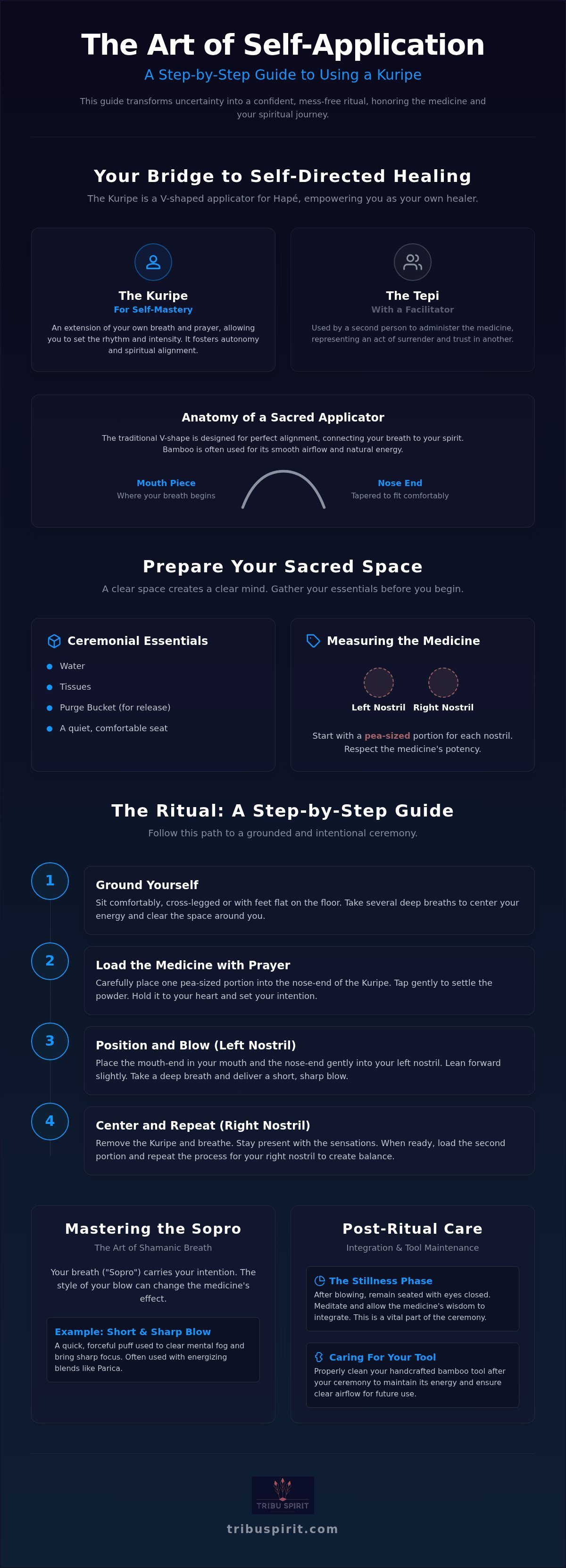
The Kuripe is a small, V-shaped applicator used to blow Hapé into your own nostrils. It's more than a simple pipe; it's a sacred bridge between your internal world and the spirit of the forest. In traditional Amazonian settings, receiving medicine from a facilitator using a Tepi pipe is a beautiful act of surrender. However, the Kuripe invites you into a different space: the path of self-mastery. When you learn how to use a kuripe, you step into the role of your own healer. You decide the intensity. You set the rhythm. You own the silence that follows.
This autonomy is central to shamanic philosophy. It encourages you to take full responsibility for your energetic clearing and spiritual alignment. Unlike the Tepi, which requires a second person to blow the medicine, the Kuripe is an extension of your own breath and prayer. The history of shamanic snuff shows that these tools have served as spiritual conduits for millennia, turning a physical act into a deeply personal ritual. It's a tool for those who value the ability to ground themselves whenever the need arises.
The Anatomy of a Sacred Applicator
Bamboo is the soul of most traditional pipes. It's light, durable, and carries a natural spirit that resonates with the jungle's frequency. For those just beginning their journey, bamboo offers the smoothest airflow, allowing the medicine to travel without obstruction. The V-shape isn't accidental. It's calculated to align perfectly with your nasal passages while one end rests in your mouth. You'll notice one side is the mouth-piece, where your breath begins, and the other is the nose-end, often tapered to fit comfortably. Understanding this physical connection helps you master how to use a kuripe with grace rather than fumbling during a ceremony.
Choosing Your First Tool
Your first pipe should feel like a natural extension of your hand. A Bamboo Kuripe is often the ideal choice because of its simplicity and the clean, prayer-infused energy it carries. When selecting your tool, consider the "throw." This refers to the distance the medicine travels from your mouth to your nose. A shorter throw provides a more direct, intense sensation. A longer pipe can soften the blow, making it more manageable for sensitive spirits. Beyond the mechanics, look for hand-carved aesthetics. These carvings aren't just decorations; they are reflections of the artisan's intention and can serve as a mirror to your own spiritual goals.
Preparing Your Sacred Space and Intention
The space you choose for your ritual acts as a vessel for the medicine. If your surroundings are cluttered or loud, your mind will likely follow suit. Before you begin learning how to use a kuripe, ensure you have your physical essentials within reach. A bottle of water, a box of tissues, and a purge bucket are necessary companions. The purge bucket isn't just a practical item; it's a symbolic space for whatever you're ready to release. Having these items nearby prevents the panic of searching for them mid-journey, allowing you to stay present in the medicine.
Precision matters during measurement. A common rule for beginners is the "two pea-sized portions" guideline. This means measuring out one small mound for each nostril. Start with less than you think you need. You can always go deeper in a later session, but you should respect the potency of the Nicotiana rustica from the very first breath. Mastering how to use a kuripe begins with this careful, measured preparation of the powder.
Creating a Ritual Sanctuary
Grounding is the foundation of any successful practice. Sit comfortably on the floor, perhaps cross-legged, or in a chair with your feet flat against the earth. This physical connection helps stabilize the energy as it rises through your system. You might use a hand-carved shamanic rattle to clear the stagnant air around you, signaling to your spirit that the ceremony has begun. Understanding the art of sacred ritual ensures that you aren't just using a tool, but engaging in a timeless tradition. Academic research into Shamanic Healing Ceremonies highlights that the intentionality of the environment is what distinguishes a sacred act from a mundane one.
Loading the Medicine with Prayer
Once your space is ready, it's time to load your pipe. Use a small wooden spoon or the palm of your hand to guide the powder into the nose-end of the applicator. Tap the side of the pipe gently. This settles the Hapé so it won't spill when you bring it to your face. As you do this, hold the Kuripe close to your heart and whisper your intention into the wood. Whether you seek clarity, release, or protection, infusing the medicine with your specific prayer is what activates the spirit of the plants. It transforms the powder into a personalized remedy. If you're looking for a tool that resonates with this level of intention, exploring a Bamboo Kuripe can help you start your journey with the right energetic frequency.
How to Use a Kuripe: A Step-by-Step Ritual Guide
The transition from preparation to the actual application is a moment of profound focus. Mastering how to use a kuripe is a journey of patience and respect. It's not about speed but about the quality of your presence. Once your pipe is loaded with prayer, bring the mouth-end between your lips. Gently guide the nose-end into your left nostril. This side is traditionally associated with "death" or the release of what no longer serves your highest good. Take a deep, cleansing breath through your nose and hold it. This pause is the moment of complete stillness before the medicine enters your field.
The Glottis Lock: Essential Safety
Before you perform the blow, you must master the glottis lock. This is the physiological key to a safe and comfortable experience. Close the back of your throat as if you're preparing to go underwater. This simple action ensures the Hapé stays in the nasal cavity where it belongs. It prevents the powder from traveling into your lungs or causing an uncomfortable cough. Practice this lock with air alone several times until it feels like second nature. It's the most important physical skill when learning how to use a kuripe effectively.
The First Blow (The Left Side)
With your throat locked and your intention clear, perform the Sopro. This is the intentional breath that carries the spirit of the plants into your system. As the powder makes contact, you'll feel an immediate, sharp sensation. Don't pull away or tense your face. Lean into the intensity. In these first 30 seconds, stay focused on your breath. The sting is a catalyst for clearing mental fog and emotional weight. It's the physical manifestation of the clearing process, stripping away the layers of the ego to reveal the clarity beneath.
The Second Blow (The Right Side)
Balance is essential in shamanic practice. You must always apply Hapé to both sides to maintain energetic equilibrium. After the left side, immediately reload your pipe and repeat the process for your right nostril. This side represents "life," "rebirth," and the manifestation of your new intentions. As you blow, visualize the qualities you wish to invite into your heart. Close the ritual by clicking your tongue against the roof of your mouth or offering a final, sharp exhale to clear any remaining powder from the pipe. This signals the end of the active phase and the beginning of your integration into the silence.
Mastering the Sopro: The Art of the Shamanic Breath
The physical mechanics of learning how to use a kuripe are only the beginning of your journey. The true magic lies in the Sopro, the intentional spirit-breath that carries the medicine into your energetic field. In the Amazonian tradition, the breath is the vehicle for the prayer you've already infused into the powder. By changing the rhythm and force of your exhale, you alter the frequency of the entire ceremony. Your breath becomes the bridge between the physical tool and the spiritual experience.
- The Short and Sharp Blow: This technique is a quick, decisive burst of air. It's best paired with Hapé - Parica when you need to clear mental fog or cut through heavy energetic blockages. It acts like a lightning bolt, striking the center of your being to awaken the senses and restore focus.
- The Long and Slow Blow: This breath starts gently and maintains a steady, unwavering pressure throughout the exhale. It's the ideal choice for Hapé - Tsunu, facilitating a deep sense of grounding. It feels like roots extending from your feet into the earth, anchoring your spirit in the present moment.
- The Ascending Blow: This style begins as a soft whisper and builds into a sharp, powerful finish. It's designed for "breakthrough" moments when you feel on the verge of a realization but need an extra push to cross the threshold of your own resistance.
Matching the Breath to the Medicine
Your choice of medicine dictates the soul-rhythm of your breath. For instance, a gentle, rhythmic blow is often most effective when working with Hapé - Mulateiro. This blend is known for its meditative qualities, and a soft Sopro allows the medicine to unfold slowly, like a flower opening in the morning sun. As you deepen your practice of how to use a kuripe, you'll begin to sense which rhythm your spirit requires. Trust your intuition; it knows the path to your own healing.
Common Blowing Mistakes to Avoid
Even with a clear intention, physical errors can disrupt the flow of your ritual. One common mistake is trailing off at the end of the blow. A weak finish can leave the medicine stuck in the pipe or nostrils without the force needed to reach the proper energetic centers. You should also avoid inhaling through the mouth mid-blow, as this often leads to choking or coughing. Finally, don't blow too hard too soon. Excessive force at the very start can cause unnecessary physical distress. Start with intention, not aggression.
To find the tools and blends that resonate with your unique breath, explore our ethically sourced collection at Tribu Spirit and begin your path toward self-mastery.
Post-Ritual Integration and Caring for Your Tool
The echo of the forest lingers long after the physical sensation of the Hapé fades. This period, often called the Stillness Phase, is where the true work of the medicine begins. You should sit in silence for at least 10 to 15 minutes after your application. Resisting the urge to move or check your phone allows the insights to settle into your consciousness. This is a vital part of learning how to use a kuripe; the tool delivers the medicine, but your presence integrates it. Let the silence be your teacher as the powder grounds your energy into the earth.
Eventually, you'll feel the need to clear your nasal passages. When you do, lean your head forward over your purge bucket or a tissue. Blow gently. If you blow too hard, you risk forcing the powder deeper into your sinuses, which can cause lingering discomfort or a headache. Patience is your best ally here. Let the medicine do its work before you rush to clean yourself up. This physical release is often accompanied by an emotional one, so allow the process to be as slow as it needs to be.
Your pipe is a sacred extension of your own energy field, so physical and energetic hygiene is paramount. Use a thin wire or a pipe cleaner to remove any Hapé buildup from the internal chambers of your applicator. A blocked pipe will disrupt the airflow and the quality of your next Sopro. To maintain the spiritual purity of the tool, use Mapacho smoke or Palo Santo to reset its energy. This clearing ritual ensures that the Kuripe remains a clean vessel for your prayers, ready for your next journey into the self.
The Art of Integration
Deepening your connection to the medicine involves integrating your ceremonial experience through conscious reflection. While the medicine is still active in your field, consider journaling any visions, feelings, or sudden clarities that arose. If you experience a heavy purge, whether physical or emotional, meet it with grace and gratitude. It's simply the body releasing what no longer serves your path. This integration turns a fleeting experience into a lasting transformation.
Longevity for Your Shamanic Tools
Treat your Kuripe with the same reverence you'd any sacred object. Store it in a dry, elevated place rather than a damp bathroom where the wood or bamboo might warp. It's also wise to keep your tool for your use only. Your Kuripe carries your unique energetic signature, and sharing it can muddy the connection you've built with the spirit of the plants. As your practice evolves, you might feel called to a new tool that reflects your growth. Trust that feeling; it's a sign of your deepening mastery of how to use a kuripe as a gateway to higher states of being.
Step Into Your Power as a Self-Healer
Your journey with Hapé is a deeply personal evolution that begins with a single, intentional breath. By mastering how to use a kuripe, you've moved beyond being a passive recipient of medicine to becoming an active participant in your own spiritual growth. You now understand the vital importance of the glottis lock for safety and the way different Sopros can shift your energetic state from mental fog to profound grounding. These techniques are the keys to a ritual that is as effective as it is sacred.
True transformation happens in the quiet moments of integration and the respect you show your handcrafted tools. To support your evolving practice, it's essential to use instruments that carry the correct frequency. Begin your journey with a hand-carved Bamboo Kuripe from Tribu Spirit. Our tools are ethically sourced and tribe-approved, featuring traditional craftsmanship designed for perfect airflow. For those seeking even deeper wisdom, you're invited to join the Tribu Spirit Academy for comprehensive practitioner training. Walk your path with confidence and grace.
Frequently Asked Questions
Is it normal to feel a burning sensation when using a kuripe?
Yes, a sharp, heat-like sensation is a standard part of the experience. This "fire" is believed to clear mental clutter and stagnant energy from your field. It usually peaks within the first minute and quickly transitions into a state of deep calm. Embrace the intensity as a physical sign of the medicine's cleansing work.
Can I use a kuripe if I have a cold or a blocked nose?
It's best to wait until your nasal passages are clear before beginning your ritual. Using the medicine while congested can lead to blockages within the pipe or cause the powder to sit uncomfortably in the sinus cavity. A clear, unobstructed breath is essential for the Sopro to carry the medicine effectively into your system.
How much Hapé should I put in my kuripe for the first time?
Start with a small portion, roughly half the size of a pea for each nostril. While you're learning how to use a kuripe, it's better to begin with a gentle dose to understand your sensitivity. You can slowly increase the amount in future sessions as you become more comfortable with the physical sensations and the spirit of the plants.
What is the difference between a bamboo kuripe and a bone kuripe?
Bamboo is the traditional choice for its natural airflow and light, forest-connected spirit. It's an excellent material for those beginning their journey because of its flexibility. Bone applicators are denser and often feel more grounding or "heavy" in their energetic delivery. Both serve as sacred bridges, but bamboo remains the most fluid option for daily practice.
Do I always have to blow into both nostrils?
Yes, you must always apply the medicine to both nostrils to maintain energetic balance. The left side represents what you are releasing, while the right represents what you are calling in. Skipping one side can leave you feeling ungrounded or energetically lopsided, which contradicts the goal of finding your center and harmony.
Can I use a kuripe by myself or do I need a facilitator?
The Kuripe is specifically designed for self-application, granting you the autonomy to guide your own healing process. While a facilitator uses a Tepi pipe to blow medicine for you, learning how to use a kuripe allows you to integrate the practice into your personal daily ritual. It's a powerful tool for independence and self-mastery.
How do I clean my kuripe if it gets clogged?
Use a thin, flexible wire or a specialized pipe cleaner to clear any internal obstructions from the chambers. Moisture from your breath can occasionally cause the powder to clump inside the bamboo. Regular maintenance ensures a consistent airflow for every session. Energetically, you can also pass the tool through Mapacho smoke to keep its spirit clear.
What should I do if I accidentally inhale the Hapé powder?
If you accidentally inhale the powder into your throat or lungs, stay calm and drink some water immediately. This usually happens if the glottis lock isn't fully engaged during the blow. Lean forward and blow your nose gently to clear the passages. In the future, practice the throat lock with air alone before loading your pipe to ensure a safe application.