

What if the physical discomfort you encounter during a ceremony isn't a mistake, but a sacred dialogue between your spirit and the earth? Many seekers approach this ancient medicine with reverence, yet find themselves unsettled by the sudden rush of heat, the watery eyes, or the deep, visceral pull of a purge. It's natural to feel a sense of hesitation or even anxiety when the potent intensity of Nicotiana rustica begins its work within your field. You aren't alone in wondering if these sensations are normal. Understanding hapé side effects and how to avoid them is the first step toward moving from a place of resistance into a state of graceful surrender.
You deserve a practice that feels both transformative and safe. We believe that physical reactions are often energetic feedback loops, guiding you toward deeper alignment when you learn to listen with intention. This guide will help you master the art of working with Hapé by teaching you how to harmonize your body with the medicine's frequency. We'll explore the roots of common discomforts like sinus irritation or nausea and provide the ritual techniques needed to ensure every breath is a grounding, elevated experience.
Key Takeaways
- Distinguish between the biological triggers of tobacco alkaloids and the shamanic view of the medicine acting as an energetic broom for your spirit.
- Reframe the experience of the purge as a purposeful release of stagnant energy rather than a simple physical ailment or error in practice.
- Master practical ritual techniques, such as dosage control and the sacred "Sopro" breath, to navigate hapé side effects and how to avoid them with grace.
- Understand how the quality of sourcing and the maker's intention directly influence the physical comfort and energetic clarity of your entire experience.
Common Hapé Side Effects: What to Expect Physically and Emotionally
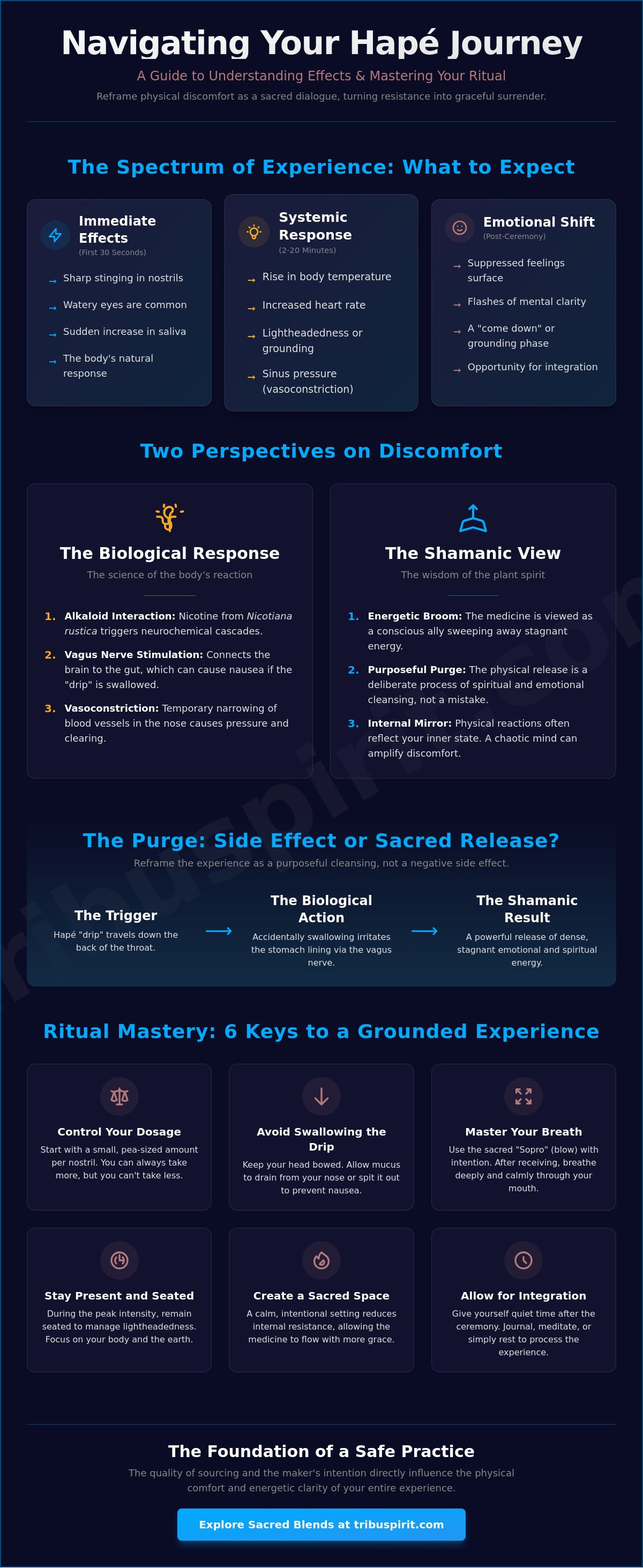
Entering a Hapé ceremony is an invitation to meet yourself in a raw, unfiltered state. The medicine doesn't wait for permission; it moves through the body with a swift, fiery grace. Within seconds of the blow, you'll likely feel a sharp stinging in the nostrils. This is often followed by watery eyes and a sudden increase in saliva. These aren't signs that something is wrong. They're the body's natural way of responding to a potent botanical ally. While these sensations can feel intense, they're the physical threshold you cross to reach deeper stillness.
Beyond the initial hit, your systemic response might include a rise in body temperature or a noticeable increase in heart rate. Some seekers experience lightheadedness as the medicine grounds their energy. It's essential to understand hapé side effects and how to avoid them by staying seated and breathing deeply during this peak. A standard reaction feels like a temporary storm that clears the air. In contrast, a sensitive response might involve more prolonged dizziness or a lingering sense of being ungrounded. Distinguishing between the two requires a quiet, observant mind.
The Physical Body's Response to Nicotiana Rustica
The foundation of many Hapé blends is Mapacho, a sacred form of Snuff (tobacco) known for its high nicotine content. This potent plant spirit interacts directly with your central nervous system, creating a state of heightened alertness and focus. You'll likely feel pressure in your sinuses almost immediately. This usually lasts between ten to twenty minutes as the medicine works to clear physical and energetic blockages. The presence of tobacco alkaloids causes a temporary narrowing of the blood vessels in the nasal mucosa, known as vasoconstriction, which contributes to the initial sensation of pressure and clearing. This physical tightening is the catalyst for the subsequent release.
The Emotional and Energetic Shift
Once the physical intensity fades, the emotional landscape begins to shift. Hapé acts as a mirror, often bringing suppressed feelings or sudden flashes of clarity to the surface. You might find yourself feeling a wave of sadness or irritability after the ceremony. Don't push these feelings away. This "come down" is actually a grounding phase where your spirit integrates the work done during the peak. If a session was particularly intense, giving yourself space for quiet reflection is vital. Learning the nuances of hapé side effects and how to avoid them ensures that your journey remains a tool for growth rather than a source of unnecessary stress. Integration turns a fleeting experience into a lasting transformation.
Why Discomfort Occurs: Biological vs. Shamanic Perspectives
To truly understand the nature of your experience, you must look through two lenses at once. Science tells us that the alkaloids in Nicotiana rustica trigger a cascade of neurochemical responses, while tradition tells us the plant is a conscious teacher. This duality explains why a session might feel physically demanding yet spiritually refreshing. Research on the Therapeutic Uses of Tobacco in Peruvian Amazonian Medicine highlights that these physical responses aren't random accidents. They're part of a systemic recalibration that touches both the nervous system and the spirit.
When you explore hapé side effects and how to avoid them, you quickly learn that the body's reaction is often a mirror of its internal state. A noisy mind or a cluttered environment can amplify physical tension. If your setting is chaotic, the medicine's attempt to ground you may feel like a collision rather than a soft descent. Creating a sacred space allows the physical body to relax. When you soften, the medicine flows with less resistance, turning potential discomfort into a quiet, meditative release.
The Science of the Sinuses and the Gut
Hapé interacts directly with the vagus nerve, the long highway connecting your brain to your digestive system. When the medicine is administered, this nerve is stimulated, which is why nausea is such a common guest during ceremony. Understanding hapé side effects and how to avoid them requires paying close attention to the "drip." If you accidentally swallow the liquid that runs down the throat, it irritates the stomach lining and triggers an immediate urge to purge. Keeping your hydration levels high before a session acts as a buffer, helping your system process the tobacco alkaloids with greater ease.
Panema and the Clearing of Stagnant Energy
Indigenous traditions describe a state called Panema. It's a heavy, stagnant energy that manifests as bad luck, lethargy, or a clouded spirit. Shamanic wisdom views Hapé as a sacred broom that sweeps away this density. If you find yourself asking what is hape while navigating a difficult moment, remember that it serves as a diagnostic tool. A "rough" experience often signals that there was significant energetic weight to clear. The medicine isn't making you sick; it's helping you move what no longer serves you. Choosing a blend that resonates with your current needs can help mitigate these challenges, and you can find the right match by exploring our sacred Hapé blends designed for deep alignment.
The Purge: Is it a Side Effect or a Healing Process?
In the silence of a sacred circle, the body sometimes speaks through a sudden, visceral release. This is the purge. While many newcomers fear the prospect of vomiting or heavy sweating, these involuntary physical responses are rarely signs of toxicity. Instead, they represent a deep, cellular detoxification. Amazonian tradition teaches us that the medicine identifies what's stagnant within us and moves it toward the exit points of the body. Whether it manifests as tears, sweat, or a physical purge, this process is a sacred clearing of the vessel.
Distinguishing between "getting sick" and "releasing medicine" is a vital part of the journey. When you get sick, the body is under attack. When you purge during a Hapé session, the body is actively shedding what no longer serves its highest good. Learning about hapé side effects and how to avoid them doesn't always mean stopping the purge; it means learning how to move through it with dignity and presence. It's a moment of profound surrender where the ego steps aside to let the physical body heal itself.
Navigating Nausea with Grace
When the wave of nausea peaks, your breath is your most reliable anchor. Inhale deeply through the nose and exhale slowly through the mouth, visualizing the energy moving downward into the earth. We recommend the "Bucket Protocol" for every practitioner. Simply having a clean bucket nearby removes the mental anxiety of "making a mess," allowing you to fully inhabit the experience without fear. Purging is a non-linear healing path, not a requirement for every session. Some days the medicine brings quiet contemplation; other days, it demands a more physical sacrifice.
Post-Purge Integration
The moments following a release are often the most crystalline of the entire ceremony. A sense of lightness usually washes over the seeker, accompanied by a rare, quiet mental clarity. Your system has done hard work, so replenishment is essential. Sip room-temperature water and allow yourself to rest in the stillness. You can deepen this phase by engaging in sacred ritual practices that anchor your new, lighter frequency into your daily life. This integration turns a difficult physical moment into a permanent spiritual shift.
Practical Strategies: How to Avoid and Mitigate Hapé Side Effects
Mastering the physical technique of the ceremony is the most effective way to manage hapé side effects and how to avoid them. While the medicine carries its own wisdom, your body is the vessel that must contain its fire. If you approach the medicine with a frantic energy or a slumped posture, the experience will likely mirror that lack of alignment. By refining your physical approach, you transform a potentially overwhelming moment into a focused, meditative clearing. You're the bridge between the earth and the sky during this process.
Begin with dosage. For those early in their path, a portion no larger than a half-pea per nostril is often sufficient. It's a common mistake to think that more powder leads to more healing. In reality, a smaller, well-received dose allows for deeper integration without taxing the physical system. If the body feels flooded, it will naturally seek to purge. By starting small, you give your nervous system the space to adjust to the high nicotine content of the Mapacho. Respect the plant's power by inviting it in slowly.
The Art of the Application
Your choice of shamanic tools plays a silent but crucial role in the delivery. A bamboo kuripe with a smooth, clear channel ensures the powder travels as a fine mist rather than a heavy clump. The technique of the blow, or "Sopro," is equally vital. A "turtle blow" is long, steady, and gentle, ideal for grounding and deep contemplation. In contrast, the "deer blow" is short, sharp, and powerful, used for clearing intense blockages. If you find the medicine frequently causes nausea, try a gentler turtle blow on an empty stomach. Keeping your head tilted slightly forward after the application prevents the powder from sliding down your throat, which is the primary cause of stomach upset.
Frequency and Respect
Respecting the medicine means recognizing it as a ceremonial ally rather than a daily habit. When Hapé is used habitually, the body begins to lose its sensitivity, and the physical side effects may actually increase as the energetic system becomes depleted. Signs of over-use include chronic sinus irritation, a persistent "heavy" feeling in the head, or a lack of clarity during sessions. If you notice these symptoms, it's time to pause. Resetting your relationship involves stepping back for a few weeks to allow your channels to clear. Returning with a renewed intention and the right equipment ensures the medicine remains a sacred tool. You can find high-quality, sustainably sourced ceremonial Hapé and tools to support your mindful practice.
Sourcing and Intent: The Foundation of a Safe Practice
The final pillar of a safe journey rests in the origin of the medicine itself. Not all Hapé is created with the same reverence or purity. Industrialized versions, often produced for mass consumption, may contain fillers or poorly processed tobacco that lead to significant nasal burning and lingering headaches. In contrast, traditionally crafted blends carry the vibration of the forest and the specific prayers of the maker. When you understand hapé side effects and how to avoid them, you realize that the energetic "cleanliness" of the source is just as important as your physical technique. A blend made with love and traditional wisdom flows through the spirit with far less resistance.
The base ashes used in a blend also dictate the physical experience. For example, Tsunu ash provides a balanced, grounding force, while Murici might feel more physically intense in the gut. By aligning your choice of medicine with your current state of health, you can minimize unnecessary strain on your system. Setting a clear, focused intention before the blow acts as a rudder for the medicine. It directs the plant spirit to the areas of your body that require clearing rather than allowing it to wander aimlessly through your nervous system. Your mind provides the map; the medicine provides the movement.
Choosing the Right Blend for Your Sensitivity
Selecting the right ally is a deeply personal process. For many, hape tsunu is the gold standard for balanced grounding. It offers a clear path without the overwhelming intensity that can sometimes trigger high blood pressure or persistent sinus pressure in sensitive users. If you're prone to headaches, it's wise to avoid extremely "hot" blends or those with sharp additives like mint, which can sometimes constrict the blood vessels too abruptly. Blends containing Mucuna may offer a more euphoric, gentle lift, softening the physical impact of the Nicotiana rustica for a more graceful experience.
The Ethics of the Amazon
A safe practice is an ethical one. Supporting indigenous sovereignty ensures that the medicine you receive is pure and harvested with respect for the land's natural cycle. This connection to the source provides a layer of energetic protection that industrial products simply cannot offer. Prayer and tobacco have walked hand-in-hand for millennia; treating the medicine as a sacred guest rather than a commodity changes how your body receives it. As you conclude your session, use gratitude as your final grounding tool. A simple word of thanks to the plants and the tribes who prepared them seals the experience and helps you return to the physical world with a quiet, renewed heart.
Step into Your Sacred Practice with Confidence
Embracing the medicine of the forest requires a delicate balance of humility and knowledge. You've learned that physical sensations, from the initial sting to the deep release of a purge, are simply the body's way of recalibrating its energetic field. By refining your posture and honoring the sacred "Sopro" breath, you create a vessel capable of holding the plant's intense wisdom. This mastery of hapé side effects and how to avoid them ensures that every session becomes a gateway to clarity rather than a struggle with discomfort.
The quality of your allies defines the depth of your journey. When you choose medicine crafted with traditional prayers, you invite a lineage of healing into your space. Explore our ethically sourced, ritual-grade Hapé collection to find blends sourced directly from indigenous Amazonian tribes. Each selection is tested for purity and traditional potency, directly supporting reforestation and indigenous sovereignty. Step forward with a steady breath and a clear heart, knowing you are supported by the earth's most sacred teachers. You're ready to walk this path with grace.
Frequently Asked Questions
Is it normal to have a headache after using Hapé?
A temporary headache can occur as a result of the rapid vasoconstriction of blood vessels in the head or simple dehydration. To manage this, ensure you drink plenty of water before and after your session. If the pain persists, it often signals that the dose was too high or the setting was too overstimulating for your current state. Listen to the body and rest in darkness if needed.
Can Hapé cause long-term damage to the sinuses?
Long-term damage is rare when the medicine is used with respect and proper technique, but chronic, habitual use can lead to persistent inflammation of the nasal passages. It's vital to allow your sinuses time to breathe and heal between ceremonies. Using a saline rinse or Neti pot several hours after a session helps remove any lingering fine powder. This practice maintains the health of your physical vessel.
What should I do if I feel like I'm going to faint during a ceremony?
If you feel lightheaded or faint, immediately lower your center of gravity by sitting or lying directly on the earth. This sensation is often caused by a sudden drop in blood pressure or the intensity of the nicotine rush. Focus on slow, rhythmic breathing and press your palms firmly against the floor. This action anchors your energy back into the physical world and helps the dizzy spell pass.
How can I stop the 'drip' from making me nauseous?
Managing the "drip" is essential for understanding hapé side effects and how to avoid them effectively. Keep your head tilted slightly forward rather than back after the application to prevent the powder from entering your throat. If you feel the liquid sliding down, don't swallow it. Spit it out into a tissue or bucket to prevent the tobacco alkaloids from irritating your stomach lining.
Is Hapé safe to use every day, or will I build a tolerance?
You will build a physical tolerance if you use Hapé every day, which eventually dulls the spiritual connection and heightens physical sensitivity. We recommend keeping the medicine for ceremonial use rather than daily habit. This preserves the sacredness of the experience. It also prevents the energetic depletion that often follows excessive, non-intentional use. Use the medicine with a clear, specific purpose.
Are there any medications that interact poorly with Hapé side effects?
Hapé can interact poorly with medications that affect blood pressure, heart rate, or certain antidepressants like MAOIs. Because the nicotine in Mapacho is a potent stimulant, it may amplify the effects of other substances in your system. Always consult with a healthcare professional if you are on a prescription regimen before beginning your journey. Safety is the foundation of any deep spiritual work.
What is the best way to clean my kuripe to avoid infections?
The best way to clean your bamboo kuripe is to use a thin pipe cleaner dipped in a high-percentage isopropyl alcohol. Run it through the entire channel to remove moisture and organic residue that could harbor bacteria. Let the tool air dry completely in a sunlit spot. This ensures it remains a clean, sacred instrument for your next ceremony. Proper maintenance reflects your respect for the medicine.
Can I use Hapé if I have a history of nicotine sensitivity?
If you have a history of nicotine sensitivity, approach the medicine with extreme caution and start with a microscopic amount. Hapé side effects and how to avoid them start with knowing your body's limits before the blow occurs. You might prefer blends with a lower Mapacho content or higher ash-to-tobacco ratios. This allows you to test your physical response without overwhelming your nervous system.