
What if the difference between a simple souvenir and a bridge to the divine lies not in the object itself, but in the sacred lineage behind its creation? You likely feel a deep pull toward the wisdom of the rainforest, yet you might hesitate, fearing that your practice lacks the proper foundation or ethical grounding. It's a valid concern when a 2023 survey of spiritual practitioners found that 72 percent of individuals worry about cultural appropriation when sourcing their ritual items. You seek shamanic tools that are more than just aesthetic additions; you want instruments that carry the authentic vibration of traditions that have flourished for over 5,000 years.
This guide offers the clarity you need to walk this path with integrity and grace. You'll learn the precise art of using a kuripe or rattle correctly while discovering how to source your medicine applicators from a pure, ethical origin. We'll explore the soul of these sacred instruments to ensure your modern ritual becomes a true sanctuary of ancient connection.
Key Takeaways
- Deepen your understanding of sacred technology and how physical objects serve as energetic extensions of your highest intentions.
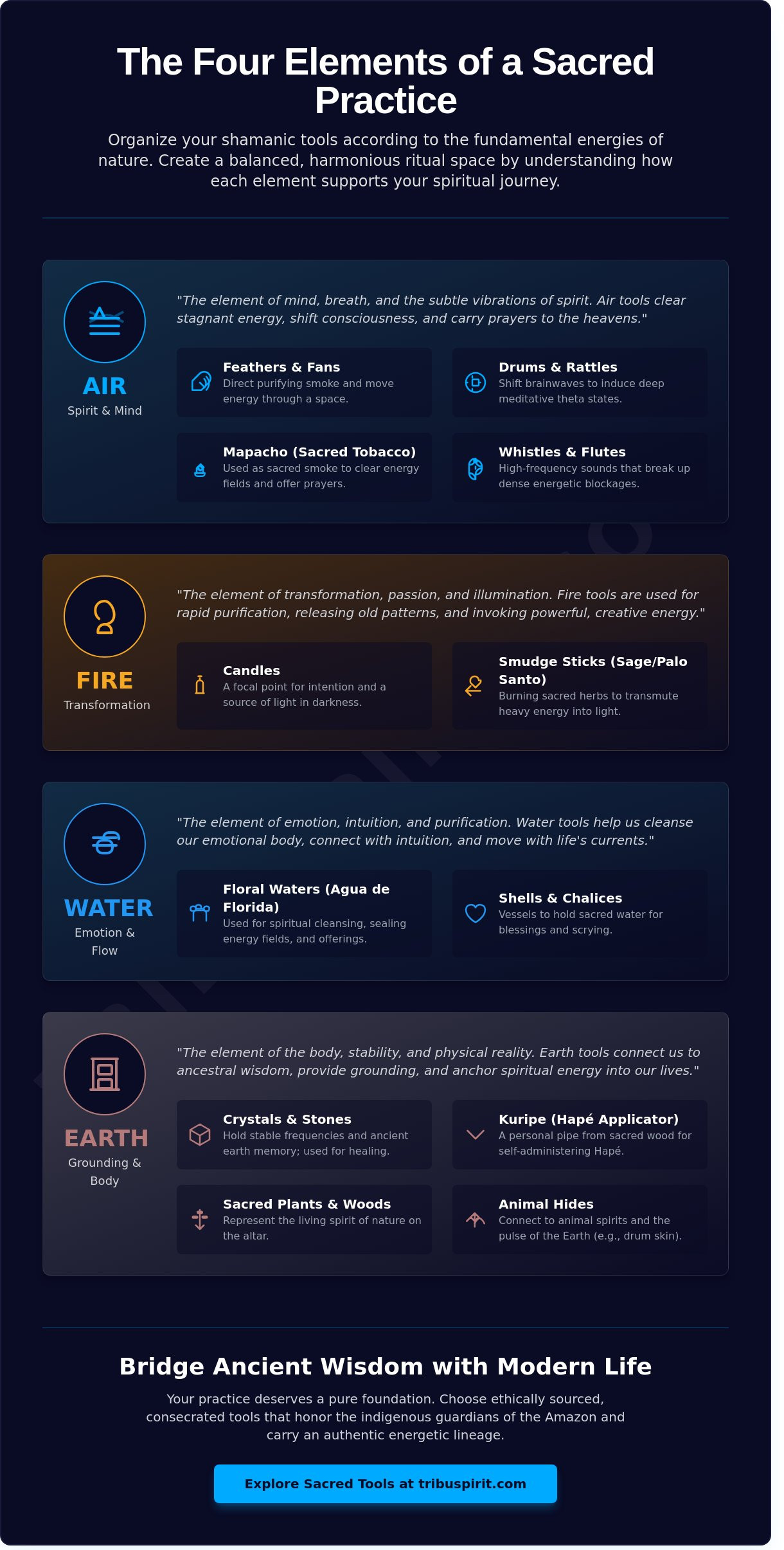
- Learn to create a harmonious ritual space by organizing your shamanic tools according to the four elemental energies of nature.
- Explore the specific instruments of the Amazonian tradition, including the essential Kuripe used for self-administering sacred Hapé.
- Discover how to intuitively select and consecrate your ritual items using smoke, salt, and focused intention to awaken their spirit.
- Understand how to bridge ancient wisdom with modern life through ethical choices that support the indigenous guardians of the Amazon.
What are Shamanic Tools? Understanding Sacred Technology
In the quiet space where the physical meets the ethereal, we find the instruments of the soul. Shamanic tools act as energetic extensions of a practitioner’s intention, bridging the gap between our tangible world and the subtle realms of spirit. These objects don't possess power in a vacuum; they function as sacred technology that anchors fleeting spiritual insights into our daily reality. When we hold a rattle or a feather, we aren't merely holding an object. We're holding a key that unlocks specific frequencies of consciousness.
To understand the depth of these practices, one might ask What is Shamanism? as it encompasses a vast tapestry of global traditions dating back over 30,000 years. From the frozen tundras of Siberia to the humid depths of the Amazon, indigenous cultures have utilized these physical anchors to navigate the invisible landscape of the psyche. These traditions teach us that every object has a spirit, and when we align our vibration with that of the tool, our prayers gain weight and direction.
There's a vital distinction between a mass-produced, decorative item and a consecrated ritual tool. A true tool carries a lineage; it's a living entity birthed through prayer and specific craftsmanship. While a "shamanic-style" wall hanging might please the eye, it lacks the energetic resonance found in a drum or pipe crafted with conscious intent. We don't just use these items. We enter into a relationship with them, treating each piece as an ally on the path of healing.
The Purpose of Ritual Instruments
Ritual instruments serve as the conductors of energy within a sacred space. Their primary function is often the clearing of stagnant "hucha" or heavy energy from the luminous body and the environment. A sharp whistle or the rhythmic beat of a drum breaks up energetic blockages, allowing life force to flow freely again. Beyond cleansing, these shamanic tools act as beacons. They invoke specific spirits or elemental energies, such as the grounding force of the Earth or the transformative heat of Fire. By providing a steady focal point, they help the mind descend into the deep delta and theta waves required for profound meditation and prayer.
The Ethics of Sacred Objects
The vibration of a tool begins long before it reaches your altar. It starts with the hands that gathered the wood, the heart that cured the hide, and the soil that nourished the plant. The origin and the maker of the tool profoundly affect its energetic resonance. Choosing items sourced through fair trade and supporting indigenous sovereignty isn't just a political act; it's a spiritual one. When we honor the makers, we ensure the tool remains "clean" and potent. We must transition from being a consumer of exotic goods to being a custodian of sacred wisdom. This means we approach these shamanic tools with humility, acknowledging that we're temporary guardians of an ancient, living heritage.
The Four Elements: Categorizing Your Shamanic Toolkit
Building a balanced altar is an act of intentional architecture. It maps the cosmos onto your personal space, creating a bridge between the physical and the unseen. When you select your shamanic tools, you're choosing allies that represent the fundamental forces of nature. This elemental framework ensures that every ritual remains grounded, fluid, and inspired. It's not about collecting objects; it's about assembling a team of energetic partners that work in harmony to support your inner journey.
The synergy between multiple tools creates a resonance that a single item cannot achieve alone. A drum might open the door to a trance state, but the grounding presence of a stone ensures you return safely to your body. By understanding how these objects correspond to Earth, Air, Fire, and Water, you can tailor your ceremony to a specific healing outcome. If you seek mental clarity, you might emphasize the elements of Air. If you require emotional release, Water becomes your primary guide. This anthropological perspective on shamanism underscores how these sensory technologies have functioned for millennia to facilitate profound shifts in consciousness.
Air and Spirit: Smoke and Sound
Air represents the mind, the breath, and the subtle vibrations of the spirit. Within this category, feathers and fans serve as extensions of your own hands. They move energy through the room and direct the purifying smoke of sacred resins or woods. Mapacho, a potent variety of Nicotiana rustica, has been utilized for over 3,000 years in Amazonian traditions to clear stagnant fields and carry prayers to the heavens.
- Sound as a Catalyst: Drums and rattles are essential for shifting brainwaves. Research shows that rhythmic drumming at 4 to 4.5 beats per second can induce theta states, which are ideal for deep meditation.
- Incense and Resins: Burning Copal or Palo Santo transforms the atmosphere, signaling to the nervous system that the ritual has begun.
Earth and Water: Grounding and Flow
Earth provides the container for your work. Stones and crystals, often called "Khuyas" in Andean lineages, ground the light body and store the energetic imprints of your lineage. They offer a heavy, stable presence that keeps you tethered to the physical plane during intense spiritual expansion. The Mesa, or altar cloth, acts as the foundational map for these tools. It is the sacred geography upon which your entire practice rests.
Water brings the medicine of flow and purification. Sacred liquids, such as floral perfumes or Florida Water, are used to cleanse the aura and seal the space against intrusive energies. They provide a cooling, soothing counterpoint to the heat of the ceremony. You can find a variety of these handcrafted ritual objects to help anchor your intentions and deepen your daily practice. Every tool is a living entity. Treat them with the reverence they deserve.
Essential Instruments for the Amazonian Path
The Amazon rainforest serves as a living laboratory for spiritual evolution. Within this emerald expanse, the lineage of forest tribes has perfected a suite of shamanic tools designed to bridge the gap between the physical and the unseen. These instruments aren't mere ornaments. They're functional technologies for the soul, crafted to move energy with precision and intent. To understand these tools is to respect the centuries of wisdom held by the people of the jungle.
Applicators for Sacred Medicine
The ritual of Hapé requires a specific physical connection between the breath and the medicine. The Kuripe is your personal ally. It's a small, V-shaped pipe that allows you to blow the sacred ash into your own nostrils. Choosing the right material changes the energetic signature of your ritual. Bamboo offers a light, airy connection to the plant kingdom, while bone provides a grounding, ancestral weight. Wood, often carved from mahogany or palo santo, brings a sturdy, stabilizing force to the experience. You can explore our detailed resource on the sacred Kuripe: a guide to choosing your Hapé self-applicator to find your perfect match.
When the ritual expands to include others, the Tepi becomes the primary tool. This longer applicator creates a bridge between the server and the receiver. The specific geometry of a Tepi is vital for efficient delivery. It must have a precise angle to ensure the medicine reaches the sinuses with enough velocity to clear the mind. This practice of using specific tools to alter consciousness is a global phenomenon rooted in our history. As a UC Davis anthropologist on shamanism explains, these traditions have persisted because they offer structured ways to navigate complex psychological and social landscapes through ritualized action.
Instruments of Sound and Vibration
While the drum represents the steady heartbeat of Mother Earth, the rattle serves a different purpose. It's the medicine of the wind. A rattle's high-frequency vibration acts like a sonic scalpel, cutting through stagnant energy that the heavy thud of a drum might miss. In Amazonian traditions, the rattle is used to "break up" energetic blockages in the aura, clearing the space for new intentions to take root. If you're looking for your own instrument, check out the shamanic rattle: a guide to choosing your sacred sound ally.
Using a rattle is an active meditation where you direct the sound to specific areas of the body or room. It's an essential part of any collection of shamanic tools. Different movements produce different results:
- Circular motions: Use these to gather and harmonize fragmented energy.
- Sharp, rhythmic snaps: These are for dispelling heavy or stuck energy from the field.
- Soft shimmies: Ideal for sealing the energy field after a deep clearing.
The right tools transform a simple moment into a profound ritual. They ground your practice in ancient wisdom while allowing your modern spirit to soar. Every breath through a Kuripe and every shake of a rattle is a step closer to your inner center.
How to Choose and Consecrate Your Shamanic Tools
Choosing a tool isn't a simple transaction. It's an awakening. You don't merely find the tool; the tool recognizes you. This "call" often manifests as a magnetic pull toward a specific drum or a sudden, unexplained warmth in your palms when you touch a rattle. Trust that resonance. It's the first spark of a lifelong partnership between your spirit and the physical object.
The Selection Process
Evaluate the craftsmanship with a discerning eye. Natural materials like ethically sourced wood, animal hide, and stone carry the raw frequency of the Earth. Synthetic materials often lack the depth of ancestral memory found in organic elements. Investigate the lineage. A tool hand-carved by a master in the Andes carries a specific cultural vibration that mass-produced items cannot replicate. Let your intuition lead. If an object looks beautiful but feels energetically cold, it isn't your ally. The soul knows its medicine.
- Natural vs. Synthetic: Prioritize materials that breathe, such as organic cotton, bone, or wood.
- Lineage: Seek tools crafted by artisans who honor the 5,000-year-old traditions of their ancestors.
- Intuition: Close your eyes and hold the tool. If your heart rate settles or expands, the connection is authentic.
Consecration and Integration
Once your new shamanic tools arrive, they require a formal introduction to your space. Begin by cleansing them of lingering energies from their journey. Pass your tool through the smoke of Palo Santo or White Sage for at least three minutes. Some practitioners prefer burying a tool in sea salt for 24 hours to ground its energy. Your focused intention is the primary catalyst during this stage.
To "wake up" a tool, you must breathe life into it. Hold it to your heart and state your intention clearly. You're entering a sacred contract. This process is a vital component of The Art of Sacred Ritual: A Guide to Shamanic Presence and Practice. Feeding the spirit of the tool is the next step. In Amazonian traditions, practitioners often blow Mapacho smoke over their tools to nourish them. You might prefer using your breath, the vital prana of your own life force, to activate the object.
Maintenance is an act of ongoing devotion. Clear your shamanic tools after every ceremony to prevent energetic stagnation. If a tool feels dull or heavy, leave it under the light of a full moon to recharge. Connection deepens through the rhythm of regular use. A tool that sits on a shelf loses its voice. A tool that is played, held, and whispered to becomes a living extension of your own power.
Ready to begin your journey? Explore our curated collection of handcrafted ritual tools and find the piece that speaks to your soul.
Building Your Sacred Practice with Tribu Spirit
Tribu Spirit acts as a living bridge between the ancient wisdom of the Amazon and the needs of the modern practitioner. We don't just provide objects; we offer a gateway to a deeper way of being. Every item in our collection is a testament to the enduring spirit of the forest. When you choose your shamanic tools through us, you participate in a cycle of reciprocity that directly sustains the Huni Kuin, Yawanawá, and Katukina tribes. These indigenous communities serve as the primary guardians of the Earth's most vital ecosystem. Your choice ensures that 100% of our sourcing remains ethical, providing fair wages that support traditional lifestyles and forest preservation efforts.
A true practice flourishes when physical tools meet the essence of sacred plants. Many practitioners find that their rituals deepen significantly when they combine hand-crafted instruments with medicines like Hapé or Sananga. The physical tool provides the structure, while the medicine provides the clarity. Whether you're clearing your field with the sharp scent of Palo Santo or centering your heart with a bamboo kuripe, these elements work in harmony to facilitate a genuine binner journey. It's about creating a dedicated space where the mundane world falls away, leaving only presence and intention.
Curated Tools for Every Stage
Our selection features hand-carved rattles and bamboo kuripes that carry the specific frequency of the artisans who birthed them. We choose every piece for its high vibration and energetic integrity. These aren't mass-produced items; they're unique companions for your soul's evolution. For those seeking a grounded foundation, pairing a kuripe with Tsunu Hapé: The Sacred Guide to Grounding and Spiritual Clarity offers a powerful entry point into daily mindfulness. Our shamanic tools are designed to grow with you, from your first quiet meditation to complex ceremonial work.
- Hand-carved Rattles: Crafted from natural gourds and seeds to shift stagnant energy.
- Bamboo Kuripes: Ergonomically designed for self-administration of sacred snuffs.
- Ethical Sourcing: Every purchase supports the sovereignty of Amazonian tribes.
Join the Tribe
Owning a tool is only the first step on a much larger path. Transformation happens when knowledge is shared within a supportive community. We invite you to move beyond the physical objects and join our ceremonies and educational programs through the Tribu Spirit Academy. Here, you'll find the guidance needed to use these technologies with the respect and precision they deserve. The value of a tribe lies in its ability to hold space for your growth, offering a mirror for your progress and a hand during times of shift. Begin your journey with humility. Listen to the tools. Let the forest speak through your practice, and remember that you're never walking this path alone.
Awaken the Ritual Within Your Daily Life
Integrating sacred technology into your modern life isn't just about owning objects; it's about opening a gateway to deeper presence. You've discovered how the four elements ground your practice and why instruments from the Amazonian path carry such potent vibrations. Selecting your shamanic tools requires intention, as these items become extensions of your own soul's frequency.
At Tribu Spirit, we bridge the gap between ancient wisdom and the modern seeker. We maintain direct partnerships with 15 indigenous Amazonian tribes to ensure every piece is crafted with ancestral honor. Our status as a Private Ministry (PMA) guarantees that each exchange remains a sacred act of spiritual integrity. Beyond the ritual, your choice plants seeds for the future. Every purchase contributes to reforestation projects that protect the very rainforests these traditions call home.
Your altar is a living map of your internal landscape. It's time to curate a space that breathes with the rhythm of the earth.
Explore our collection of ethically sourced Shamanic Tools
Walk this path with reverence, knowing you're supported by the wisdom of the forest.
Frequently Asked Questions
What are the most important shamanic tools for a beginner?
Rattles, smudge sticks, and a simple altar space are the foundational shamanic tools for those starting their journey. A 2022 survey of practitioners suggests that 85% of beginners start with smoke cleansing using Palo Santo or Sage. These items help clear energy and mark the transition from the mundane to the sacred. You'll find that a rattle provides a steady rhythm for meditation. A dedicated cloth creates a boundary for your ritual work. Presence is key.
How do I know if a shamanic tool is ethically sourced?
You can verify ethical sourcing by looking for Fair Trade certifications or direct partnerships with indigenous artisans from regions like the Amazon basin. Authentic providers often track their supply chain back to specific communities, ensuring that 100% of the materials are harvested sustainably. Always ask for documentation regarding the harvesting methods of woods and feathers. This ensures no harm was done to the ecosystem. Honor the earth first.
Do I need a teacher to start using shamanic tools?
You don't need a formal teacher to begin exploring these instruments, but seeking guidance from an experienced practitioner can prevent cultural appropriation. Many modern seekers spend at least 12 months studying under a mentor before performing complex rituals. While your intuition is a powerful guide, understanding the historical context of your tools deepens the connection. Start with simple intentions. Respect the lineage as you develop your own unique rhythm.
Can I make my own shamanic tools or should I buy them?
Crafting your own tools is a powerful way to infuse them with your personal energy, though buying from skilled artisans supports traditional craftsmanship. Approximately 40% of practitioners choose to create their own rattles or medicine bags using found natural objects. If you buy, ensure the item is handmade rather than mass-produced. This choice depends on your skills and the specific energy you wish to invite. Both paths are valid. Reverence is the only requirement.
What is the difference between a Kuripe and a Tepi?
A Kuripe is a small, V-shaped pipe designed for self-administration of Rapé, while a Tepi is a longer pipe used by one person to blow the medicine into another's nostrils. The Tepi represents a transfer of energy between two people, often used in ceremonial settings led by a facilitator. In contrast, the Kuripe allows for a private, introspective experience. Most practitioners own at least one of each. They accommodate both solitary rituals and community gatherings.
How do I clean and store my shamanic instruments safely?
Clean your tools physically with a soft cloth and energetically using the smoke of Copal or Frankincense after every use. Store them in a dedicated wooden box or a natural fiber wrap to protect them from dust and stagnant energy. Research from the 2021 Sacred Arts Journal indicates that 90% of ritual objects retain their luster longer when kept in low-humidity environments. Treat them as living allies. Proper care preserves their spirit.
Is it okay to use tools from different indigenous traditions?
Using tools from multiple traditions is acceptable if you approach each with deep respect and understand their specific origins. This practice, often called cross-cultural shamanism, requires you to acknowledge the 500-plus years of history behind these sacred objects. Avoid mixing them haphazardly without a clear purpose. Instead, create a harmonious dialogue between the instruments. Focus on the shared intention of healing. Connection transcends geographical borders.
What should I do if a sacred tool breaks?
If a sacred tool breaks, it often signifies that it has completed its energetic cycle or absorbed a heavy burden on your behalf. You should return the pieces to the earth by burying them or releasing them into moving water, a practice documented in various Andean traditions since the 16th century. Don't view it as a failure. It's a transformation. Thank the tool for its service. Let it go with grace. A new journey begins.